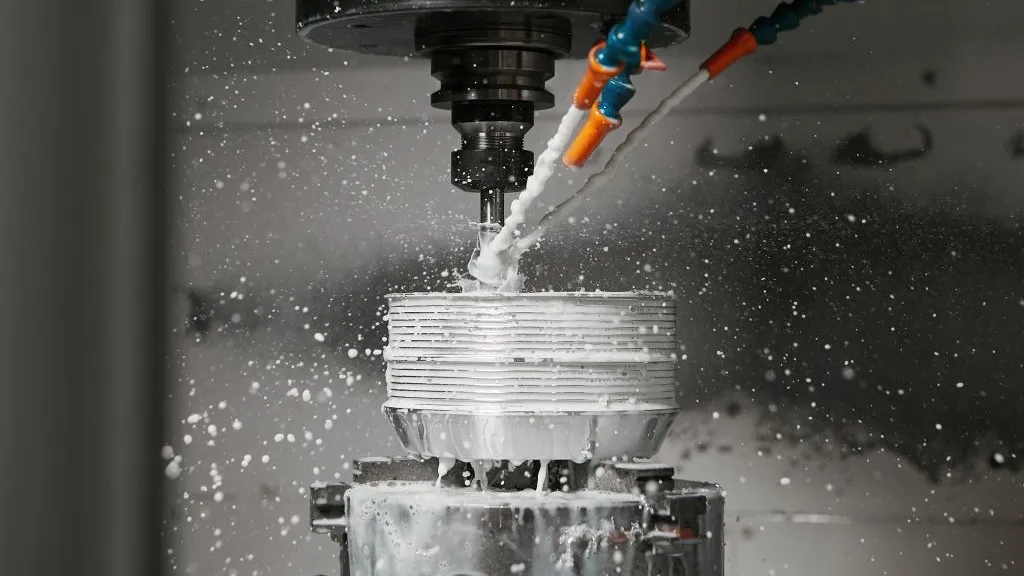

In modern consumer electronics and high-value accessory design, industrial designers constantly push for thinner wall profiles, zero-gap assembly seams, and razor-sharp geometric transitions. Yet this aesthetic and functional ambition frequently collides with the physical laws of subtractive machining. While high-speed 5-axis CNC milling remains the workhorse for roughing and contouring steel mold bases, it is fundamentally constrained by a simple geometric truth: a rotating cylindrical cutter cannot machine an internal corner sharper than its own radius.
When your 3D CAD model calls for crisp internal snap-fit pockets, micro-connector recesses, or deep, ultra-thin reinforcing ribs that a rotary spindle cannot reach without tool chatter or breakage, Sinker Electrical Discharge Machining (also known as Die-Sinking EDM or spark eroding) becomes the indispensable manufacturing pathway. By combining high-end Japanese and Swiss EDM equipment with strategic Design for Manufacturability (DFM) partitioning, we bridge the gap between industrial design intent and repeatable mass production.
The CNC Milling Bottleneck: Internal Corner Radii and Tool Deflection
Every CNC-milled internal vertical corner inherits a fillet radius equal to at least half the diameter of the end mill. When machining hardened tool steels like S136 or H13 (typically 48 to 54 HRC), cutting tool physics impose strict limits on how small a cutter can be used at depth.
For high-precision consumer electronics injection molding—such as multi-layer rugged smartphone cases, industrial VR/AR headset housings, graded trading card slab protectors, and smart wearable enclosures retailing above $30—a leftover 0.5mm or 1.0mm internal corner radius creates three immediate engineering problems:
- Internal Component Interference: Rigid PCBA boards, battery cells, camera lens bezels, and neodymium magnet arrays have sharp 90-degree corners. If the plastic boss or locating pocket in the housing retains a 0.5mm CNC tool radius, the mating electronic module will ride up on the fillet rather than seating flat.
- Compromised Snap-Fit Retention: Miniature cantilever snap hooks and child-resistant locking tabs rely on crisp undercut ledges. A rounded mold corner translates into a sloped plastic engagement face that slips open under drop impact.
- Tool Chatter in Deep Ribs (L/D Ratio Limits): Once a cutter’s Length-to-Diameter (L/D) ratio exceeds 5:1 in hardened steel, radial cutting forces cause the slender carbide shaft to deflect like a cantilever beam (Source: Modern Machine Shop). Trying to mill a 0.6mm-wide reinforcing rib to a depth of 8mm (an L/D ratio > 13:1) results in severe tool vibration, tapered rib walls, poor surface finishes that cause part sticking during ejection, and frequent cutter snapping.
Relies on physical mechanical shear. Cutter diameter dictates minimum corner radius, and radial tool pressure causes deflection in deep, narrow slots.
Burns the inverse geometry of a custom copper or graphite electrode into hardened steel via controlled micro-sparks with zero mechanical contact force.
How Sinker EDM Solves Complex Cavity Geometry
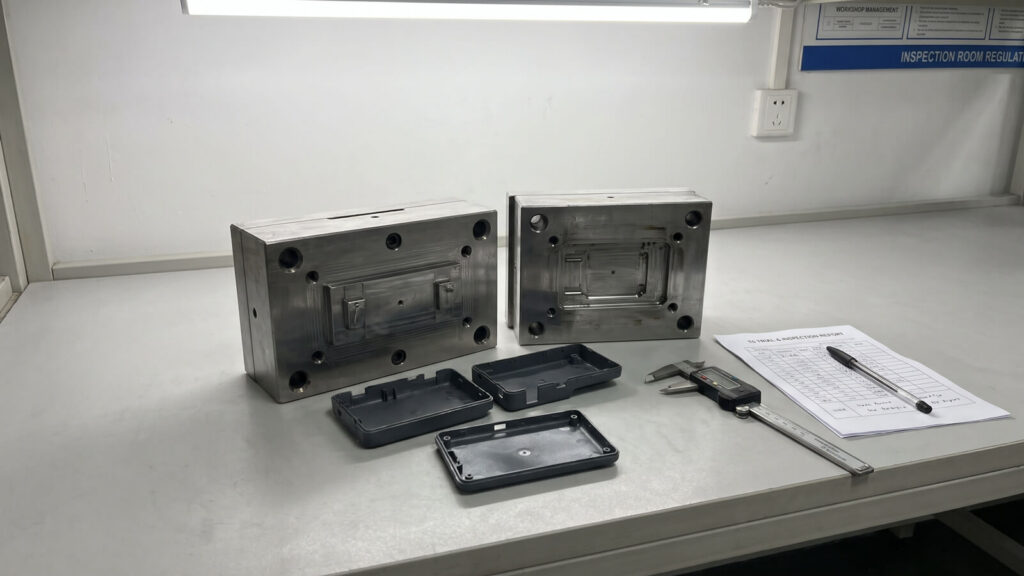
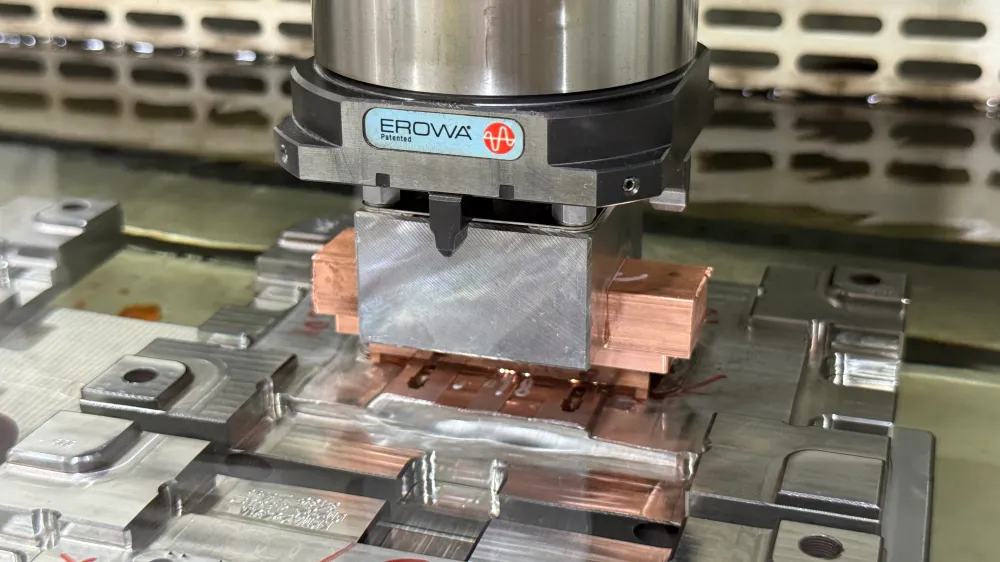
To overcome rotary milling boundaries, our in-house mold making services department utilizes Sinker EDM to vaporize microscopic particles of hardened tool steel using a custom-machined positive electrode. Because the electrode is milled as an external male protrusion—where a large, rigid CNC cutter can easily machine razor-sharp external intersections and thin standing blades—sinking that inverse shape into the mold block produces internal cavity features that are physically impossible with rotary tools:
- Near-Zero Internal Corner Radii: Achieving crisp 0.03mm to 0.05mm internal transitions for precision snap-fit locks, acoustic speaker grill recesses, and flush camera bezel steps.
- Consistent ±0.005mm Cavity Tolerance: Holding micron-level positional accuracy across multi-cavity inserts and complex 3D shut-off surfaces without mechanical tool push-off.
- Blind Features and Undercut Lifter Pockets: Unlike Wire EDM—which requires a through-hole to thread a continuous brass wire—Sinker EDM plunges vertically or orbits horizontally into blind cavities, sealed bosses, and angled sub-gates.
Engineering Deep Ribs, Micro-Slots, and VDI 3400 Textures at YG TECH
Thin-walled consumer electronics accessories rely on deep internal reinforcing ribs and boss gussets to pass 1.5-meter to 3-meter drop tests without increasing exterior bulk. Machining these narrow, high-aspect-ratio slots into hardened S136 or H13 steel without inducing surface micro-cracks requires strict process discipline across three operational stages:
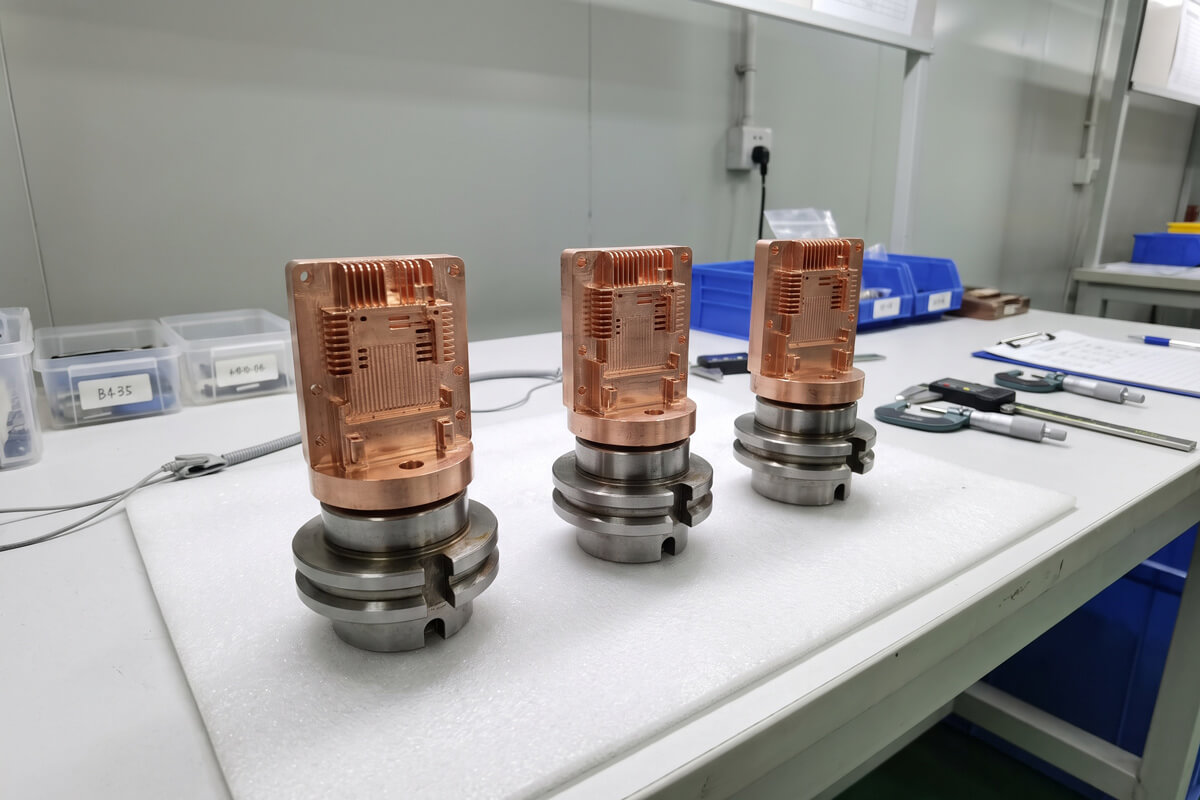
We custom-mill multiple roughing and finishing electrodes tailored to your rib geometry. For optical or mirror-finish cavities (Ra 0.2 μm), we machine oxygen-free high-conductivity copper (C11000) or tungsten-copper alloys that resist edge wear. For deep structural ribs in engineering plastics like PPS or glass-filled nylon, we utilize ultrafine-grain isotropic graphite. Every electrode is mounted on Swiss EROWA quick-change pallets, enabling offline CMM pre-setting with ±0.002mm repeat positioning accuracy before the electrode ever enters the EDM tank.
When burning a 0.5mm-wide rib at a depth of 12mm, eroded metal debris and carbon particles can easily become trapped in the microscopic spark gap. If debris accumulates, the electrical discharge concentrates into a stationary secondary “arc” that pits the mold wall and leaves localized soft spots. Our Mitsubishi and GF AgieCharmilles machines synchronize high-speed Z-axis “jump” retraction cycles with multi-nozzle dielectric oil flushing, evacuating carbon sludge continuously to guarantee uniform spark erosion from the top of the rib to the deepest blind floor.
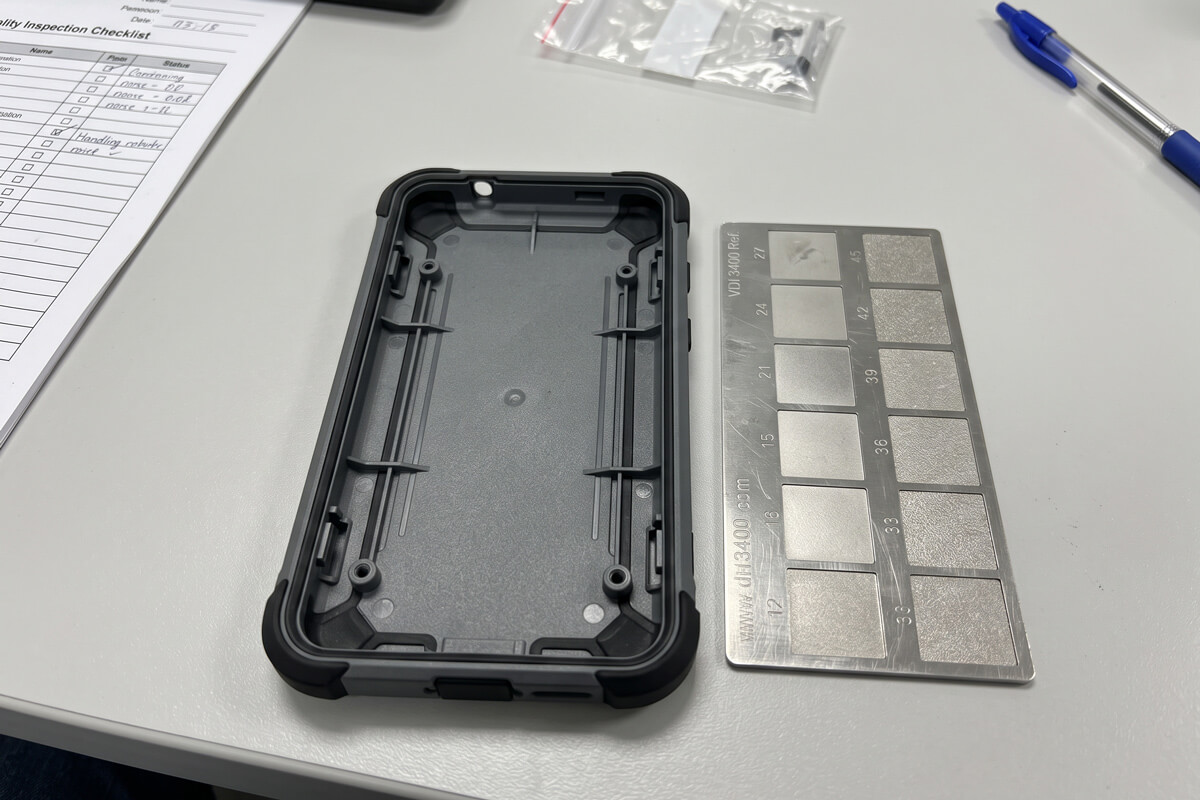
Manual stone and diamond paste polishing inside narrow slots inevitably rounds off sharp parting edges and causes uneven “orange peel” distortion. By modulating discharge current, pulse on-time, and orbital electrode trajectories during the final finishing passes, our generators produce uniform, repeatable surface textures conforming directly to the international VDI 3400 (Verein Deutscher Ingenieure) standard (Source: GF Machining Solutions).
Technical Specifications at YG TECH: Mitsubishi & GF AgieCharmilles Fleet
Achieving a true Ra 0.2 μm mirror finish directly from an electrical spark requires advanced nano-pulse power generators that introduce conductive powder additives or high-frequency micro-discharges to disperse stray capacitance (Source: Mitsubishi Electric). To ensure project stability from rapid prototyping through mass production, our EDM department operates under the following verified parameters:
| Feature / Metric | YG TECH Technical Specification | Direct Engineering Benefit for Plastic Parts |
|---|---|---|
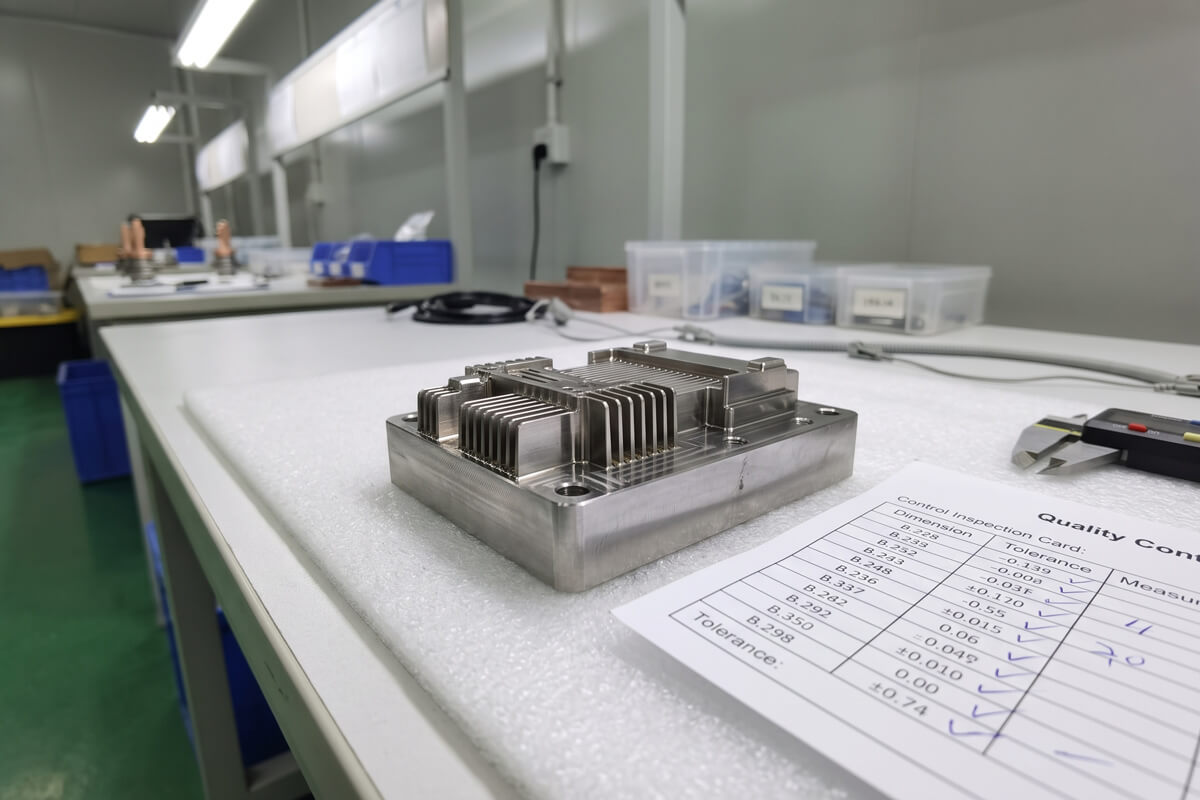
| Positioning & Burn Accuracy | ±0.005 mm (vs. ±0.01 mm general mold baseline) | Guarantees flash-free shut-off alignment on complex 2K and overmolded enclosures. |
| Best Surface Finish | Ra 0.2 μm (Mirror Sinker EDM) & VDI 3400 Scale | Eliminates manual hand-polishing distortion inside deep ribs, preserving sharp CAD edges. |
| Machine Fleet | Mitsubishi & GF AgieCharmilles + EROWA Chucking | High-end Japanese and Swiss thermal stability for repeatable multi-cavity tooling. |
| Tool Steel & Resin Capability | S136 (Hardened), H13, NAK80 | Molding PPS, PC, TPU, LSR | Supports 300,000 to 500,000+ shot mold lifespans across optical and abrasive polymers. |
This ±0.005mm positioning accuracy is particularly critical for our two-shot injection molding and LSR (Liquid Silicone Rubber) overmolding programs. In a rotary 2K mold, the rigid polycarbonate substrate is molded in Cavity A and rotated 180 degrees into Cavity B for soft TPU elastomer overmolding. If the EDM shut-off ribs between Cavity A and Cavity B deviate by more than a few microns, either the second shot will steel-crush the substrate or molten elastomer will bleed across the cosmetic boundary.
The “So What?” for Hardware Designers: DFM Strategies to Minimize Burn Time
As a pragmatic engineering partner, we never recommend Sinker EDM for every feature on a part. Because each custom EDM operation requires machining dedicated roughing and finishing electrodes plus hours of controlled spark erosion, indiscriminate EDM usage inflates tooling budgets and extends lead times.
During our upfront DFM review for custom injection molding services, our tooling engineers analyze your 3D STEP file to apply a Hybrid CNC + Targeted EDM Strategy that minimizes “burn time” while protecting your design intent:
- CNC High-Speed Pre-Roughing (Removing 92%+ of Stock Volume): Even on features destined for Sinker EDM, we first use high-speed CNC end mills tohog out the bulk of the steel cavity, leaving only a 0.15mm to 0.25mm skin and the corner fillets for the electrode to burn away. This slashes electrode wear and cuts EDM machine hours by more than half.
- Partitioning Cosmetic vs. Non-Critical Internal Radii: If an internal pocket merely houses a wire harness with 2mm of clearance, our DFM report will suggest adding a 0.5mm or 1.0mm corner radius so it can be finished 100% on the CNC mill—saving your EDM budget strictly for functional snap-fits, PCBA locating datums, and exterior cosmetic lines.
- Pairing Sinker EDM Sub-Inserts with MUD Rapid Tooling: For hardware startups and SMEs validating a new accessory, we can machine your complex EDM features into compact steel sub-inserts mounted inside our standardized MUD (Master Unit Die) frame. Through our rapid tooling services, this approach reduces total upfront tooling cost by 30% and delivers production-grade T0 samples in as fast as 10 days.
Submit your STEP file under an upfront NDA. Our mold engineers will color-code your geometry within 24 hours—highlighting where CNC radii can save tooling cost and where ±0.005mm Sinker EDM is mandatory.
Scalable Production & Commercial Safeguards for Emerging Brands
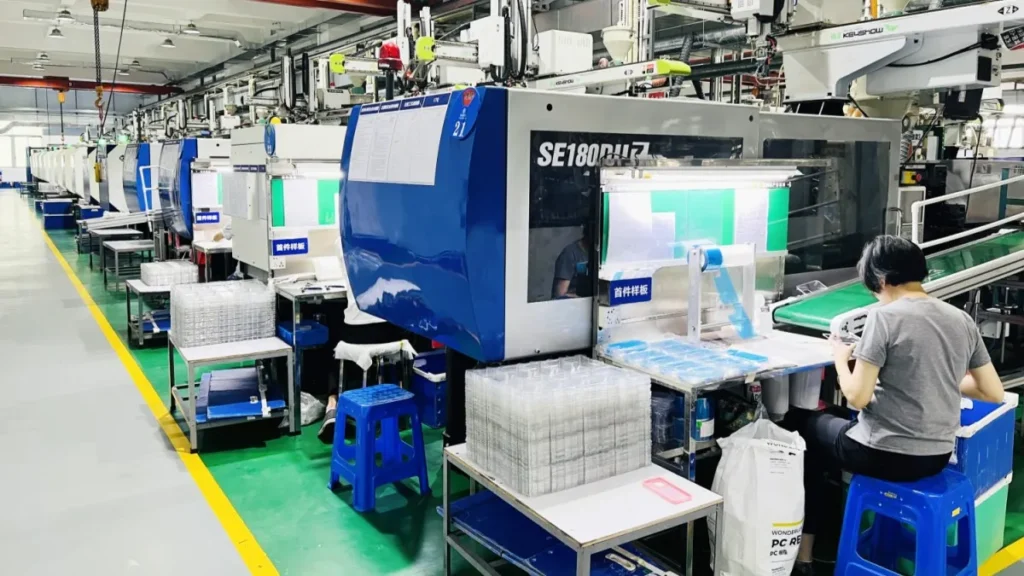
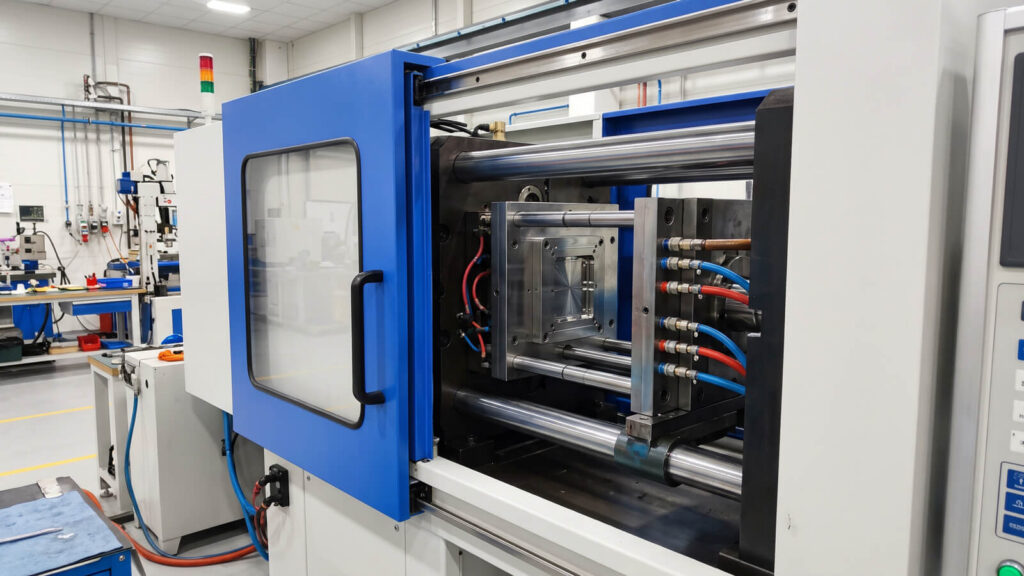
Precision mold making is only half the equation; converting that tool into profitable retail inventory requires agile manufacturing terms. Established in 1996, YG TECH operates 130+ injection molding presses spanning 50T to 800T—including an ISO Class 8 cleanroom for optical polycarbonate, medical-grade components, and dust-free IMD (In-Mold Decoration) or IM-3D-E (In-Mold 3D Electronics) assemblies. Our facility is certified to ISO 9001, ISO 14001, ISO 13485, RoHS, and GRS standards, and has passed both Amazon and Walmart factory audits.
To support fast-moving SMEs and hardware startups across North America, Europe, and Australia, we back our technical capabilities with transparent commercial commitments:
- 100% Client Mold Ownership & Upfront NDA: Your IP is protected before files are shared, and full legal title to the mold transfers unconditionally to your company upon final payment.
- Flexible 1,000-Piece MOQ & Turnkey Logistics: Launch without excessive inventory pressure via our 1,000-unit standard MOQ, supported by EXW or hassle-free DDP shipping and adaptable payment structures (100% upfront for rapid samples, standard 50% deposit, or Net 30 terms for recurring partners).
- Closed-Loop Quality Accountability: Should any dimensional or cosmetic discrepancy occur, our quality engineers execute root-cause metrology traceability and steel-safe corrective adjustments rather than offering superficial batch swaps.
Get a Technical Review of Your Rib, Snap-Fit, and Corner Geometries
Send your 3D CAD files (STEP, IGES, or X_T) to our engineering team. Every pre-tooling DFM package includes: