
In hardware product development, the most dangerous phase lies between an approved 3D-printed prototype and full-scale mass production. For hardware startups and mid-sized brands launching high-value plastic accessories retailing above $30—such as multi-layer rugged smartphone cases, industrial VR/AR headset housings, graded trading card (PSA slab) protectors, and child-resistant enclosures—committing $35,000 to $60,000+ and 8 weeks of lead time to a multi-cavity Class 101 hardened steel mold before validating market demand is a massive capital risk.
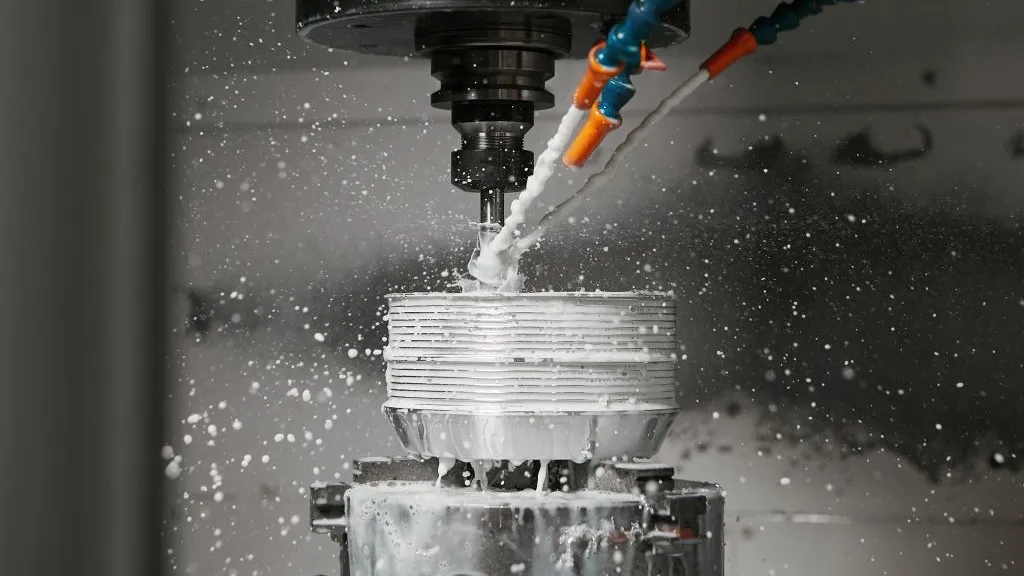
Rapid Tooling (also known as bridge tooling or soft/semi-hard prototype tooling) solves this bottleneck. By combining standardized Master Unit Die (MUD) frames, high-speed 5-axis CNC machining, and pre-hardened tool steels or aircraft-grade aluminum, rapid tooling compresses mold manufacturing timelines from months down to 10–15 days while cutting upfront tooling investment by 30% to 50%+. Below is a comprehensive engineering breakdown of how rapid tooling works, its exact dimensional and cosmetic boundaries, and how to use it to de-risk your New Product Introduction (NPI) pipeline.
What Is Rapid Tooling? (Definition & Classification)
In polymer manufacturing, rapid tooling services refer to a streamlined mold-making methodology designed to produce injection-molded parts in volumes ranging from 100 to 50,000+ units within days rather than months. Unlike additive prototyping—which builds parts layer-by-layer out of simulated resins—rapid tooling creates an actual physical mold cavity injected with real, production-grade thermoplastics or liquid silicone rubber (LSR) under high clamping pressure.
From a metallurgical and process perspective, rapid tooling is divided into two primary categories (Source: SME / Society of Manufacturing Engineers):
Uses a master pattern (SLA 3D printed or CNC machined) to cast a room-temperature vulcanizing (RTV) silicone mold for vacuum casting services, or uses DMLS/Photopolymer 3D-printed inserts. Ideal for early trade-show mockups, but limited to thermoset polyurethanes or very short runs under low injection pressure.
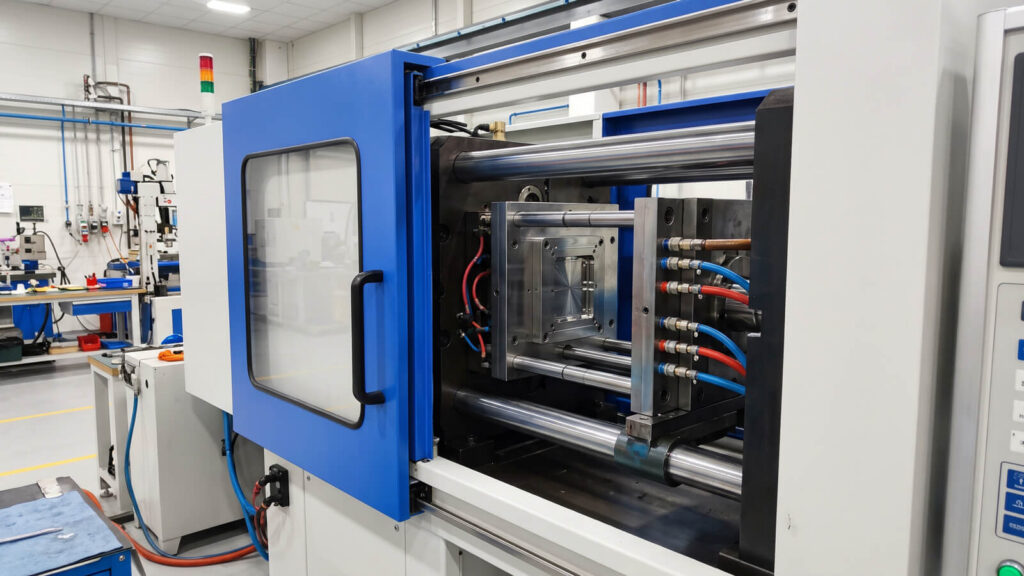
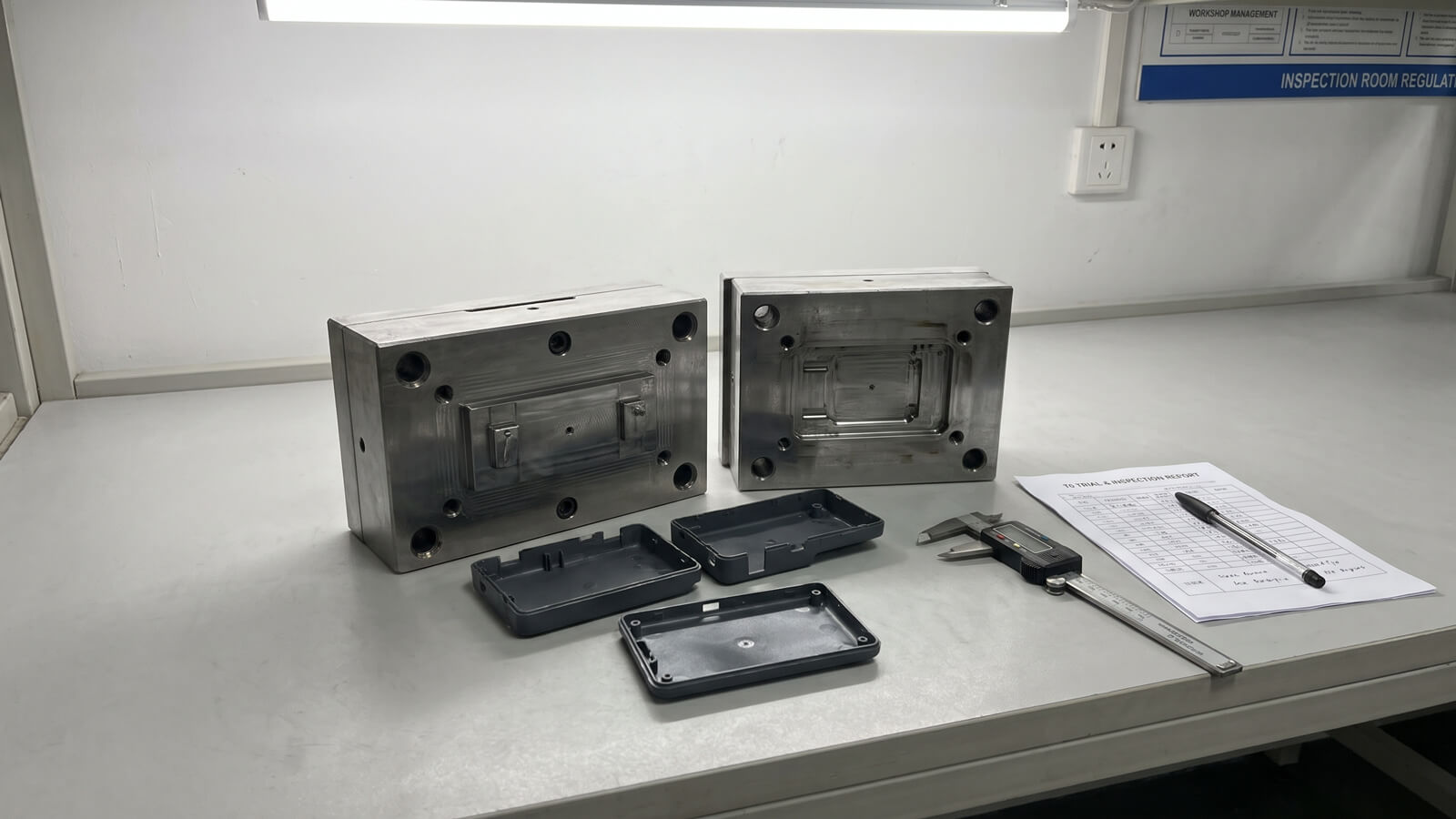
Uses high-speed CNC milling, mirror Sinker EDM, and slow-feed Wire EDM to cut unhardened or pre-hardened metal inserts (7075 Aluminum, P20, NAK80, or S136) mounted inside a shared MUD (Master Unit Die) frame. Runs on real 50T–800T injection presses with 100% genuine engineering resins.
Bridging the Production Gap: Aluminum vs. Pre-Hardened Steel
For hardware founders, product managers, and sourcing engineers, the hardest financial balancing act occurs during the Engineering Validation Test (EVT), Design Validation Test (DVT), and early market launch phases. You need 1,000 to 10,000 parts molded in genuine polycarbonate (PC), ABS, glass-filled nylon, or high-temperature PPS to pass UL drop tests, IP68 burst/waterproof tests, ISO 13485 medical validations, or to fulfill initial Kickstarter and e-commerce pre-orders. Yet locking your CAD geometry into a $45,000 hardened H13 multi-cavity mold before real customers use the product is a recipe for expensive steel scrap if a single snap-fit or PCBA boss needs to move by 0.5mm.
Direct metal rapid tooling bridges this gap by matching the metallurgy of the mold insert to your exact validation horizon and volume ceiling—matching the Plastics Industry Association (SPI) Class 104 and Class 103 mold standards:
| Tooling Tier & Material | Hardness | Guaranteed Shot Life | T0 Lead Time | Best Strategic Use Case |
|---|---|---|---|---|
| 7075-T6 / QC-10 Aluminum Tooling | ~150 HB (80 HRB) | 2,000 – 10,000 shots | 7 – 10 Days | Unfilled PP/PE/ABS functional test parts; low-pressure geometry without sharp shut-offs. |
| P20 Pre-Hardened Steel MUD Insert | 28 – 32 HRC | 10,000 – 50,000 shots | 10 – 14 Days | Pilot launches, crowdfunding fulfillment, and steel-safe DFM iteration at 1,000-unit MOQs. |
| NAK80 / S136 Pre-Hardened MUD Insert | 36 – 42 HRC | 50,000 – 100,000+ shots | 12 – 18 Days | Optical PC card protectors, LSR liquid silicone, 2K overmolding, and abrasive glass-filled resins. |
| Hardened H13 / S136 Production Mold | 48 – 54 HRC | 300,000 – 500,000+ shots | 25 – 35 Days | Full-scale retail production after bridge tooling validates market demand and locks design. |
Why Pre-Hardened Steel (P20 / NAK80) Often Beats Aluminum for $30+ Accessories
Many Western buyers initially ask for aluminum rapid tooling because they associate aluminum with fast CNC spindle speeds. However, when molding high-value consumer electronics accessories—which frequently utilize abrasive glass-fiber reinforced nylon, high-clamp-tonnage thin-wall polycarbonate, or intricate side-action sliders—soft 7075 aluminum suffers from rapid parting-line peening (mushrooming) and galling on moving shut-offs after just a few thousand cycles (Source: MoldMaking Technology).
At YG TECH, we predominantly engineer our soft tooling vs. hard tooling bridge programs using P20 or NAK80 pre-hardened tool steels inside a MUD master frame. Because P20 and NAK80 are supplied pre-heat-treated to 30–40 HRC, we machine them directly to final micron dimensions without waiting 5 days for external vacuum heat-treatment furnaces—delivering aluminum-like 10-day speed while providing 5× the wear resistance, weldability for engineering modifications, and a guaranteed 50,000 to 100,000-shot bridge warranty.
YG TECH Bridge-to-Production Guarantee & Asset Ownership: Starting with a MUD rapid tool never means throwing money away. First, upon full payment, 100% of the custom mold insert ownership belongs unconditionally to you under our upfront NDA. Second, if your bridge run in a single-cavity MUD insert takes off and you upgrade to a multi-cavity hardened S136/H13 production mold (300,000–500,000 shots) with YG TECH, our engineering team directly transfers the validated gating, shrinkage, and scientific molding parameters—and offers structured tooling amortization credits for recurring production partners.
Tolerances and Surface Finishes in Rapid Tooling
A critical fear among mechanical engineers is that choosing “rapid tooling” means accepting warped parts, visible step mismatches at the parting line, or dull surfaces that fail cosmetic inspection on a $40+ retail product. Whether rapid tooling compromises your part quality depends entirely on which rapid tooling process you select against your drawing’s Key Product Characteristics (KPC).
Below is our engineering capability comparison across rapid tooling methods versus dedicated production steel molds:
| KPC Engineering Metric | 3D Printed / Silicone Soft Tool | 7075 Aluminum Rapid Mold | YG TECH P20 / NAK80 MUD Rapid Tool | Hardened S136 / H13 Production Mold |
|---|---|---|---|---|
| Machining & Insert Tolerance | ±0.10 to ±0.20 mm | ±0.025 to ±0.050 mm | ±0.010 mm (±0.005 mm on EDM shut-offs) | ±0.005 to ±0.010 mm (±0.002 mm WEDM) |
| Molded Part Tolerance (PC/ABS, 50mm) | ±0.25 mm (ISO 2768-m/c) | ±0.08 to ±0.12 mm | ±0.05 mm (ISO 2768-f Fine) | ±0.03 to ±0.05 mm |
| Optical Polish Limit (SPI Standard) | Semi-gloss only; layer lines visible | SPI B-1 / A-3 (Prone to micro-pitting) | SPI A-2 Mirror (Ra 0.025–0.05 μm on NAK80/S136) | SPI A-1 Optical Diamond Buff (Ra < 0.012 μm) |
| Surface Texturing (VDI 3400 / Etch) | Simulated digital texture only | Bead blast only; chemical acid etch streaks | Full VDI 3400 (VDI 12–30) EDM & laser texture | Full VDI 3400, Mold-Tech etch & multi-layer laser |
Evaluating Key Product Characteristics (KPC) Before Selecting Rapid Tooling
- When MUD Steel Rapid Tooling Matches Production Quality 100%: Because YG TECH machines MUD core and cavity inserts using the exact same Makino slow-feed Wire EDM and Mitsubishi/GF AgieCharmilles mirror Sinker EDM equipment used in our injection mold manufacturing division, we hold ±0.01mm machining tolerances and deliver crisp VDI 3400 matte textures or mirror finishes (on NAK80/S136 inserts). Your T0 bridge parts are dimensionally and cosmetically indistinguishable from mass-production parts—allowing you to sell them directly to retail customers.
- Where Rapid Tooling Has Genuine Engineering Boundaries: If your product requires a 16-cavity hot-runner layout, complex hydraulic core-pulling cylinders that exceed the envelope of a standard MUD frame, or ultra-long-run resistance against 40% glass-filled PPS over 300,000+ cycles, a shared rapid tooling base is geometrically unsuitable. In those cases, our DFM team will advise building a dedicated standalone steel tool from day one.
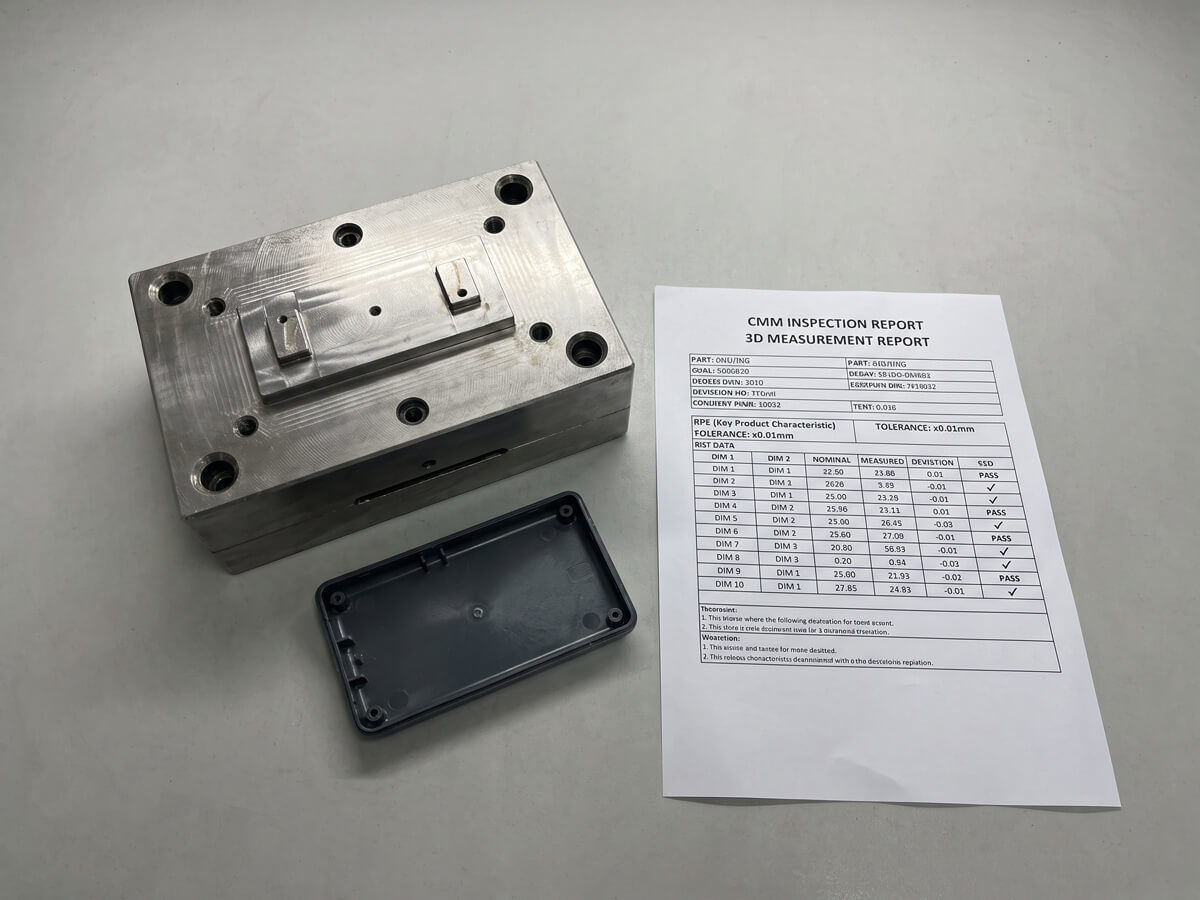
Submit your 3D STEP file and 2D drawing under an upfront NDA. Our senior tooling engineers will review your KPC callouts, optical/VDI surface requirements, and undercut sliders within 24 hours.
How MUD Inserts Cut Tooling Cost and Lead Time
When experienced sourcing managers or hardware engineers receive a quote promising a 30% to 50% tooling cost reduction and 10-day T0 sample delivery, their immediate reaction is skepticism: “Where is the factory cutting corners? Are they skipping cooling channels, using crude hand-knockout pins, or gating straight into the cosmetic A-surface?”
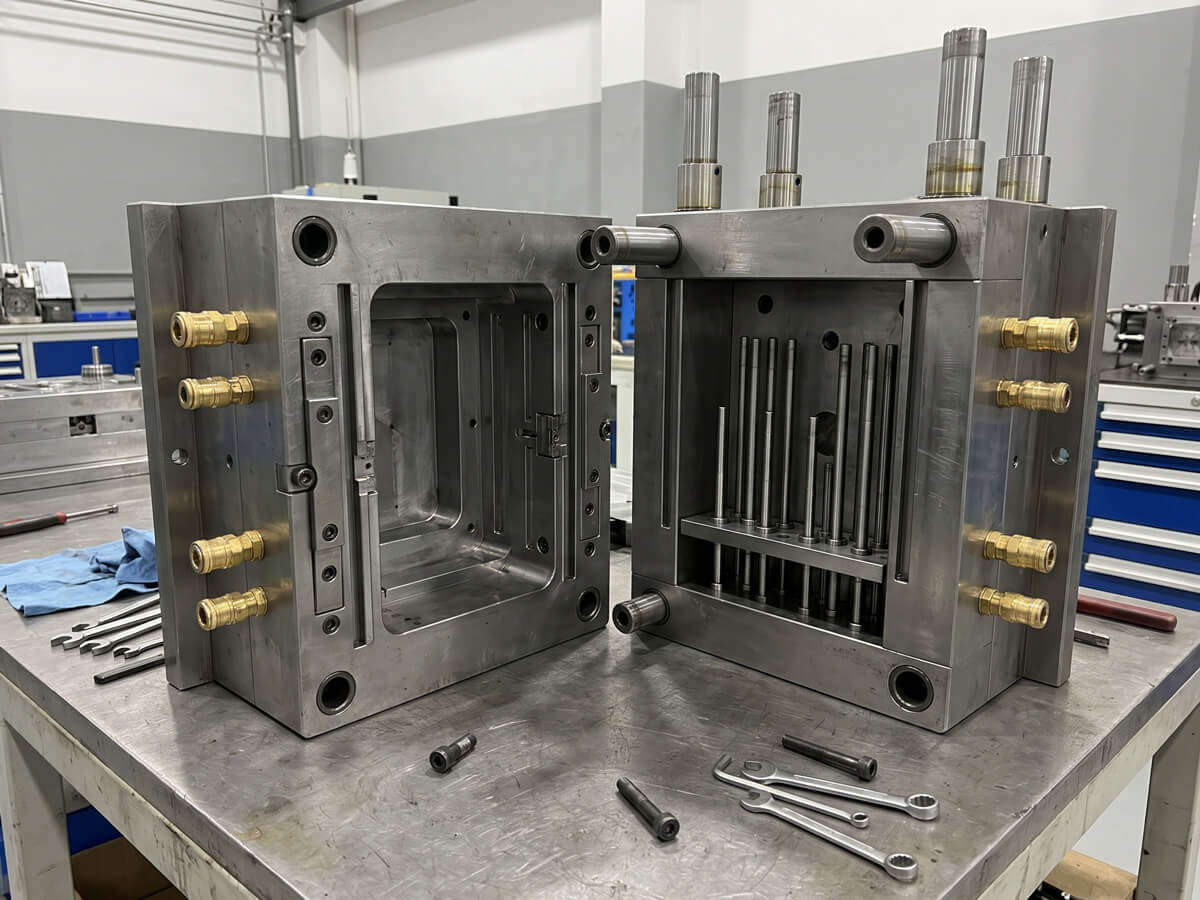
Understanding the mechanical engineering behind a MUD (Master Unit Die) quick-change system reveals why speed and savings come from modular architecture—not from cutting corners on cavity physics:
- Eliminating the 12-Day Outer Mold Base Bottleneck: A conventional injection mold consists of up to 12 heavy steel plates (clamping plates, A/B support plates, spacer blocks, and ejector housings) weighing hundreds of kilograms. Ordering, rough-milling, and precision-grinding that outer structure consumes 35%–40% of total mold cost and nearly two weeks of lead time. In our MUD system, the outer precision master frame is already permanently mounted or pre-staged in our toolroom. You only pay for the compact core and cavity insert blocks that slide into the master frame’s precision T-slots—cutting steel weight by 70% and allowing our CNC spindles to start cutting your part geometry within hours of DFM sign-off.
- Dedicated Conformal & Beryllium-Copper Cooling Inside Every Insert: We never rely on passive heat dissipation through the master frame. Each custom MUD insert is engineered with its own internal O-ring-sealed water cooling circuits, baffles, or high-conductivity beryllium-copper thermal pins connected directly to quick-disconnect manifolds on the MUD base. This ensures uniform mold temperature control so crystalline and amorphous resins solidify without warpage.
- Uncompromised Gate Architecture & Balanced Ejection: Inside your custom MUD insert, our engineers machine the exact gate style your accessory requires—whether that is a concealed submarine (tunnel) gate that auto-degates on ejection, a fan gate to eliminate flow lines on clear polycarbonate, or a curved horn/banana gate for B-side entry. Likewise, each insert houses its own customized ejector plate assembly containing precision ejector pins, sleeves, and blades aligned to ±0.005mm so thin-wall housings eject smoothly without stress marks.
High-Margin Application Cases for Rapid Tooling ($30+ Retail Accessories)
Rather than spreading resources across low-margin commodity parts, YG TECH deploys rapid tooling specifically to help agile SMEs and hardware startups capture high-margin niche markets:
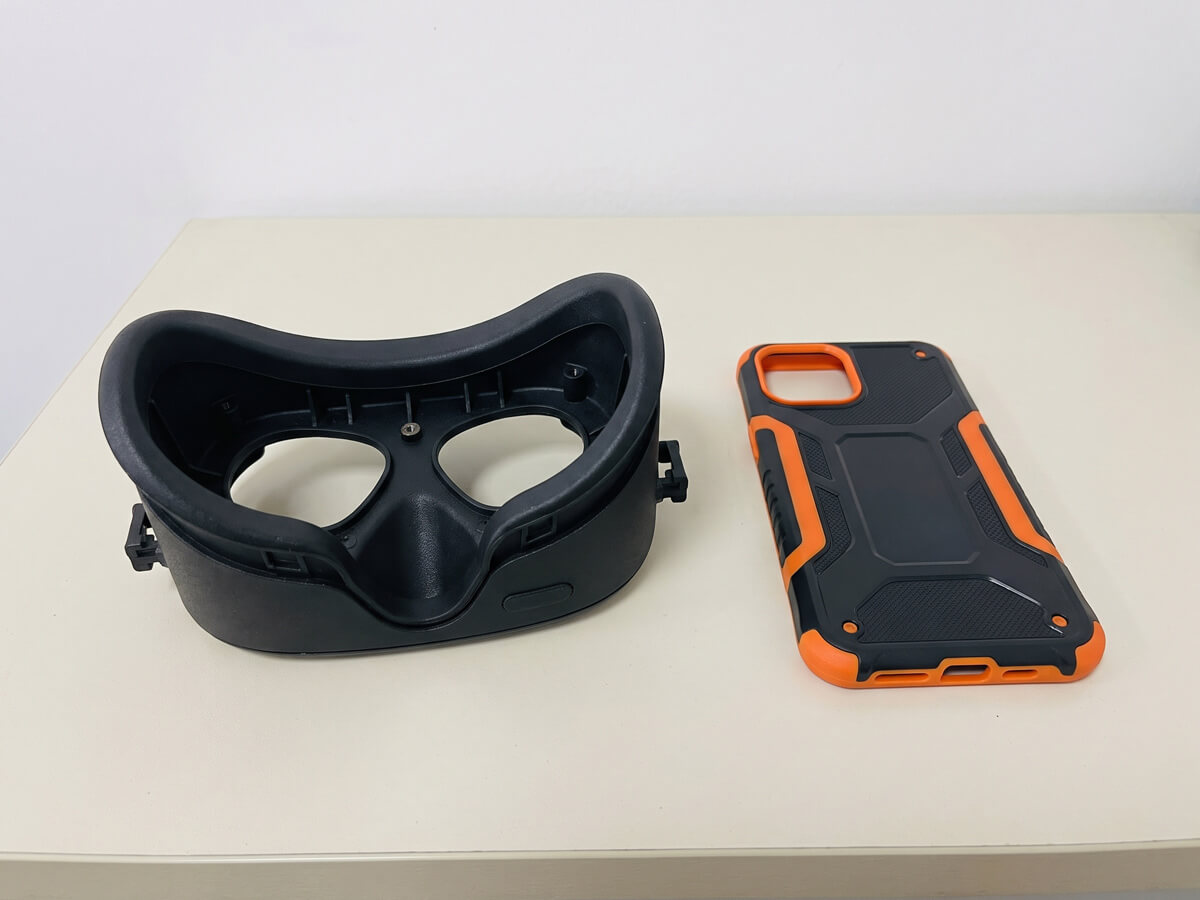
When a new flagship phone launches, timing determines market share. Using MUD rapid tooling and overmolding service lines, accessory brands launch 1,000-unit batches of dual-material PC+TPU rugged cases in 10–12 days while competitors are still waiting on traditional steel tooling.
Enterprise VR/AR hardware requires frequent optical sensor and ergonomic iterations. We mold low-volume glass-filled nylon frames, high-temp PPS brackets, and skin-safe LSR facial gaskets inside our ISO Class 8 cleanroom without locking startups into 50,000-unit commitments.
As demonstrated in our custom PSA slab protector manufacturing case study, mirror-polished NAK80/S136 rapid inserts enable collectible brands and specialty lock-box startups to validate optical clarity and snap-fit child-resistance across multiple SKUs affordably.
How to Vet a Rapid Tooling & Bridge Manufacturing Partner
Many online manufacturing brokers advertise “rapid injection molding,” only to outsource your tool to tiny back-alley workshops that lack metrology equipment or hold your mold hostage when you try to scale. Since 1996, YG TECH has operated as a vertically integrated toolmaker and contract molder built around transparent engineering and commercial governance:
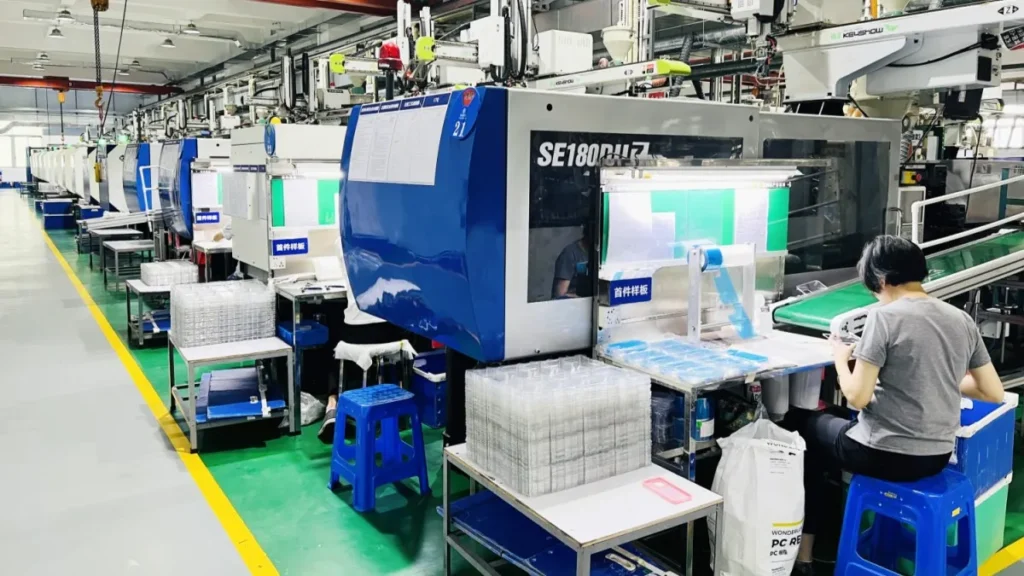
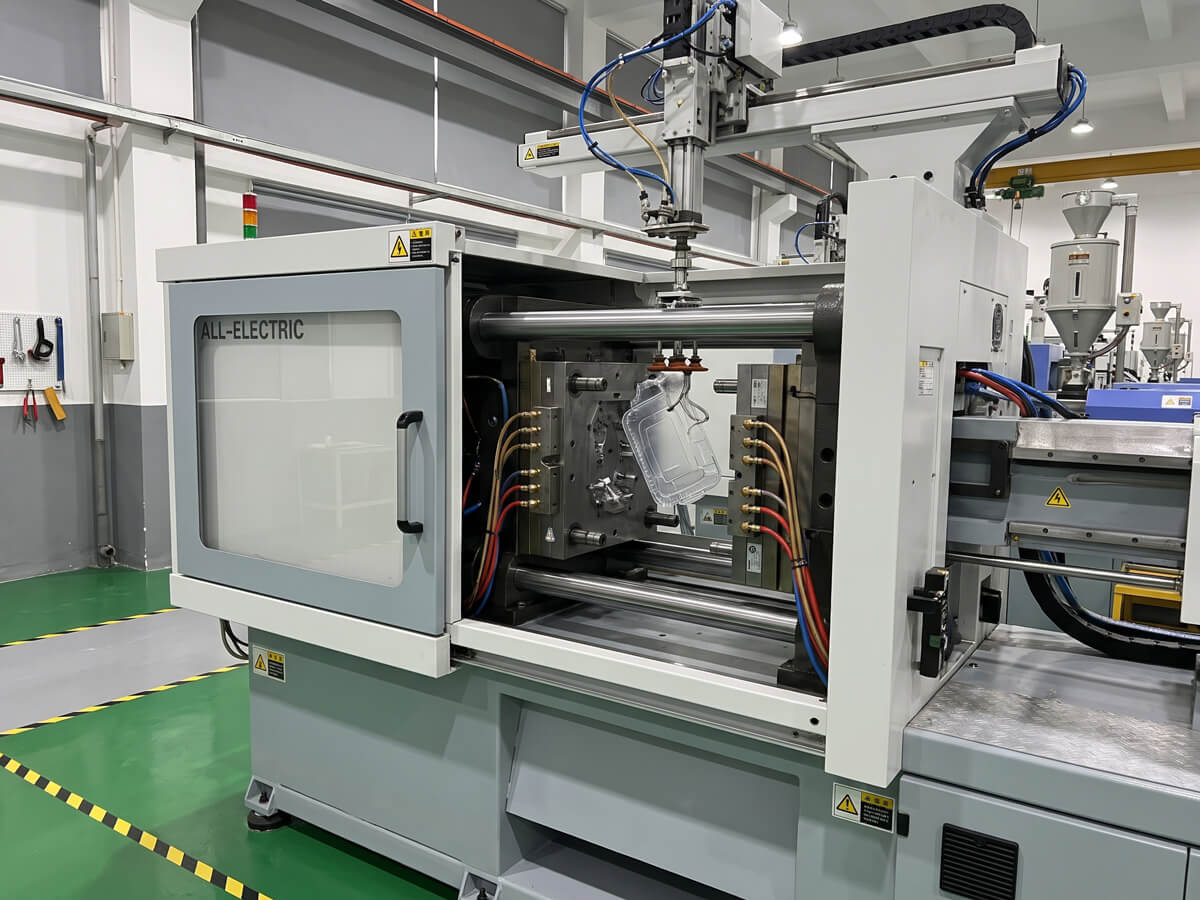
- In-House Press Depth & Cleanroom Scale: We operate 130+ injection molding machines spanning 50T to 800T alongside an ISO Class 8 cleanroom, certified to ISO 9001, ISO 14001, ISO 13485, RoHS, and GRS 4.0 standards, and audited by both Amazon and Walmart.
- Startup-Friendly Commercial Terms: We support a practical 1,000-piece standard MOQ, transparent EXW or door-to-door DDP shipping, and flexible payment options (100% upfront for rapid samples, standard 50% deposit, or Net 30 credit terms for qualified recurring partners).
- Closed-Loop Quality & Advanced Specialty Processes: Beyond standard molding, we offer in-house LSR/LIM, IMD (In-Mold Decoration), IM-3D-E (In-Mold 3D Electronics), and simple PCBA assembly. If any dimensional deviation ever occurs, we execute a closed-loop root-cause engineering investigation and steel-safe adjustment rather than brushing off issues with blind part swaps.
FAQs
What is the difference between rapid tooling and rapid prototyping?
Rapid prototyping produces 1 to 50 single-piece models for early visual and form verification without building a metal injection mold, whereas rapid tooling manufactures a physical metal or silicone mold to injection-mold 100 to 50,000+ functional parts in real production plastics. Key engineering differences include:
- Manufacturing Method: Rapid prototyping services rely on additive 3D printing (SLA/SLS) or direct CNC machining of individual plastic blocks; rapid tooling uses CNC and EDM to cut a mold cavity used on an injection press.
- Material Properties: 3D-printed prototypes exhibit anisotropic layer weakness and simulated resin chemistry; rapid-tooled parts possess true isotropic injection-molded weld strength, snap-fit elasticity, and chemical resistance.
- Unit Economics: Rapid prototyping is cheapest for 1 to 25 units; rapid tooling becomes significantly cheaper per unit once volume exceeds 250 to 1,000 pieces.
What materials can be used in rapid tooling for injection molding?
Rapid tooling for injection molding primarily utilizes four categories of mold materials, selected according to required shot life, resin abrasiveness, and clamping pressure:
- P20 Pre-Hardened Tool Steel (28–32 HRC): The industry workhorse for MUD rapid tooling inserts, supporting 10,000 to 50,000 shots with excellent CNC machinability and weldability.
- NAK80 & Pre-Hardened S136 Steel (36–42 HRC): Used for rapid tools requiring SPI A-2 mirror optical finishes, VDI 3400 EDM textures, LSR liquid silicone molding, or 50,000 to 100,000+ bridge shots.
- High-Strength Aluminum Alloys (7075-T6 / QC-10): Used for low-pressure, non-abrasive thermoplastic runs between 1,000 and 10,000 shots where fast thermal dissipation is prioritized.
- RTV Silicone & 3D-Printed Photopolymer/DMLS Cores: Used strictly for ultra-low-volume urethane vacuum casting (20–50 shots) or low-pressure pilot testing under 200 shots.
How much cheaper is rapid tooling than conventional tooling?
Rapid tooling is typically 30% to 60% cheaper upfront than conventional standalone production tooling. The exact cost savings depend on the mold architecture and cavitation:
- MUD Shared-Frame Steel Inserts (30%–45% Savings): By inserting custom P20 or NAK80 core/cavity blocks into YG TECH’s standardized Master Unit Die (MUD) frame, you eliminate the cost of purchasing and machining a dedicated outer mold base.
- Single-Cavity Aluminum Molds (40%–60% Savings): Faster CNC metal removal rates and zero heat-treatment costs reduce upfront capital expenditure for simple geometries without moving sliders.
- Design Iteration Savings: Modifying a rapid tool insert during DVT costs a fraction of re-machining an 8-cavity hardened H13 production tool.
How fast can a rapid tool be built and delivered?
A direct metal rapid injection mold can be built and deliver T0 first-article samples in 7 to 15 calendar days, compared to 4 to 8 weeks for a conventional production mold. Typical timelines by complexity are:
- Simple Open/Shut MUD Rapid Tool (No Sliders): 10 days from final 3D CAD/DFM approval to T0 molded samples.
- Complex MUD Rapid Tool (With Side Sliders, Lifters, or 2K Overmolding): 12 to 15 days to T0 sample dispatch.
- Urethane Silicone Soft Tooling (Vacuum Casting): 5 to 7 days for 10 to 50 cast units.
Can you use real production plastics with rapid tooling?
Yes, direct metal rapid tooling (machined from P20, NAK80, S136 steel, or 7075 aluminum) runs on standard 50T–800T injection presses and supports 100% genuine production-grade thermoplastics and elastomers. Supported production materials include:
- Amorphous & Optical Resins: Polycarbonate (PC), ABS, PC/ABS blends, PMMA (Acrylic), and GRS 4.0 certified Post-Consumer Recycled (PCR) plastics.
- Semi-Crystalline & High-Temp Engineering Resins: PA6/PA66 (including glass-fiber reinforced grades), POM (Acetal), PBT, and specialty Polyphenylene Sulfide (PPS).
- Flexible Elastomers: Thermoplastic Polyurethane (TPU), TPE, and platinum-cured Liquid Silicone Rubber (LSR/LIM) for waterproof seals and 2K overmolding.
What is the lifespan of a rapid injection mold?
The lifespan of a rapid injection mold ranges from 20 shots to over 100,000 shots depending on the tooling material and the abrasiveness of the injected polymer:
- Silicone Vacuum Casting Mold: 20 to 50 shots per silicone cavity before dimensional degradation.
- 3D-Printed Polymer / Composite Mold Insert: 50 to 250 shots under low-pressure injection.
- 7075-T6 / QC-10 Aluminum Rapid Mold: 2,000 to 10,000 shots with unfilled resins (fewer if running glass-filled plastics).
- P20 Pre-Hardened Steel MUD Insert: 10,000 to 50,000 shots with full dimensional stability.
- NAK80 / S136 Pre-Hardened Steel MUD Insert: 50,000 to 100,000+ shots, serving as a long-term bridge or full lifecycle tool for mid-volume SME accessories.
Accelerate Your Launch With 10-Day MUD Rapid Tooling
Ready to validate your hardware accessory in real production plastics without paying for a full standalone mold base? Upload your 3D CAD files under our binding upfront NDA for a complete engineering DFM review and side-by-side tooling quote.
Hold ±0.01mm precision in P20/NAK80 steel inserts with a 1,000-unit MOQ, 100% client mold ownership, and EXW/DDP delivery.
Upload 3D Files for 10-Day MUD Quote →Not sure whether your annual volume favors a 50k-shot MUD insert or a 300k-shot S136 production mold? Let our engineers calculate your break-even point.
Speak With a Senior Tooling Engineer →