
Selecting a rapid prototyping vendor looks simple when you only need a rough desk model. However, for hardware startups, mid-sized consumer brands, and mechanical engineers developing high-value plastic accessories retailing above $30—such as multi-layer rugged smartphone cases, industrial VR/AR headset frames, graded trading card (PSA slab) protectors, or child-resistant enclosures—a prototype must do far more than look good. It must validate snap-fit fatigue, verify simple PCBA clearances, pass drop tests, and transition smoothly into injection molding without forcing a complete CAD redesign.
Hiring a pure-play 3D printing bureau or an unverified online broker often strands your engineering team once you move from 5 prototypes to 1,000 pilot units. Drawing on YG TECH’s nearly three decades of manufacturing experience since 1996, here is a practical engineering framework for vetting a rapid prototyping services partner capable of carrying your hardware from EVT concept to cleanroom mass production.
1. Match Prototyping Technologies to Your Material and Tolerance Needs
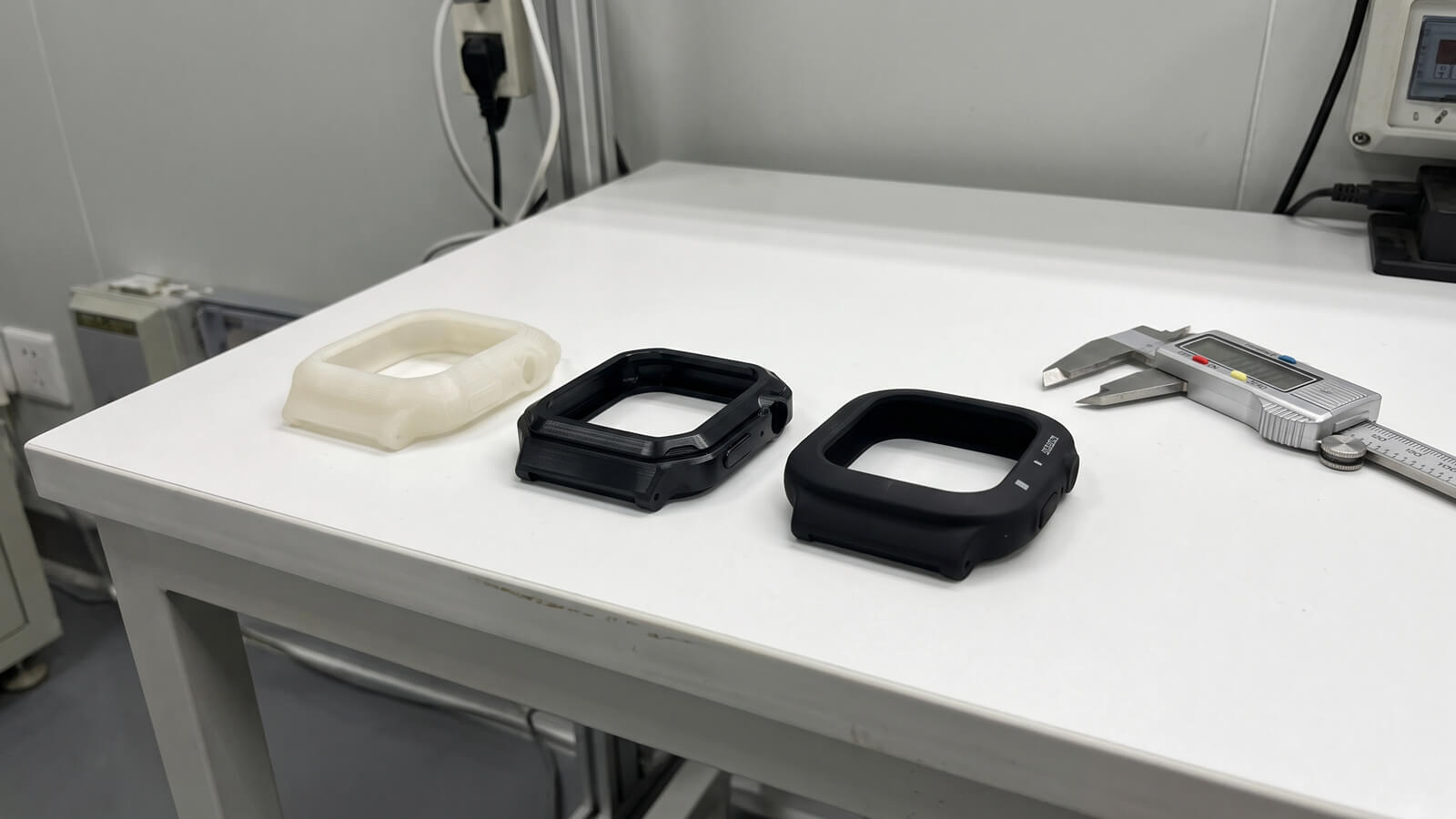
Before requesting quotes, clarify the functional goal of your prototype. A reliable partner should never push a single technology for every stage; instead, they should operate an integrated multi-process toolroom covering four distinct prototyping tiers:
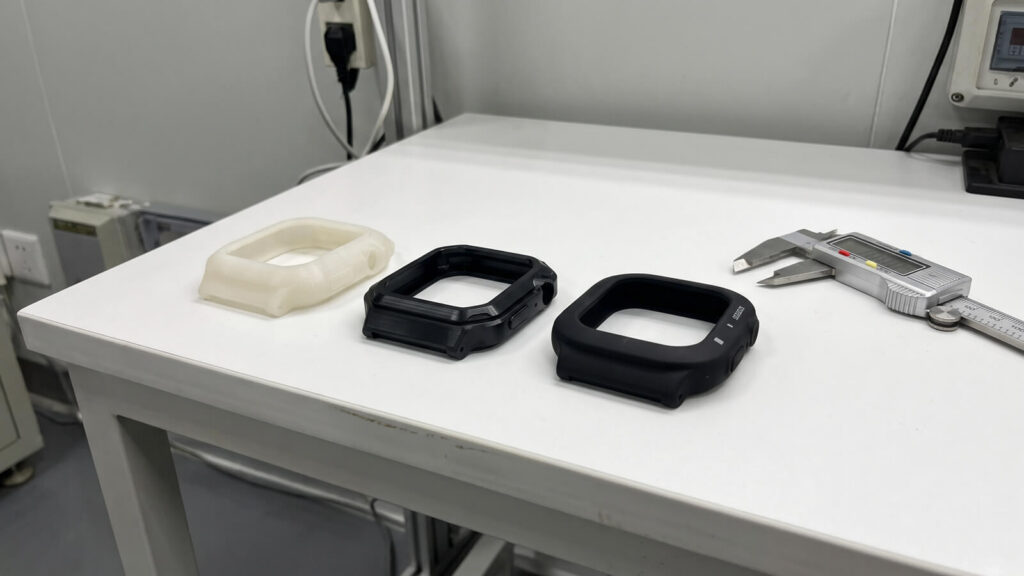
Ideal for early ergonomic form checks and complex internal lattices via rapid prototyping 3D printing services. Holds ±0.10mm tolerances in simulated ABS, tough resin, or PA12 nylon.
Machines solid blocks of real production plastics (PC, ABS, POM, PPS, PMMA) and metals to ±0.02mm–±0.05mm via rapid prototyping CNC machining for true drop and thermal testing.
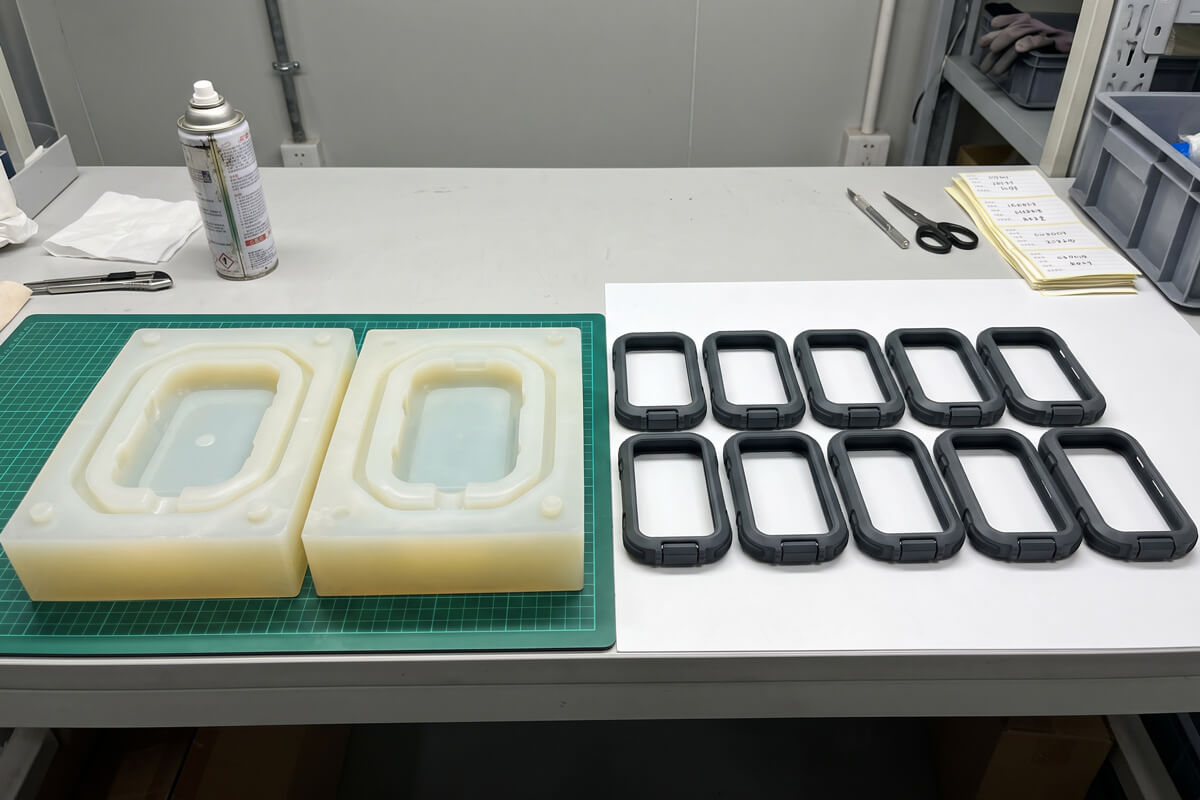
Uses RTV silicone molds under vacuum casting services to replicate production textures, optical clarity, and Shore A overmolded elastomers at low unit cost.
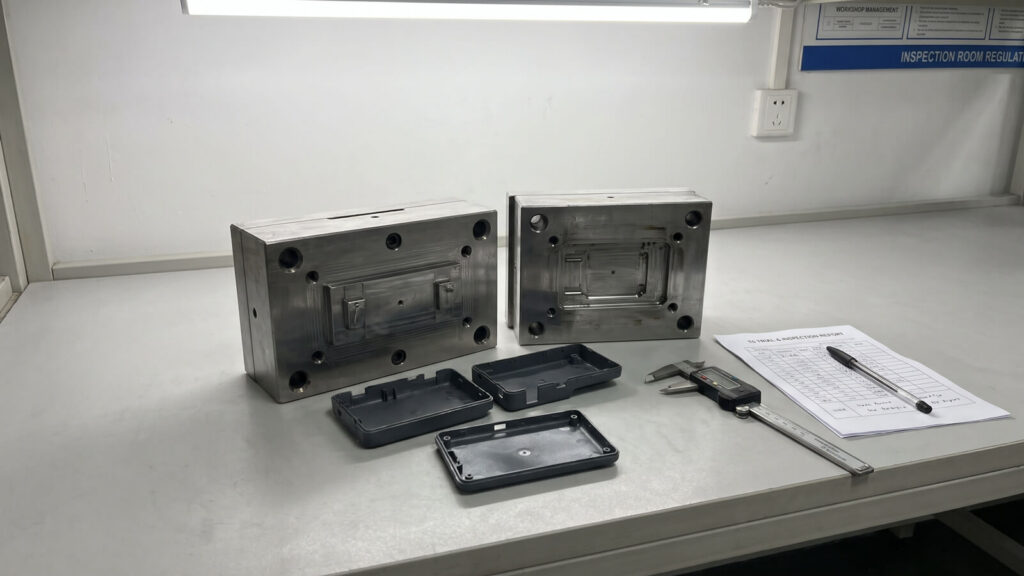
Cuts P20/NAK80 steel inserts inside a shared Master Unit Die frame via rapid tooling services—slashing mold costs by 30% with 10-day T0 molded samples.
2. Audit Technical Pedigree, Metrology, and Bridge-to-Production Scale
Over 60% of hardware launch delays occur when a startup has to switch from a prototype job shop to a mass-production factory that rejects the initial CAD geometry as unmoldable (Source: SME / Society of Manufacturing Engineers). When evaluating a supplier’s technical depth, verify both their prototyping precision and their downstream manufacturing ceiling:
- Upfront DFM for Future Injection Molding: Even when machining a single CNC prototype, our engineers review your STEP file through a moldmaker’s lens—flagging zero-draft walls, knife-edge shut-offs, and thick sink-mark zones so you don’t validate a prototype that cannot be injection molded later.
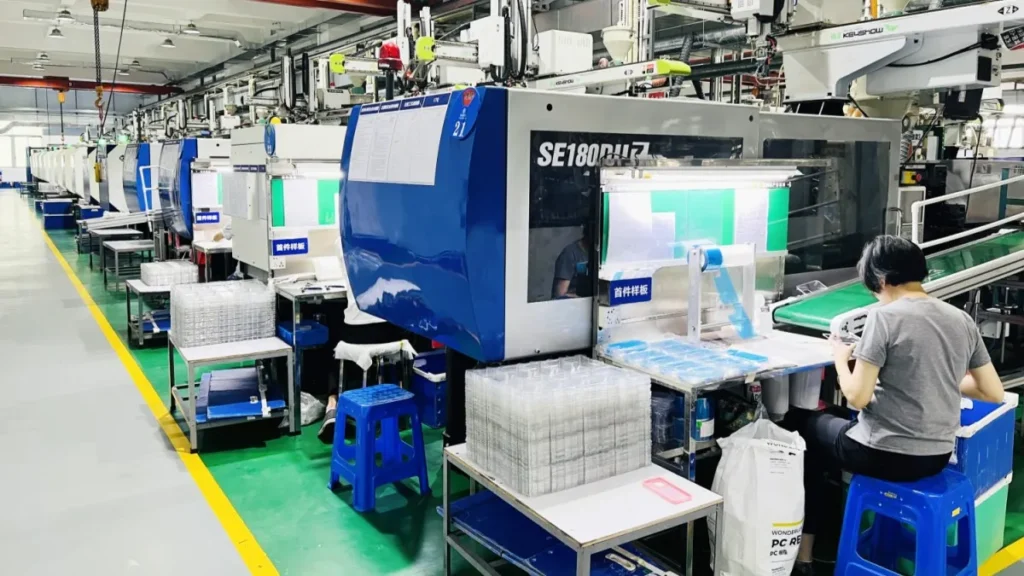
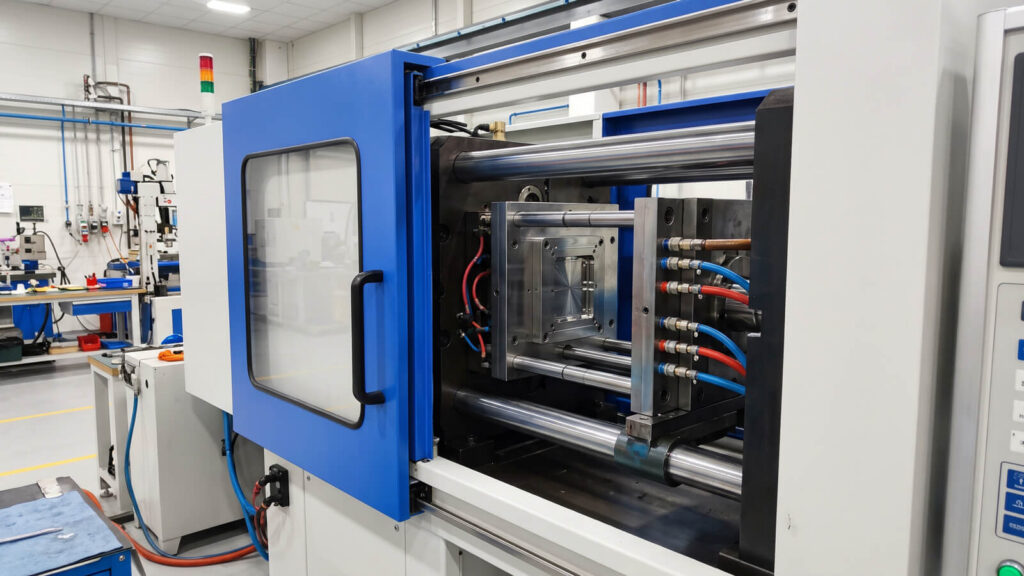
- Verified ISO Certifications & Cleanroom Facilities: Look beyond basic workshop claims. YG TECH operates under ISO 9001, ISO 14001, ISO 13485 (medical traceability), RoHS, and GRS 4.0 certifications, and has passed both Amazon and Walmart factory audits. For optical polycarbonate protectors, VR lenses, and LSR (Liquid Silicone Rubber) wearables, we transition prototypes directly into our ISO Class 8 cleanroom and 130+ injection molding presses (50T–800T).
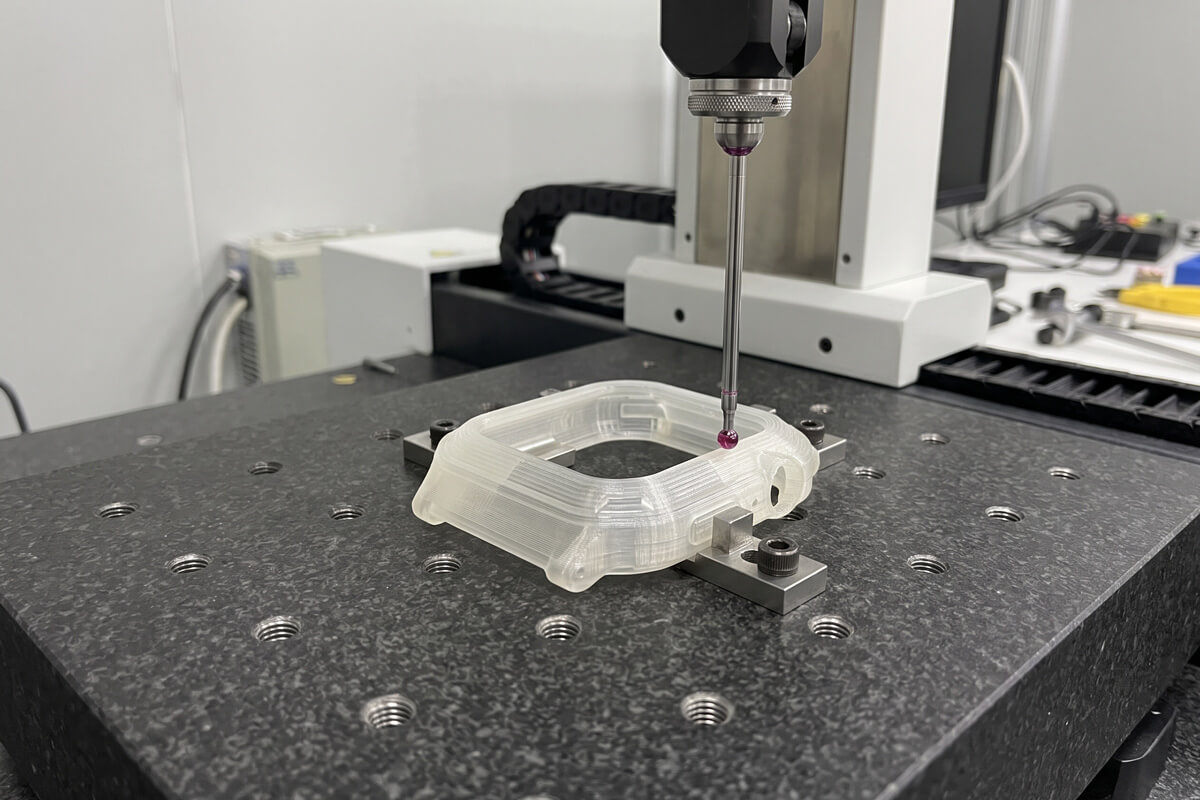
- Optical & CMM Quality Verification: A reliable prototype supplier ships parts with dimensional data—not guesswork. Every functional prototype and T0 sample is verified using 3D Coordinate Measuring Machines (CMM) and 2.5D optical vision systems capable of inspecting ±0.01mm mold tolerances.
3. Evaluate Case Studies, Responsiveness, and Project Flexibility
Hardware development is inherently iterative. When reviewing a vendor’s case studies and communication workflow, assess how they handle fast-moving engineering changes:
- Returns annotated DFM feedback and itemized quotes within 24 hours.
- Demonstrates real production cases in $30+ accessories (VR headsets, mechanical keyboards, PSA slab protectors, 2K phone cases).
- Supports mid-project CAD revisions and multi-material processes (LSR, IMD, IM-3D-E, and specialty PPS resins).
- Enforces a closed-loop quality protocol—tracing root causes and re-machining out-of-spec features rather than making excuses.
- Relies exclusively on automated algorithms with no human engineer reviewing snap-fit or assembly tolerances.
- Farms your CAD files out to unvetted cottage workshops without binding IP controls.
- Bonds multi-piece glued CNC blocks together without warning you that structural strength will fail drop testing.
- Cannot support low-volume bridge runs (1,000 pcs MOQ) once your prototype is approved.
Upload your STEP files under a binding upfront NDA. Our engineers will recommend the most cost-effective path across CNC, vacuum casting, or MUD rapid tooling.
4. Demand Cost Transparency, IP Security, and Scalable Commercial Terms
A trustworthy prototyping partner structures commercial terms to protect both your intellectual property and your working capital as you transition from prototyping into production:
- Itemized Quote Breakdowns: Insist on quotes that separate raw material weight, CNC/3D printing machine hours, secondary surface finishing (such as VDI texturing, painting, or anodizing), and express air freight.
- Upfront NDA & 100% Tooling Ownership: We execute a strict Non-Disclosure Agreement before reviewing your files. When your project advances to vacuum casting masters or MUD/steel injection molds, 100% of the mold ownership transfers unconditionally to you upon full payment.
- Seamless Transition to 1,000-Piece MOQs: Once your prototype passes validation, YG TECH supports a startup-friendly 1,000-unit standard MOQ with EXW or door-to-door DDP shipping and flexible payment structures—covering 100% upfront for rapid prototypes, standard 50% deposit for initial production runs, and Net 30 credit terms for established recurring partners.
Frequently Asked Questions
What is the difference between a rapid prototyping shop and a low-volume manufacturing supplier?
A rapid prototyping shop focuses exclusively on producing 1 to 50 single-stage models via 3D printing or CNC machining, whereas a low-volume manufacturing supplier operates bridge tooling (vacuum casting and MUD rapid injection molding) to deliver 100 to 10,000+ production-grade parts under one roof. Key operational differences include:
- Process Continuity: Pure prototype shops lack injection presses, forcing you to find and re-qualify a new factory once you need 500 to 5,000 units.
- DFM Perspective: A low-volume manufacturer like YG TECH audits your early prototype CAD for draft angles, parting lines, and uniform wall thickness so the design scales directly into a 10-day MUD rapid mold without costly CAD rework.
- Material Authenticity: Prototype shops rely heavily on photopolymer resins; low-volume manufacturers mold real engineering thermoplastics (PC, ABS, PA66+GF, PPS, TPU, and LSR) across 50T–800T presses.
How long should a rapid prototype take to be produced and shipped?
A standard rapid prototype takes between 3 and 10 calendar days from CAD approval to doorstep delivery via international air express (DHL/FedEx), depending on the manufacturing process and secondary finishing complexity:
- SLA / SLS 3D Printed Prototypes: 1 to 3 days for printing and basic bead-blasting, plus 2 to 3 days for air shipping (3–6 days total).
- 5-Axis CNC Machined Functional Prototypes: 3 to 6 days for CAM programming, milling, and CMM inspection, plus 2 to 3 days shipping (5–9 days total).
- Urethane Vacuum Casting (10–50 Units): 5 to 8 days to machine the master pattern, cure the RTV silicone mold, and cast polyurethane copies.
- MUD Rapid Injection Tooling (500–5,000+ Units): 10 to 14 days to machine P20/NAK80 steel inserts and ship T0 injection-molded samples.
Why are rapid prototyping quotes for the exact same CAD file so wildly different?
Price spreads of 300% to 500% on the exact same CAD file are driven by hidden differences in machining strategy, material integrity, post-processing labor, and broker markups:
- Solid Block Machining vs. Split-and-Glue Shortcuts: Ultra-low CNC quotes often slice a deep housing into multiple flat plates and cyanoacrylate-glue them together, destroying drop-test strength; reputable shops machine from a single solid billet on a 5-axis mill.
- 3D Print Infill & Step Layer Height: Cut-rate bureaus print at coarse 0.15mm layers with 15% hollow infill instead of dense 0.05mm high-resolution solid layers.
- Hand Finishing & Metrology Omission: Low-ball quotes ship parts with visible CNC cutter marks (“as-machined” Ra 3.2 μm) and zero CMM dimensional verification, whereas cosmetic prototypes require hours of skilled sanding, vapor polishing, or painting.
- Platform Broker Margins: Western online quoting platforms routinely add a 40% to 65% middleman markup on top of the actual factory floor cost.
What CAD file formats are best for getting an accurate rapid prototyping instant quote?
Native parametric solid formats—specifically STEP (.stp / .step) and Parasolid (.x_t)—are the best CAD formats for rapid prototyping and tooling quotes, paired with a 2D PDF drawing for critical tolerances. Format guidelines by process include:
- STEP (.stp / .step) & IGES (.igs): Mandatory for CNC machining, vacuum casting, and injection molding DFM because they preserve exact NURBS mathematical curvature and solid wall thicknesses.
- 2D Engineering Drawings (.pdf): Essential whenever your part has Key Product Characteristics (KPC) tighter than ISO 2768-m, tapped thread callouts (e.g., M2.5×0.45), Pantone color codes, or VDI 3400 surface texture specs.
- STL (.stl) & OBJ (.obj): Acceptable only for basic 3D printing; never submit STL files for CNC or tooling because tessellated triangle meshes destroy true cylindrical holes and precision mating faces.
Is it better to use a local prototyping service or outsource overseas to China?
Using a local prototyping shop is best for single-piece, next-day emergency 3D prints, whereas partnering directly with an ISO-certified Chinese manufacturer like YG TECH reduces Total Cost of Ownership (TCO) by 35% to 60% for CNC prototypes, cosmetic assemblies, vacuum casting, and bridge tooling:
- When Local Bureaus Make Sense: Unfinished 1–2 piece FDM/SLA prints needed within 24 hours where shipping time outweighs part price.
- When Direct China Sourcing Wins on TCO & Speed: Multi-part CNC enclosures, painted/anodized showpieces, 20-unit silicone vacuum casts, and 10-day MUD rapid tooling. Even factoring in 3-day DHL/FedEx air express or DDP delivery, China’s mature supply chain of optical polishing, VDI texturing, and round-the-clock spindle capacity often delivers finished assemblies faster and at less than half the domestic price.
What secondary finishing processes can a rapid prototyping company provide?
A full-service rapid prototyping manufacturer provides comprehensive in-house surface finishing to make prototypes visually and functionally identical to mass-production retail products:
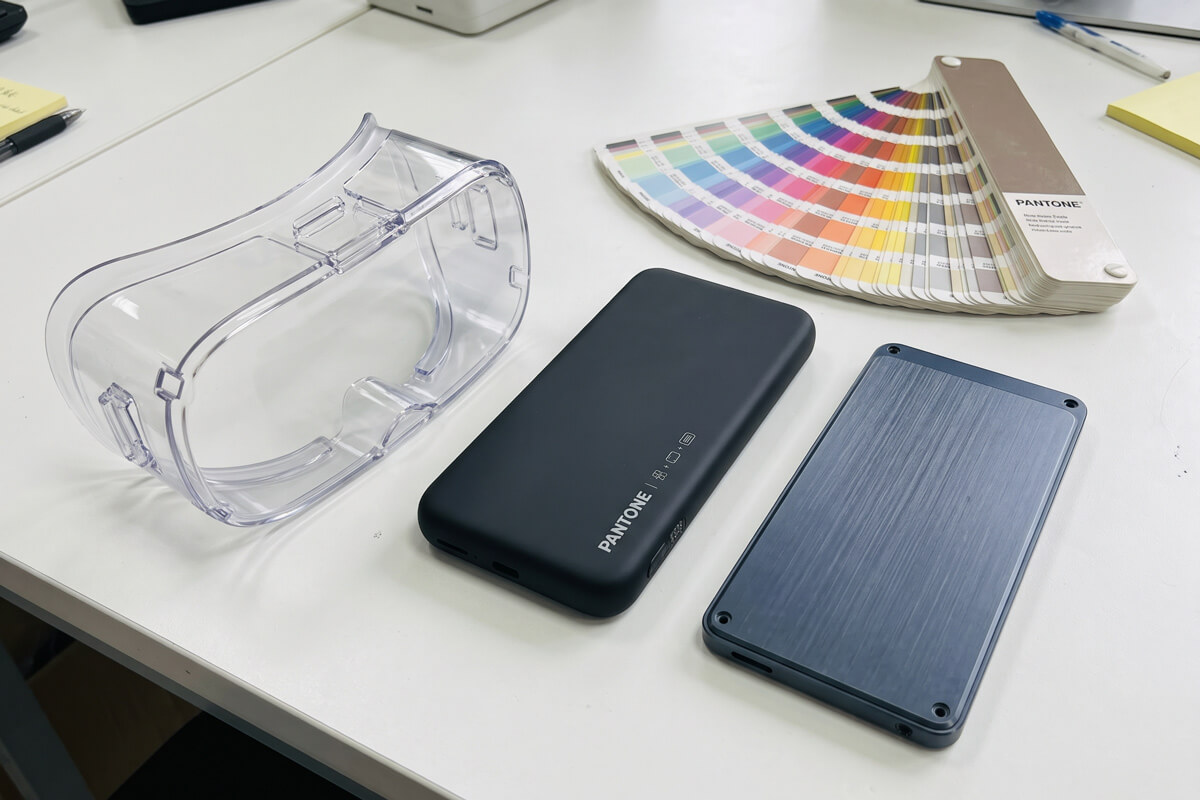
- Mechanical & Optical Polishing: Hand sanding (up to 2000-grit), bead blasting for uniform matte satin surfaces, and chemical vapor polishing to turn CNC-machined PMMA or polycarbonate crystal clear.
- Coatings & Color Matching: Custom Pantone spray painting (gloss, matte, or metallic), UV-resistant clear coats, and rubberized soft-touch polyurethane coatings.
- Metal & Conductive Treatments: Type II and Type III hard-coat anodizing for aluminum inserts, chromate conversion, EMI/RFI internal conductive shielding spray, and vacuum metallization (PVD).
- Branding & Sub-Assembly: Silk-screen printing, pad printing, precision UV laser engraving, ultrasonic brass threaded insert heat-staking, and simple PCBA drop-in assembly.
Validate Faster and Scale Smoothly With YG TECH
From 3-day 5-axis CNC functional prototypes to 10-day MUD rapid tooling and ISO Class 8 cleanroom molding, we keep your entire hardware development pipeline under one accountable roof: