

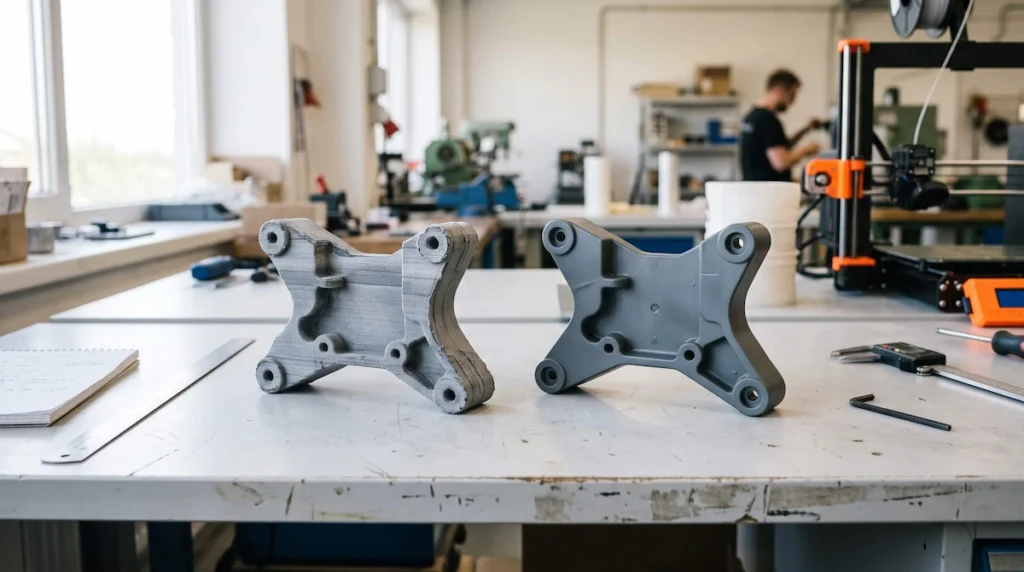
“How much cheaper is injection molding?” is a question we get asked constantly, and it’s almost always the wrong first question. The honest starting point isn’t which process is cheaper — it’s what you’re actually paying for in each one. 3D printing and injection molding charge for different things, in a different order, and the moment you break the quote into line items, the number stops feeling arbitrary.
This is the companion piece to the general process comparison we’ve written before — here, we’re only doing the math for custom plastic injection molding versus 3D printing. Material cost, machine time, tooling, labor, post-processing, and the freight bill nobody mentions until the invoice arrives.
What You’re Actually Paying For, Line by Line
Both processes bill for material, machine time, and labor. The difference is in the proportions — and in one line item that only one of them has.
3D Printing
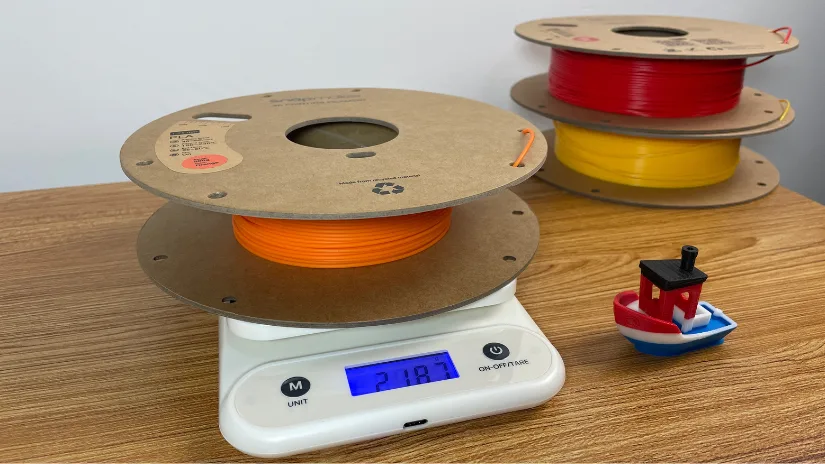
- Material: $20–$30/kg for standard FDM filament, up to $150–$550/kg for engineering-grade filament, SLS powder, or SLA resin
- Machine time: hourly depreciation + energy, billed for the full print duration
- Labor: setup, support removal, and finishing — billed per part, every part
- Failure allowance: typically 10–15% added to cover failed prints
Injection Molding
- Tooling: a one-time charge, amortized across every part the mold ever produces
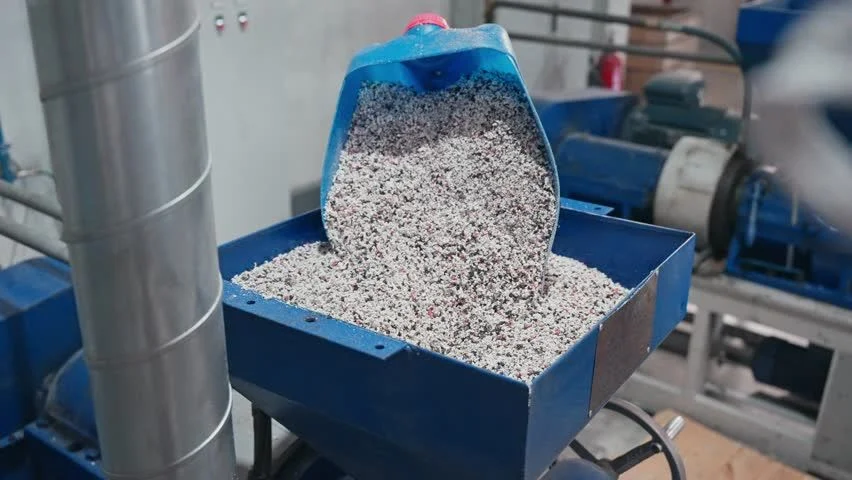
- Material: commodity resin typically $2–$5/kg, far below most 3D printing feedstock
- Machine time: hourly rate × cycle time, divided across every cavity in the mold
- Labor: largely automated after setup — minimal per-part labor cost
The structural difference in one sentence: 3D printing’s cost is almost entirely variable, so it barely changes whether you order 1 part or 100. Injection molding front-loads a fixed cost, then charges very little per part after that — which is exactly why the two lines cross at some point, rather than one simply beating the other everywhere.
The Real Numbers: Cost Per Part From 1 Unit to 5,000 Units
Take a mid-sized plastic housing as a working example: an aluminum bridge tool costs $6,000, SLS printing the same part runs about $45 per unit all-in, and injection molding it costs roughly $1.50 per part once the tool is paid for. Spread the tooling cost across volume, and here’s what the effective per-part price looks like at each stage:
| Quantity | 3D Printing (SLS) | Injection Molding | Cheaper Option |
|---|---|---|---|
| 1 | $45.00 | $6,001.50 | 3D printing |
| 10 | $45.00 | $601.50 | 3D printing |
| 50 | $45.00 | $121.50 | 3D printing |
| 100 | $45.00 | $61.50 | 3D printing |
| ~138 | $45.00 | $45.00 | Crossover point |
| 500 | $45.00 | $13.50 | Injection molding |
| 1,000 | $45.00 | $7.50 | Injection molding |
| 5,000 | $45.00 | $2.70 | Injection molding |
Example figures for a mid-sized housing part. Your actual crossover point moves with part size, tooling cost, and 3D printing process — but the shape of the curve holds for almost any part.
Where Each Side Hides Costs the Headline Number Doesn’t Show
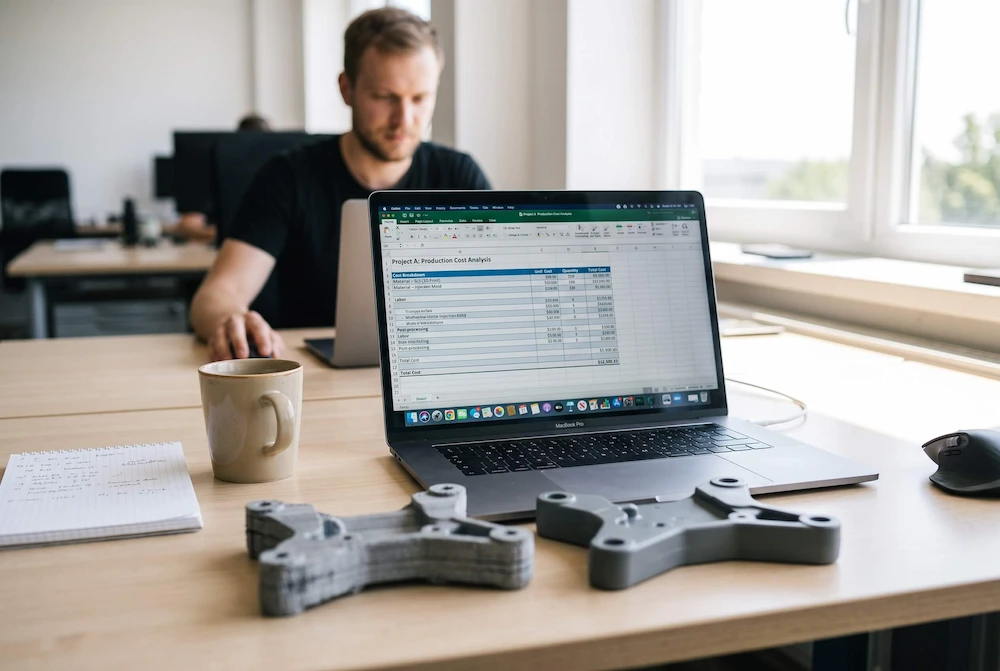
Neither quote is dishonest, exactly — but neither one leads with its full cost either.
On the 3D printing side:
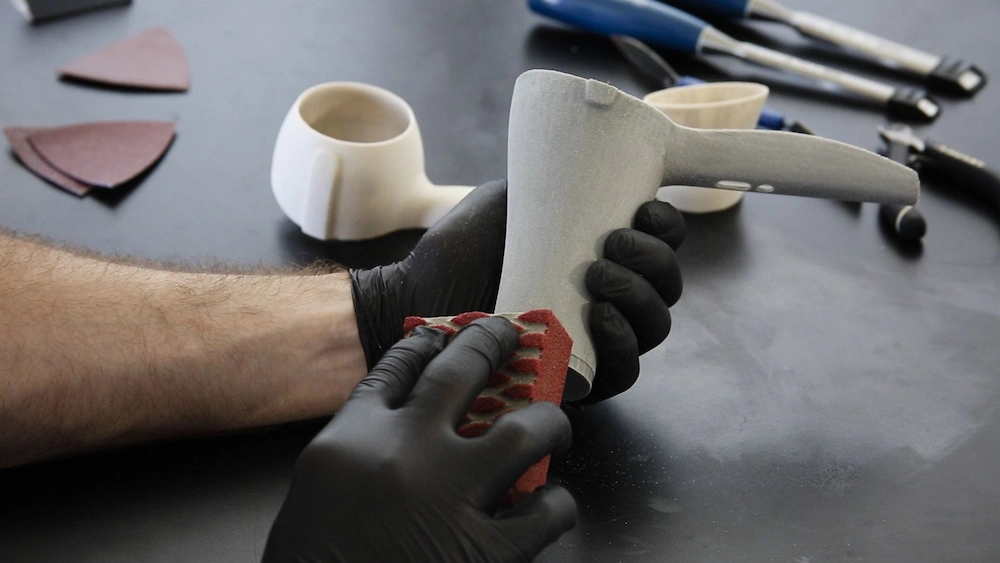
- Post-processing labor — support removal, sanding, curing — commonly adds 30–50% on top of the base print cost for parts that need a clean finish
- Failed prints act as a direct cost multiplier; budgeting 10–15% extra for reprints is standard practice, not pessimism
- Closed-material printer systems can carry proprietary filament or resin markups of up to 500% over open-market equivalents, which quietly inflates the per-kg number used in your original estimate
(Source: MakerVerse, 3D Printing Costs Explained)
On the injection molding side:
- DFM revision, T1 sampling, and mold-modification fees are frequently billed separately from the headline tooling number
- Export packaging and mold storage fees can appear on the invoice with little advance notice
We’ve covered these tooling-side fees in detail in our full injection mold cost breakdown — worth a read if tooling itself is the number you’re trying to pin down.
The Landed-Cost Wildcard: Freight, Duties, and Lead Time
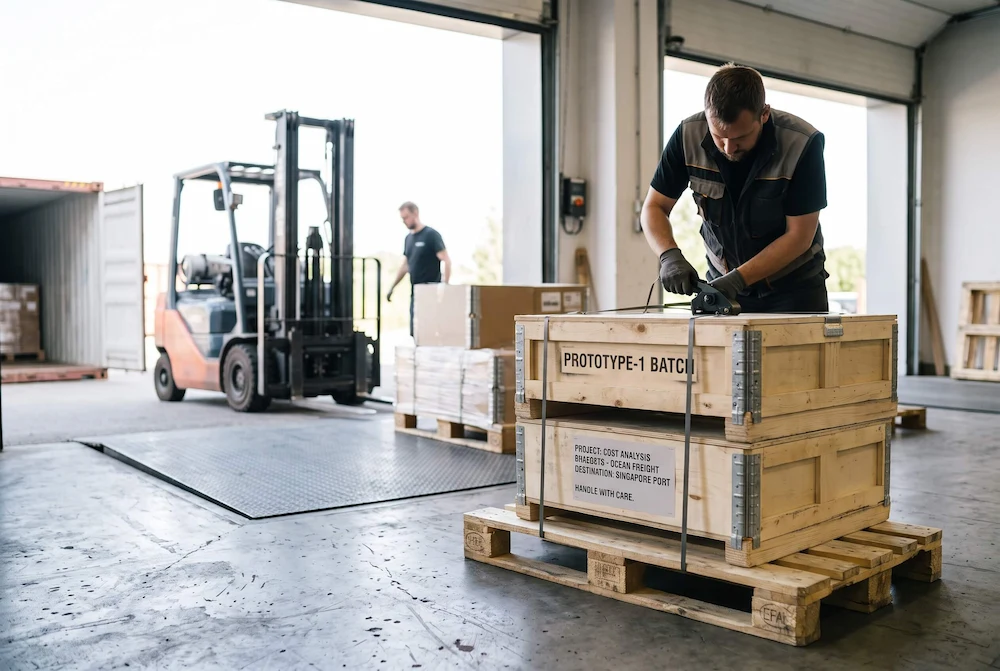
If your injection-molded parts are coming from overseas, the factory’s quoted price is only the first line of the real number. Landed cost adds ocean or air freight, insurance, customs duties, and brokerage — and none of those show up on the tooling or per-part quote itself.
A few things worth knowing before you assume the factory price is the final price:
- Ocean freight typically takes 20–40 days transit and is priced by container or by shipment volume for smaller loads, while air freight moves faster at a real premium
- Duties, tariffs, and customs rules on goods from China have shifted multiple times in recent years, so a landed-cost estimate is only as good as its most recent update — always ask your forwarder for current numbers, not last year’s
- At very low volumes, a domestic 3D printing bureau with zero freight or duty overhead can look more competitive than the raw unit-price comparison suggests — but that gap closes fast once volume clears the crossover point, because landed freight and duty cost per unit shrinks the same way tooling cost does
(Source: Topway Shipping, Real Landed Cost Calculator 2026)
If the six-month wait for a full production mold is what’s pushing you toward 3D printing for an interim run, it’s worth knowing there’s a middle path: a rapid bridge tooling program can get you real injection-molded parts, in your actual production resin, in a matter of weeks rather than months — which changes the landed-cost math considerably compared to printing your entire bridge quantity.
None of this makes one process categorically cheaper. It makes the honest answer specific to your part, your volume, and where your factory sits on the map — which is exactly what a real quote, not a rule of thumb, is for.
Frequently Asked Questions
Which is cheaper for a one-off prototype, 3D printing or injection molding?
3D printing, almost always. A single injection-molded part effectively costs the entire tooling price, since there’s no volume to spread it across — 3D printing has no comparable fixed cost to amortize.
How much does 3D printing typically cost per part?
It depends heavily on process and finish requirements, but most functional parts land somewhere between $15 and $60 per unit once labor and post-processing are included.
- FDM: generally the least expensive, especially for simple geometries with minimal supports
- SLA/SLS: higher material and post-processing cost, but better surface finish and mechanical consistency
- Post-processing labor is frequently the largest single line item, not the material itself
How much does injection mold tooling typically cost?
Tooling generally runs from about $1,000 for a simple aluminum prototype mold to $60,000 or more for a complex multi-cavity production tool.
See our full tooling cost breakdown for ranges by mold type, steel grade, and cavity count.
Does injection molding really get cheaper at higher volumes?
Yes — the tooling cost is fixed, so spreading it across more parts drives the effective per-part cost down continuously.
- At 100 units, tooling amortization might add $60 to each part’s cost
- At 5,000 units, that same tooling cost adds just over $1 per part
- Variable cost per part (resin and machine time) stays roughly flat regardless of volume
What hidden costs does a 3D printing quote usually leave out?
Post-processing labor is the big one — commonly 30–50% on top of the base print price.
- Support removal and sanding time, often billed separately or not billed at all until it’s too late to budget for
- A failure/reprint allowance, typically 10–15% of the job
- Proprietary material costs on closed-system printers, which can run well above open-market filament or resin pricing
Does overseas injection molding stay cheaper than domestic 3D printing once freight and duties are added?
Usually yes, past the crossover volume — but the margin narrows at low quantities.
- Freight and duties add a real per-unit cost, but that cost also shrinks per part as order volume grows
- At low volumes, a domestic 3D print bureau with no freight or customs overhead can be genuinely more competitive than it first appears
- Ask for an actual landed-cost quote — freight, duty, and brokerage estimates from a current forwarder — rather than comparing FOB factory price directly against a domestic 3D printing quote
Want the real numbers for your specific part?
Send your CAD file and target volume — we’ll return an itemized tooling quote, per-part cost at your volume, and a landed-cost estimate to your destination.
Get a Cost Breakdown Quote