
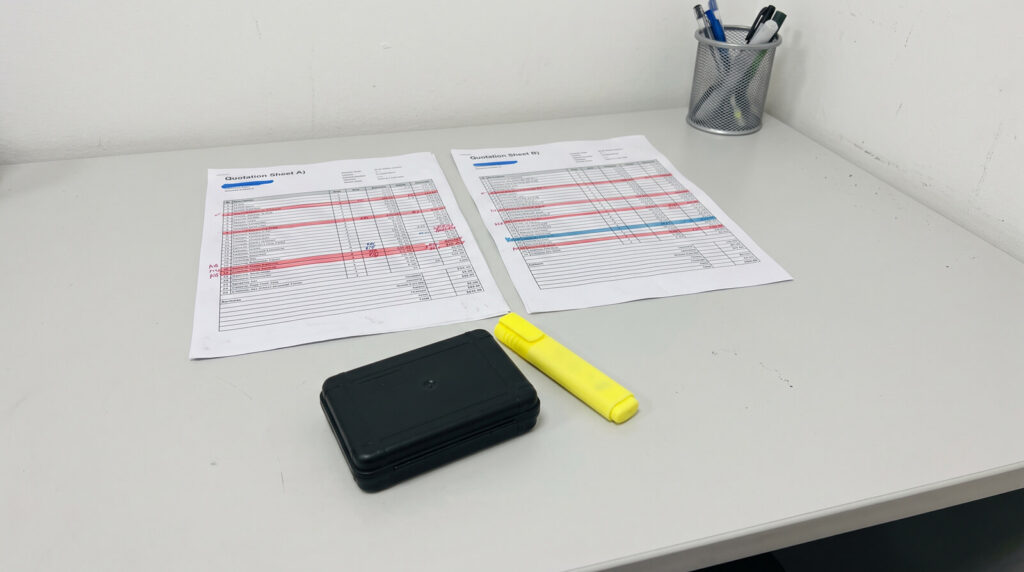
Most buyers choose a molder the way they choose a hotel: photos, a price, a few reviews. But the two quotes on your desk are usually not quoting the same job. In my experience, a price gap between suppliers is more often a difference in what was left out than a difference in efficiency. This guide reads a quote line by line, then covers the commercial terms that decide who carries the risk. For auditing a factory and shortlisting suppliers in China, see our guides on evaluating contract manufacturing partners and finding a reliable molding service; we will not repeat them here.
Step One: Make Sure You Are Quoting the Same Job
Send every supplier the same package: one CAD revision, the same target quantity and annual volume, the same material and finish, and the same list of critical tolerances. Then check that each reply states the items below. A missing item is not always a trick, but it is always a question.
| Quote line | A complete quote states | Red flag |
|---|---|---|
| Tooling | Cavity count, steel grade and hardness, SPI class, runner type, texture | One lump sum, no steel named |
| Trials and changes | Trial rounds included, who pays for modifications and when | Open-ended hourly rework |
| Tool life | A shot-life number and the wear parts list | No life stated |
| Piece price | Resin grade, cycle time and cavities assumed, scrap allowance | Just “ABS” with no grade |
| Secondary operations | Painting, printing, assembly priced separately | Bundled into the piece price |
| Inspection | First-article report, critical dimensions, sampling plan | “100% QC” with no method |
| Lead time | T1 date and sample-approval-to-production time, counted from deposit | “Fast delivery” |
| Terms | Incoterm with named place, payment schedule, quote validity | Terms “to be discussed” |
Lead time deserves the same scrutiny as price. A promise of “fast delivery” says nothing about where the clock starts. Ask for a dated schedule: deposit received, design freeze, T1 samples, your sample approval, then mass production. The gap between sample approval and the first production shipment is where schedules slip, because it depends on material availability and machine slots. A supplier who commits to dates for each gate, in writing, has usually thought the project through.
The Tooling Line: Where Cheap Quotes Hide the Difference
Steel and SPI class
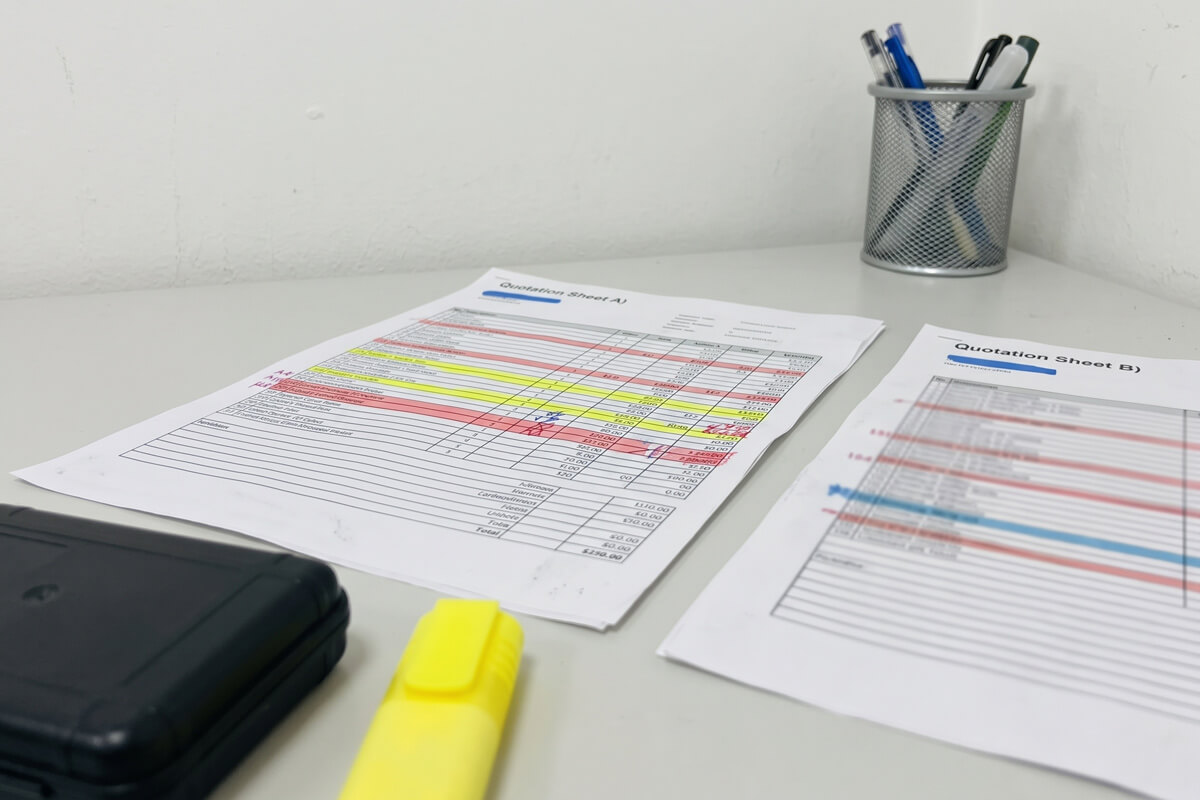
Two molds with the same cavity count can differ widely in steel and construction. Ask for the steel grade and hardness of the cavity and core, and the SPI class the mold is built to. The SPI mold standards tie class to rated life: a Class 101 tool needs cavities hardened to at least 48 HRC, while a Class 103 tool is rated under 500,000 cycles. The right class depends on your volume. A launch with a 1,000-piece MOQ rarely needs the top class, and paying for it is as wasteful as under-buying. Our standard tool life is 300,000 shots, extendable to 500,000; whichever supplier you pick, the quote should name a number. Our article on making a perfect injection mold lists the steel documents worth requesting.
Trial rounds and modification rules
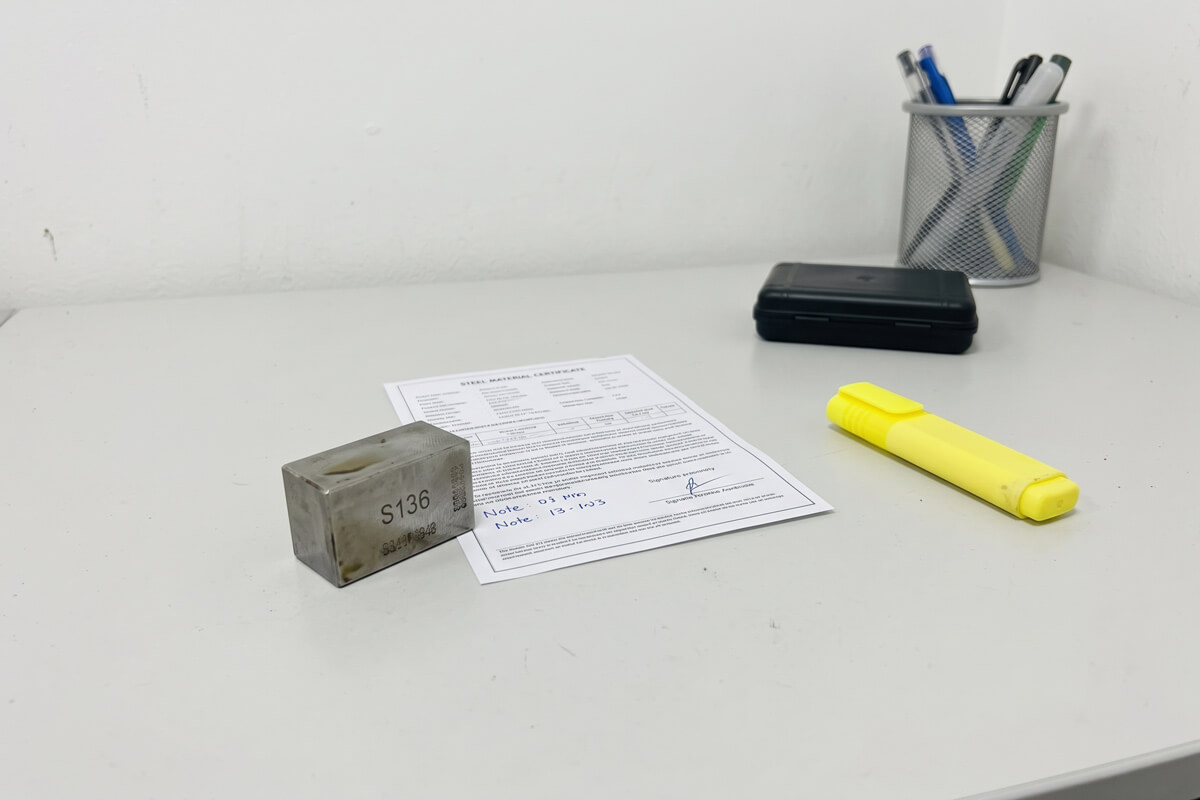
Few molds are perfect at T1, and what matters is how corrections are priced. Ask how many trial rounds are included, what counts as a supplier fix (covered) and what counts as a customer design change (billed), and whether corrections are made by removing steel rather than welding. Open-ended rework at an hourly rate is where a low tooling price turns into a high one. The trade-offs between mold types are covered in our comparison of soft tooling vs. hard tooling, and our mold cost breakdown shows what drives the number.
The Piece-Price Line: Material, Cycle Time, and What Is Not Included
A piece price is only comparable when the assumptions behind it match. Ask for the exact resin grade, not a family name, because a generic and a branded grade can differ in price, shrinkage and consistency (see our material selection guide). Ask for the cycle time and cavity count that produced the price. A quote that is 10% lower on the strength of a shorter cycle time may simply be assuming a process the part cannot survive.
Then look at what sits outside the number: packaging, inspection reports, secondary operations, and a price review clause for resin movements. A fixed price with no validity period and no resin clause usually shifts the risk to you at reorder time, which is why we suggest asking for the validity period in writing.
Commercial Terms That Decide Who Carries the Risk
These terms rarely appear on a brochure, yet they decide what happens when something goes wrong. Five to settle before you pay a deposit:
Under EXW you collect at the factory and handle export and import yourself, which gives control and more work. Under DDP the seller delivers cleared for import, which is simplest for a small team. The two sit at opposite ends of the Incoterms spectrum, with minimum seller responsibility under EXW and maximum under DDP (Source: ICC Academy). With DDP, ask what duty rate and freight basis the price assumes.
Common structures are 100% prepaid, a 50% deposit with the balance before shipment, and net 30 for established accounts. A 50% deposit is a reasonable first-order norm, and net terms normally follow a delivery history. Whichever you pick, tie payments to deliverables such as T1 sample approval, first-article approval and shipment.
Sign an NDA before sending CAD. Ask who inside the factory sees your files, and whether any work is sent to subcontractors.
Incoterms govern delivery and risk, not title to goods, so mold ownership belongs in the contract. Ours is simple: the mold is 100% yours after full payment. Also ask where it will be stored, whether it carries your name, and whether it can be released to another molder.
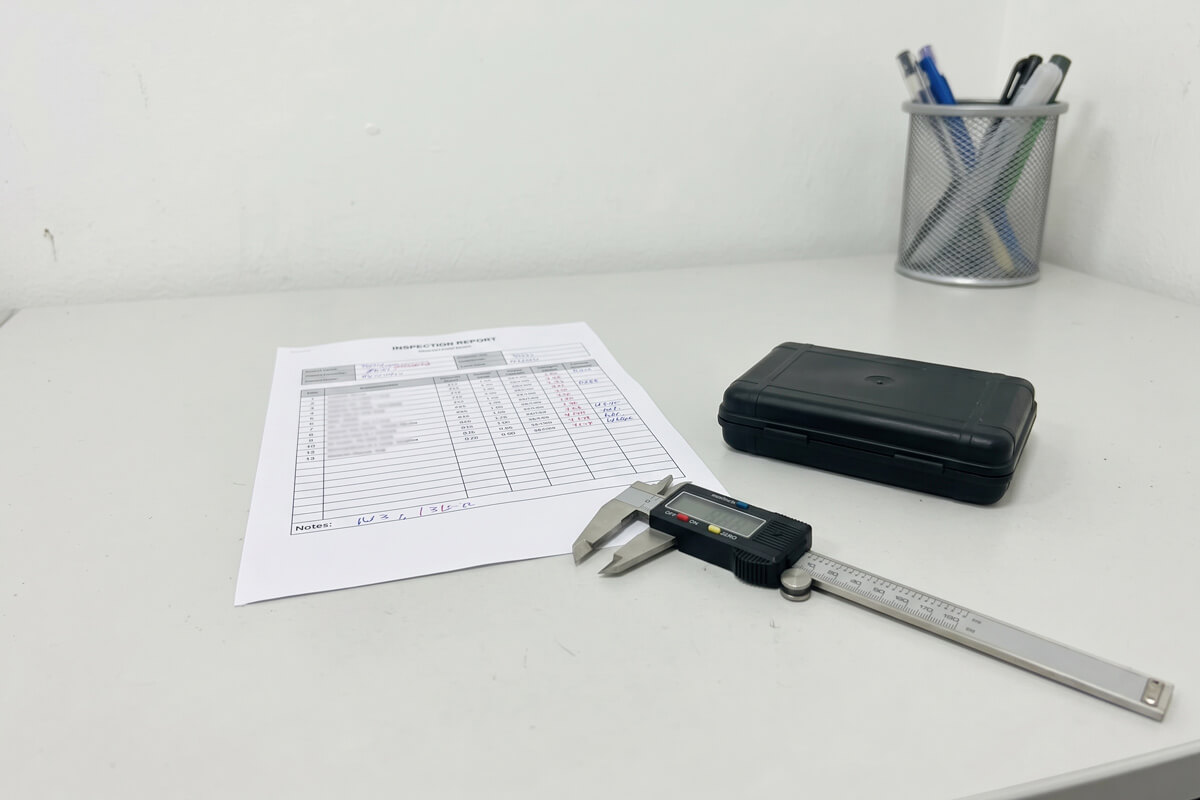
Ask how a defective lot is handled before it happens. Our approach is traceability, root-cause analysis and a negotiated remedy, not a blanket return. Shipping a small lot back across an ocean rarely helps either side, and a closed-loop fix prevents the next lot from failing. Agree up front how defects are defined, by drawing, by sampling level and by measurement method.
A Simple Way to Score Suppliers Side by Side
Once the quotes are comparable, a short scorecard keeps the decision from collapsing into the lowest number. The weights below are a starting point; adjust them to your risk.
| Criterion | Weight | Evidence to ask for |
|---|---|---|
| Tooling transparency | 30 | Steel grade and hardness, SPI class, tool life figure |
| Terms and asset protection | 25 | Written ownership, NDA, payment milestones, defect procedure |
| Quality system | 20 | Certificates, sample inspection report, measurement method |
| DFM response | 15 | Written feedback on your CAD within days, with specific questions |
| Price | 10 | Comparable assumptions across all quotes |
Price carries the smallest weight here on purpose. By the time quotes are comparable, the price gap is usually small, and the other four criteria decide whether you ever see good parts. For the quality system, look for current certificates and records. Ours are ISO 9001, 14001 and 13485, with RoHS and GRS, and we have passed Amazon and Walmart factory audits; our quality assurance page describes the inspection routines. Our guide for startups choosing a manufacturer covers the early-stage view.
One honest filter at the end: we focus on plastic accessories for small and mid-sized brands, with a typical MOQ of 1,000 pieces, not on high-barrier components. If your part sits outside that range, a different supplier may suit you better, and a good one will tell you so in the first reply.
Send the quotation you received, plus your CAD file. We will mark which lines are missing, which assumptions differ, and what a like-for-like quote from us would look like. NDA first, if you want one.