
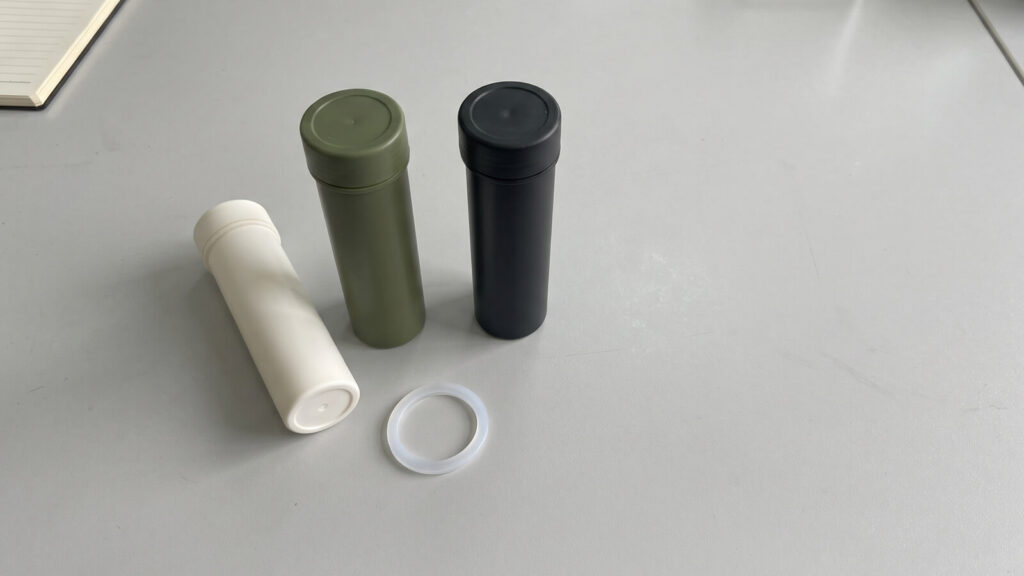
Open any pharmacy drawer and you will find the same amber vial with a push-and-turn cap. Generic child-resistant (CR) tubes and vials are commodity items. The pocket containers that sell as design objects are a different product: a matte grain, flat facets, a lock that clicks cleanly and a seal that keeps scent in. They commonly list at $28 to $50 on DTC sites, yet they contain no electronics, just one resin and a silicone O-ring. That makes them almost entirely a tooling and tolerance exercise. This article covers the three things the mold has to get right, the lock, the seal and the finish, and what a first tooling run costs for founders building home and travel safety storage.
01Child-Resistant Locks That Don’t Double Your Tooling Cost
Start with the compliance boundary. “Child-resistant” is a tested claim on a finished package, not a feature a factory can stamp on. In the US, the test procedure in 16 CFR 1700.20 uses panels of 50 children aged 42 to 51 months, plus a separate panel of 100 adults aged 50 to 70 who must open and re-close the package (Source: 16 CFR 1700.20). The design target is therefore a lock that defeats a toddler yet works for a sixty-year-old thumb. We mold to your drawing; a third-party lab tests the result. If your product category is regulated at state level, check the local rules too. This is not legal advice.
Two mechanisms that work in pure plastic
| Mechanism | How it works | Tooling impact | Watch-out |
|---|---|---|---|
| Push-and-turn | Cap is pressed down to free ratchet teeth, then turned. | Teeth point along the mold-opening axis, so a simple tool often works. | Flash on tooth faces ruins the click. |
| Squeeze-and-pull | Side arms are pinched to release locking lugs. | Lateral lugs create undercuts that call for side actions. | Flexing arms fatigue and creep in PP. |
Here is where startups lose money. A beautiful CAD model with lateral lugs forces side actions or lifters, and on a tool this small, one or two of them can cost as much as the rest of the mold (see our mold making services). The fix is to re-orient lock features so they release along the opening direction. Shallow undercuts of roughly 0.5–1.0 mm can often be stripped from PP without a slider, depending on wall and temperature. If an arm must flex, design its strain well below the resin limit; our rule of thumb for repeated use in PP is around 2–3%.
02Why “Smell-Proof” Depends on Tolerance, Not Just an O-Ring
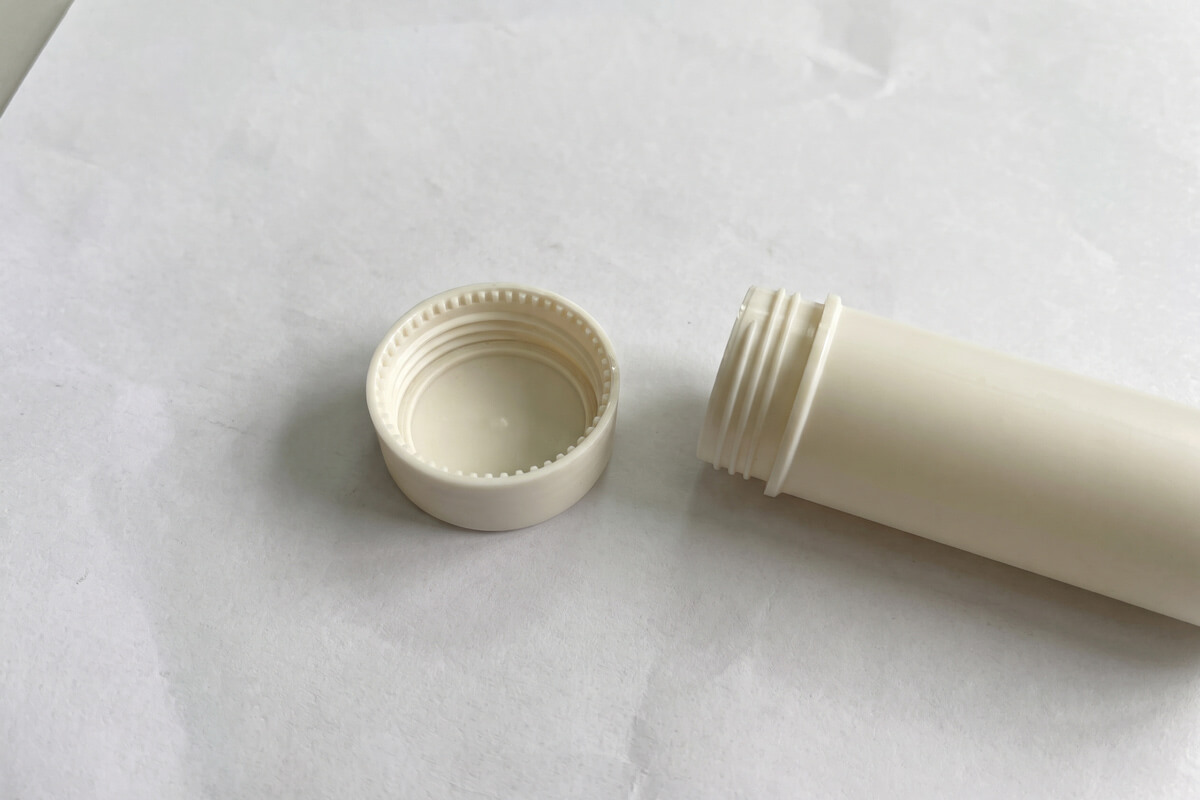
A word of honesty first: no plastic is a perfect barrier to strong aromatics over long periods. The practical goal is zero leak paths plus a resin that does not hold odor. Avoid “100% smell-proof” in your marketing. Four details decide whether the seal holds:
- Mouth roundness: a tube bore that is out of round by 0.1 mm can unload the O-ring on one side. Our precision plastic injection molding typically holds sealing diameters to about ±0.05 mm.
- Even compression: size the groove so the O-ring sits at roughly 15–25% compression all the way round.
- Parting line placement: keep it off the sealing land and out of the O-ring groove. A flash line there is a built-in leak path.
- Uniform walls: thick spots near the thread root sink and pull the bore out of round. Keep walls even, about 1.5–2.0 mm, and core out heavy sections.
Choosing the resin
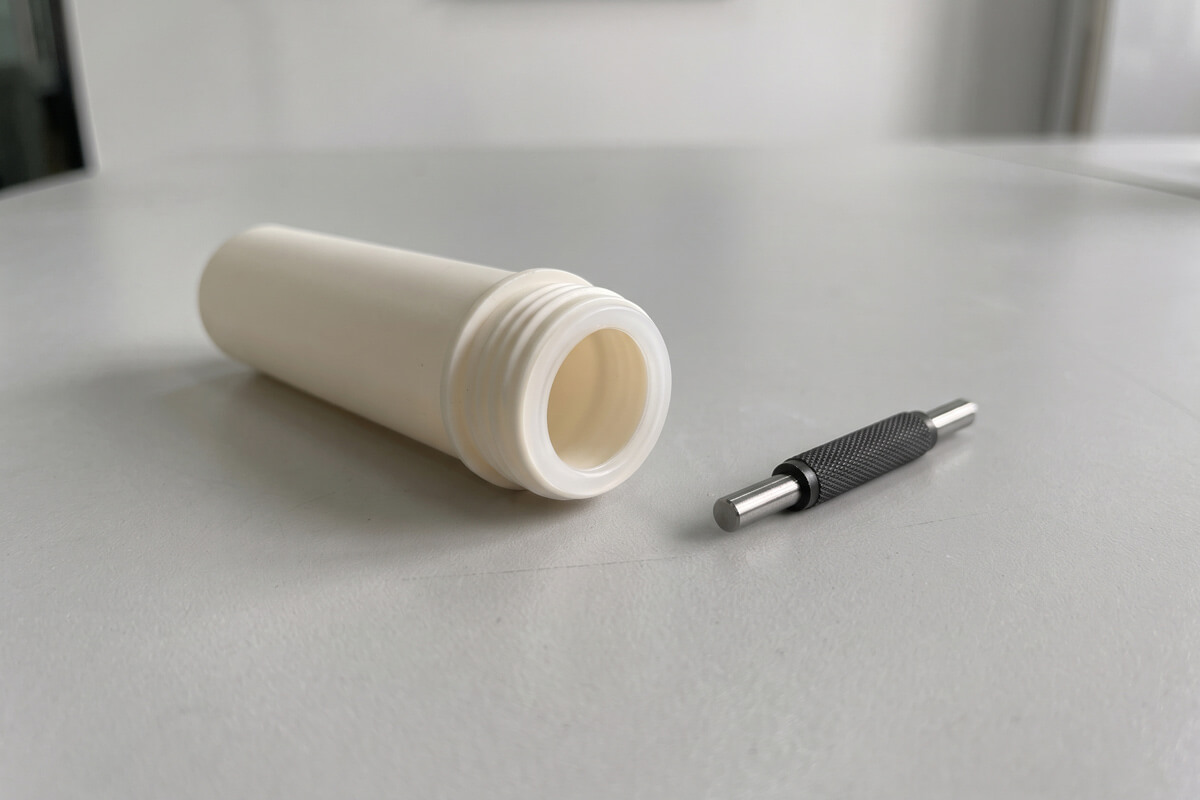
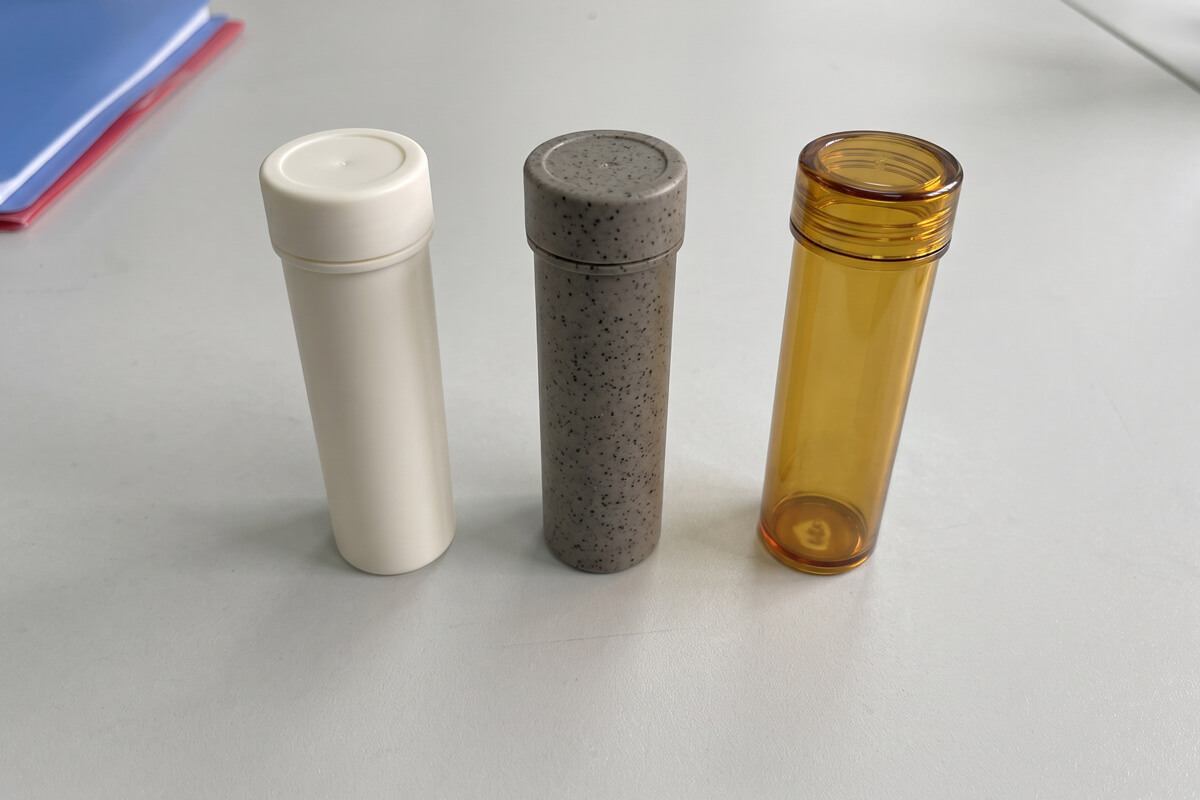
PP is the default: low cost, low moisture uptake, good chemical resistance. Polyolefins can slowly absorb and release strong aromatics, so run an aging and sniff test before you approve a color. ABS can stress-crack when oils or solvents sit against it, so avoid it for contact surfaces. Premium options include PCR PP for a recycled-content story, and amber PEI (Ultem-type) for a flagship edition; PEI looks superb but processes above 350 °C and costs several times more than PP. Hemp-fiber composites suit outer shells only, because natural fibers hold moisture and odor. Our material selection guide compares the options in more detail.
Before you trust any seal, test it. A quick check is to pressurize a closed, empty tube to a few psi under water and watch for bubbles. For scent, seal a strongly aromatic reference, such as ground coffee, inside the tube for 72 hours and have a few people sniff it.
03The $35 Look: Finish, Geometry and Hidden Details
What separates a $1 vial from a $35 object is mostly cosmetic engineering, and it costs little if planned before steel is cut.
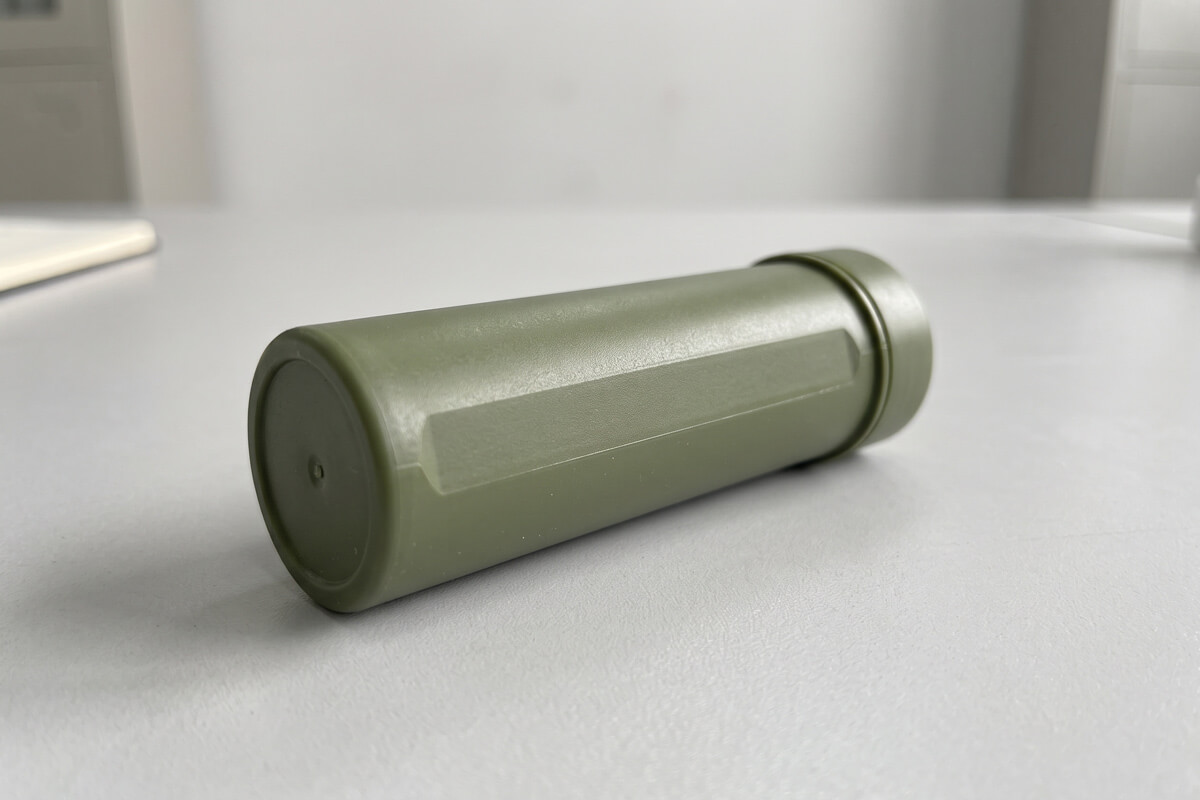
- Fine matte grain: a shallow texture, roughly 0.02–0.05 mm deep, hides fingerprints and gives a dry, stone-like feel. Add draft to match the depth.
- Hidden parting line: run it along a chamfer or a styled groove so the seam reads as a design line.
- Flat facets: one flat side or a faceted profile stops the tube rolling off a desk, and gives you a flat area for a logo.
- Integrated lanyard slot: mold a through-slot of 3–4 mm with generous radii instead of attaching a split ring. Keep the surrounding wall at least 1.2 mm so it does not crack.
04Starter Tooling Budget and MOQ for a Pocket Tube
Pocket tubes are small, so the steel is modest and a bridge tool is a sensible first step. These are planning ranges; a DFM review fixes the real numbers.
| Item | Planning range (USD, EXW) |
|---|---|
| Body + CR cap bridge tool, 1–2 cavities, no side actions | $5,000–$12,000 |
| Each side action added for lateral lock features | +$2,000–$5,000 |
| Surface texture | $500–$1,500 |
| Assembled PP tube at 1,000–5,000 pcs (molding, O-ring, assembly) | $0.60–$1.25 each |
| Standard MOQ | 1,000 pcs per item, color counted separately |
Budget separately for CR testing. The lab quotes it, and it commonly runs to several thousand dollars or more, so test a refined sample rather than your first shot. Even so, a tube that costs about a dollar to make and sells for $28–$50 leaves ample room for certification, packaging and marketing. For what drives mold price in general, see our guide to injection mold cost.
A realistic path to production
On terms, we quote EXW or DDP so landed cost is clear, sign an NDA before you share drawings, and the mold is 100% yours after full payment.
Frequently Asked Questions
What is the difference between child-resistant and child-proof?
Child-resistant means a package has been tested to be significantly difficult for most young children to open. It does not mean impossible. No container is child-proof, so keep contents out of reach.
What is the best plastic for a child-resistant pocket container?
Polypropylene (PP) is the best starting point for most pocket containers.
- PP: low cost, low moisture uptake, good chemical resistance.
- PCR PP: same performance profile with a recycled-content claim.
- PEI: translucent amber premium option, much higher cost.
How do you make a plastic pocket tube airtight?
Control the sealing geometry and add a silicone O-ring. Four steps do most of the work:
- Hold the bore round, within about ±0.05 mm.
- Size the O-ring groove for roughly 15–25% compression.
- Keep the parting line off the sealing land.
- Leak-test samples under water before approving production.
Do I need certification for a child-resistant pod?
Yes, if you market it as child-resistant. A third-party lab tests the finished package against the rule that applies to your product, such as 16 CFR 1700.20 in the US. Requirements vary by category and state, so confirm before you launch.
What are the MOQ and tooling cost for a custom pocket tube?
Our standard MOQ is 1,000 pieces per item, with each color counted separately. A body and CR cap bridge tool typically costs $5,000–$12,000 before any side actions.