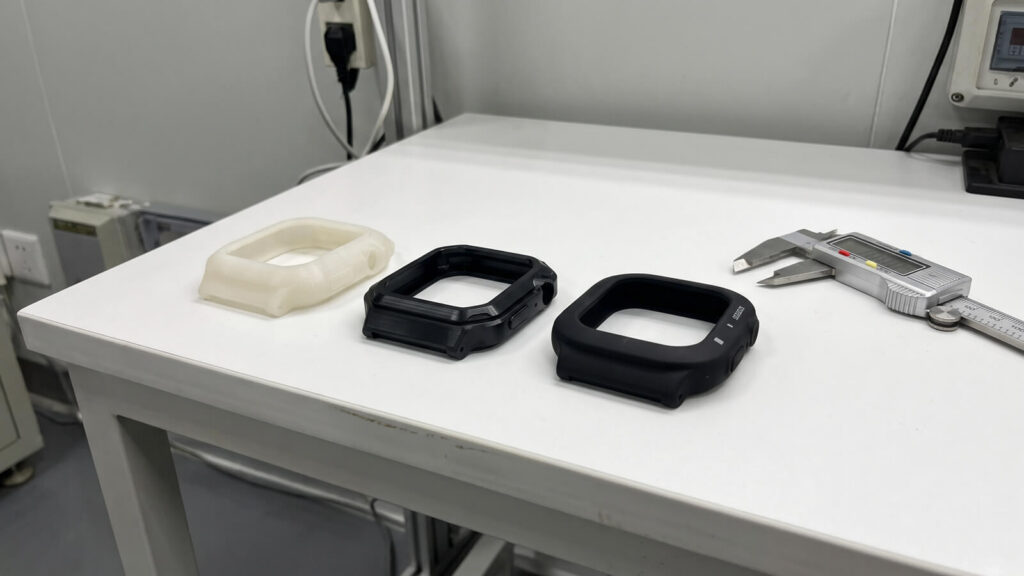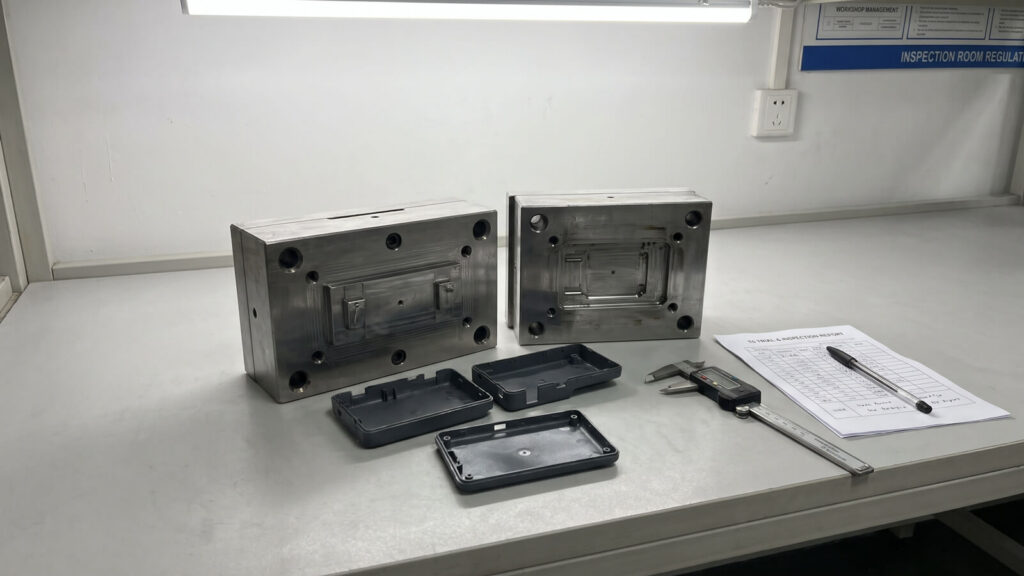

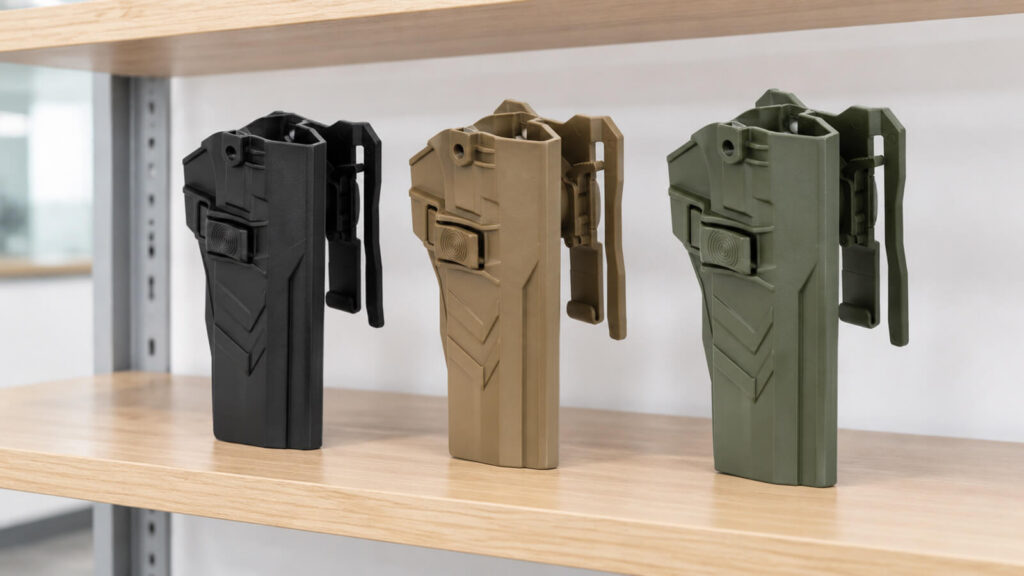
Many small tactical and EDC brands start with a thermoformed or 3D-printed prototype, find that it sells, and then ask what injection molding would change. The answer is that it changes consistency. A polymer IWB holster or EDC tool sheath is an external accessory with no electronics and none of the regulated parts of the item it carries, so the program stays simple. What makes one feel premium at $35 to $70 is retention, edge comfort and mounting, and all three are decided inside the mold. This article walks through each, then the materials and a realistic tooling budget.
Why Accessories Are the Smart Entry Point
A holster or sheath is a retention accessory: ordinary resin, ordinary tooling and ordinary QC. That is why it suits small brands better than anything that touches a core component. The catch is that every tool serves one fit. A shell is cut for one specific model, so SKU count drives tooling spend. Our advice is to start with the single best-selling fit, or with a sheath that suits a popular pocket tool, and add models once the first one sells through.
Be honest about the alternatives too. Thermoforming needs no tooling and suits runs of a few dozen. Injection molding earns its place when one fit sells in the thousands and part 5,000 must feel exactly like part 1. That is the territory of our plastic injection molding services.
Retention and Draw Feel: Where the Mold Decides the Experience
Retention comes from three things working together: a molded interference ridge, a wall that flexes a little and recovers, and sometimes an adjustable screw. A starting interference of roughly 0.3–0.6 mm is typical for a molded ridge, then tuned on real parts.
Three things that move the feel
- Flex allowance: glass-filled nylon tolerates far less flex than unfilled resin. On a GF30 shell, put the retention ridge on a thin, slotted flex zone or a separate adjustable element rather than relying on the whole wall to spring.
- Moisture: nylon is hygroscopic. Freshly molded parts are dry, smaller and stiffer; over days to weeks they absorb humidity, grow slightly and soften. A fit approved on day-one samples can feel different a month later, so approve retention on conditioned samples (Source: Envalior moisture diffusion white paper).
- Warpage: glass fibers align with the melt flow and shrink unevenly, so long flat IWB shells tend to bow. Symmetric ribs, balanced gating and even cooling keep them flat.
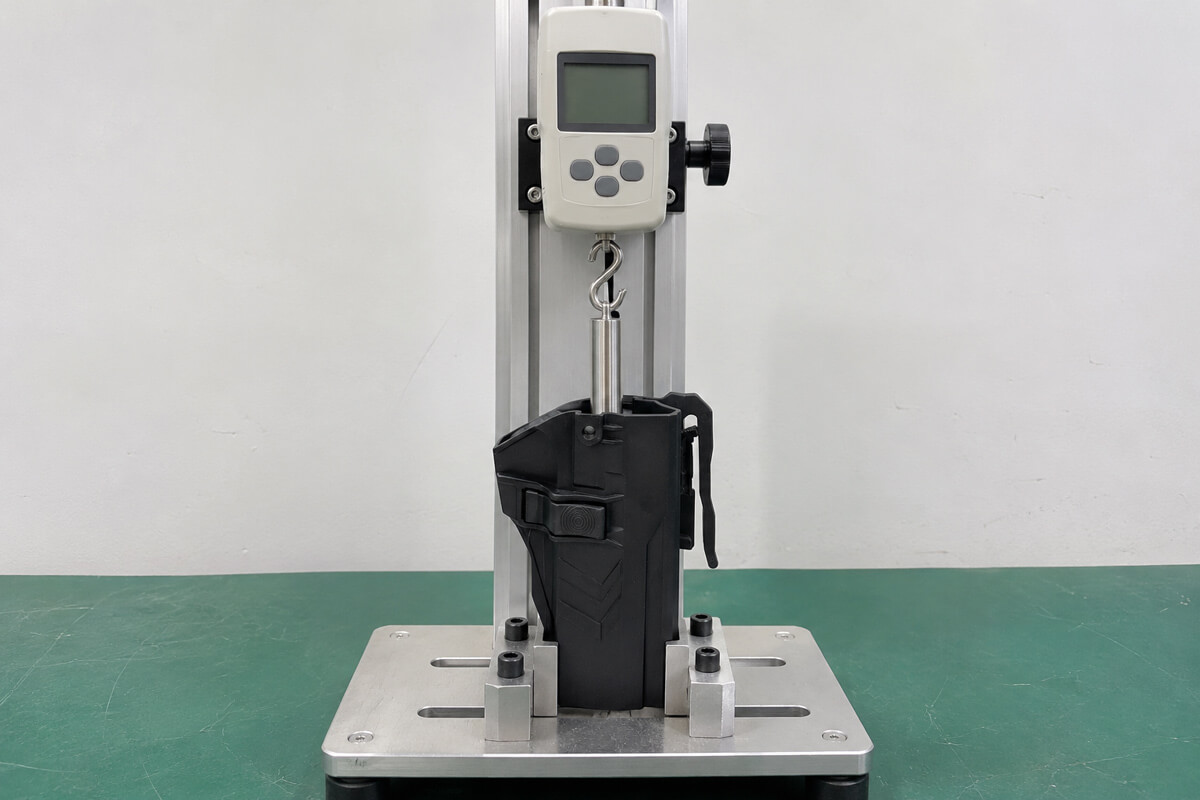
We agree a draw-force window with you, measure it with a force gauge on a reference tool in both dry and conditioned states, and cut the retention features steel-safe: start loose, then tighten by removing steel after first shots. Fit is a tolerance-stack problem, so see our guide to injection molding tolerances.
Materials: PA66-GF30, POM or ABS?
For a rigid shell, PA66-GF30 is the usual answer. For a sheath that guides a metal tool, POM often draws better. Our material selection guide compares these and other options.
Edges, Comfort and Hidden Parting Lines
Anything worn against the body is judged by its worst edge. Four rules cover most of it:
- Keep body-facing edges at a radius of about 0.8–1.0 mm or more.
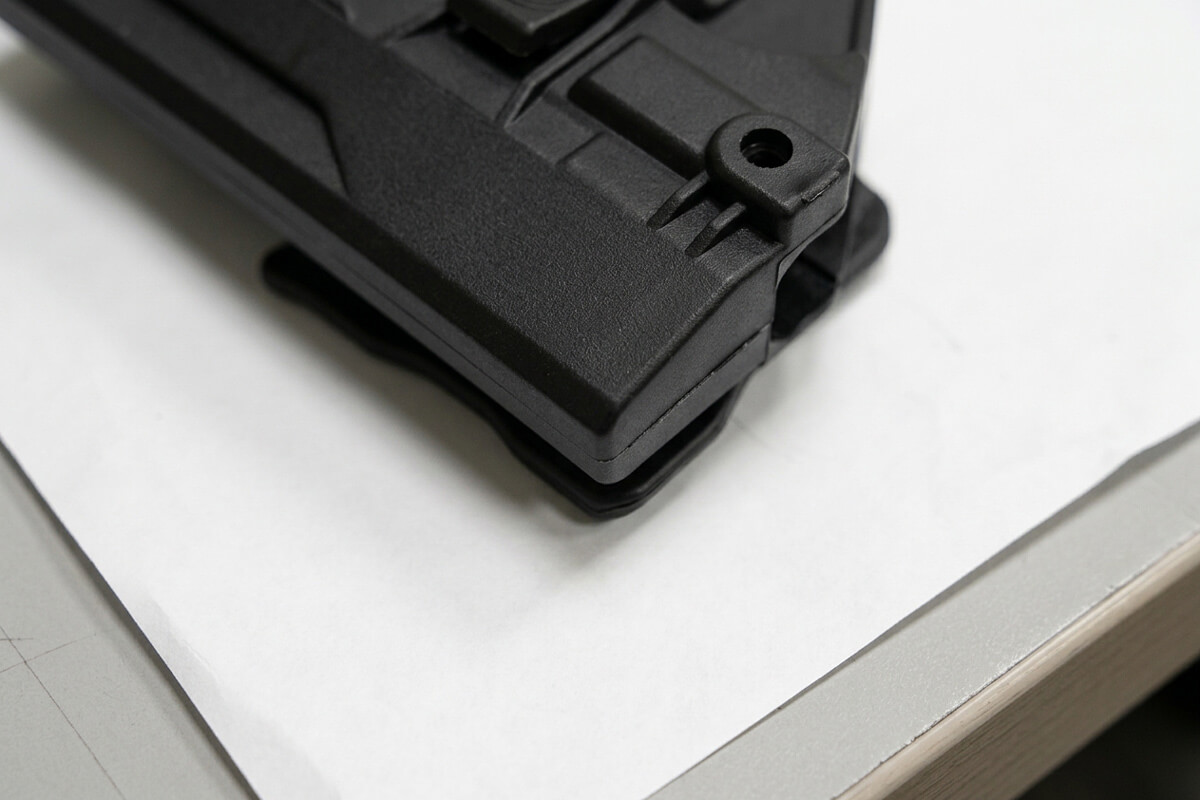
- Move the parting line off the body-facing side, or hide it in a chamfer.
- Place the gate on the outer face and trim it flush.
- Use a fine texture inside and out; it also hides glass-fiber show on cosmetic surfaces.
Glass-filled resin wears parting surfaces, so flash grows over a long run. Build mold maintenance into the schedule rather than discovering it as burrs in customer reviews.
Mounting Interfaces and the Tooling Reality
Belt clips and MOLLE panels are where buyers’ preferences vary most. A few design choices keep the platform flexible:
- Separate the mount: mold the shell once and attach interchangeable clips or panels with screws. One shell tool can then serve an IWB clip, a paddle and a MOLLE version.
- Threaded fixings: self-tapping screws strip if users re-adjust often. Pressed-in or heat-set brass inserts last longer.
- Ride height and cant: molded slot patterns let users adjust both without new parts.
- MOLLE/PALS: webbing is 1 in wide on a 1.5 in grid, so hold slot dimensions tightly, to about ±0.1 mm.
Tooling and MOQ planning ranges
Glass-filled resin wears aluminum quickly, so we usually propose pre-hardened steel with hardened gate inserts for shells like this. Treat the figures below as planning ranges; a DFM review fixes the real numbers. See our rapid tooling services and mold making services for how we scope it.
Our standard MOQ is 1,000 pieces per item, counting each color and each fit model separately. We sign an NDA before you share CAD, quote EXW or DDP, and the mold is 100% yours after full payment. MUD rapid tooling can deliver first samples in as little as 10 days.
- Send your 3D CAD or concept sketch, and the item it carries.
- Tell us your target retention feel and mounting options.
- Receive a free DFM review and low-MOQ tooling quote within 24 hours.
Frequently Asked Questions
What is the best material for an injection molded polymer holster?
Glass-filled nylon such as PA66-GF30 is the best choice for most rigid shells.
- PA66-GF30: stiff, durable, strong clip features.
- POM: smoother draw for sheaths that guide metal tools.
- Impact ABS: lower cost for budget sheaths.
How do you control retention in an injection molded sheath?
Combine molded interference, a controlled flex zone and a measured draw-force window.
- Start with about 0.3–0.6 mm of interference.
- Cut the features steel-safe so you can tighten after first shots.
- Measure draw force with a gauge on conditioned samples.
Why does a nylon holster’s fit change over time?
Nylon absorbs moisture from the air, so parts grow slightly and soften over days or weeks. Approve retention on humidity-conditioned samples, not only on freshly molded ones.
How much does tooling cost for a polymer holster or EDC sheath?
A single-cavity steel shell tool typically costs $8,000–$18,000, with an optional mount-plate tool at $3,000–$7,000. Glass-filled resin wears aluminum quickly, so steel is the safer choice.
Do I need a new mold for every fit?
Yes. Each shell is cut for one specific item, so every fit needs its own tool. Start with your best-selling fit, and share mounts across models to reduce cost.