
A fair number of the CAD files that land in our inbox have already been through a desktop injection molding machine once. A founder built something, it mostly worked, and now the question is some version of “can you just make this at scale.” This isn’t a buying guide for which benchtop machine to purchase — that’s not our business. It’s a factory’s honest view of what a small injection molding machine can genuinely do before you need us, and the specific points where it stops being able to help.
What a Desktop Injection Molding Machine Actually Is
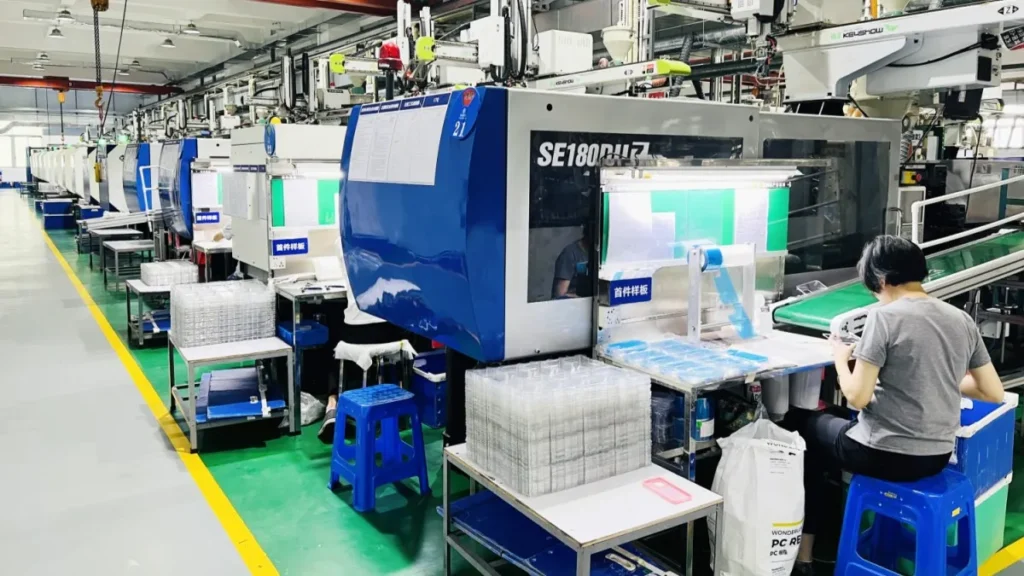
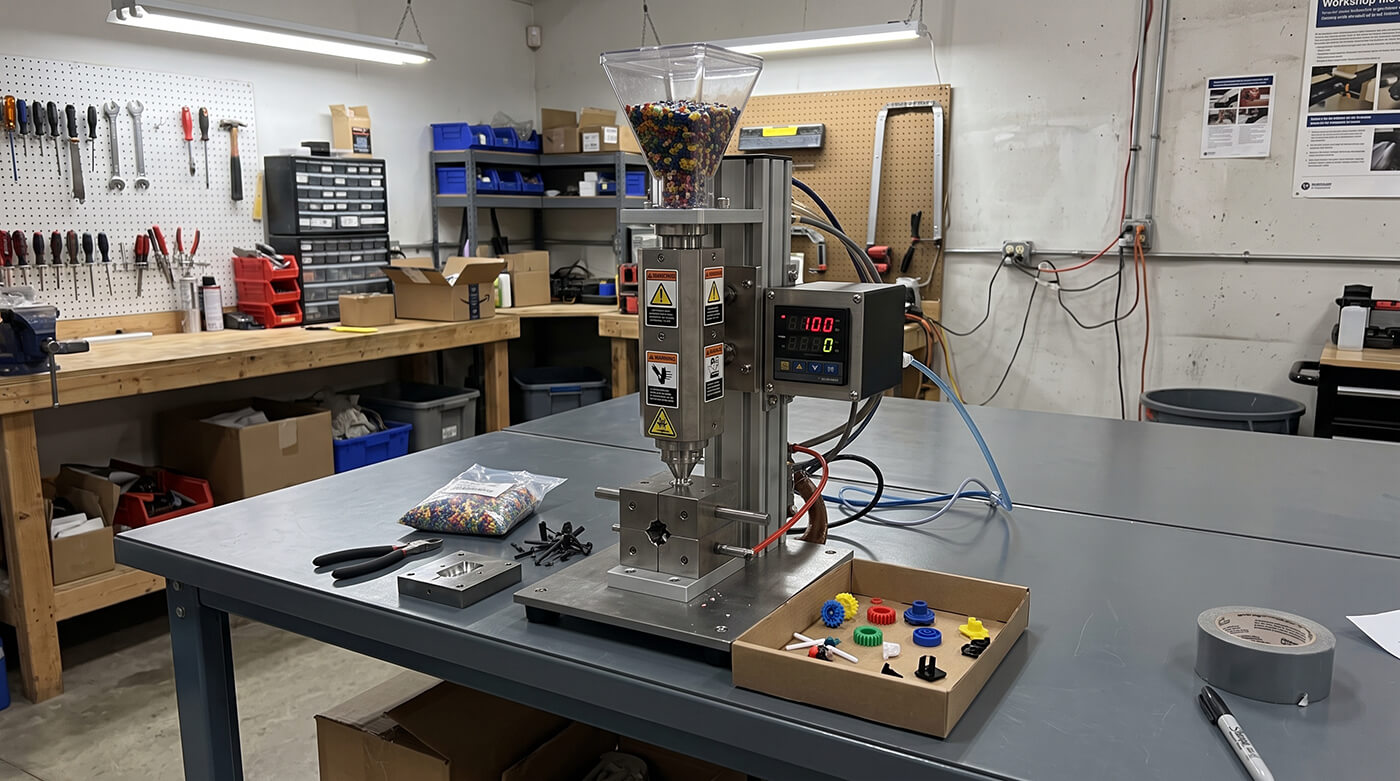
A desktop or benchtop injection molding machine is a compact, bench-mounted version of a production press — usually somewhere between 1 and 20 tons of clamping force, often manual or semi-automatic, and built to run small aluminum or even 3D-printed mold inserts rather than hardened production steel. Compare that to a factory production floor: our own press fleet runs 50 to 800 tons, built around hardened steel tooling designed to survive hundreds of thousands of cycles. A benchtop plastic injection molding machine isn’t a smaller version of that — it’s a different category of tool, built for a different job.
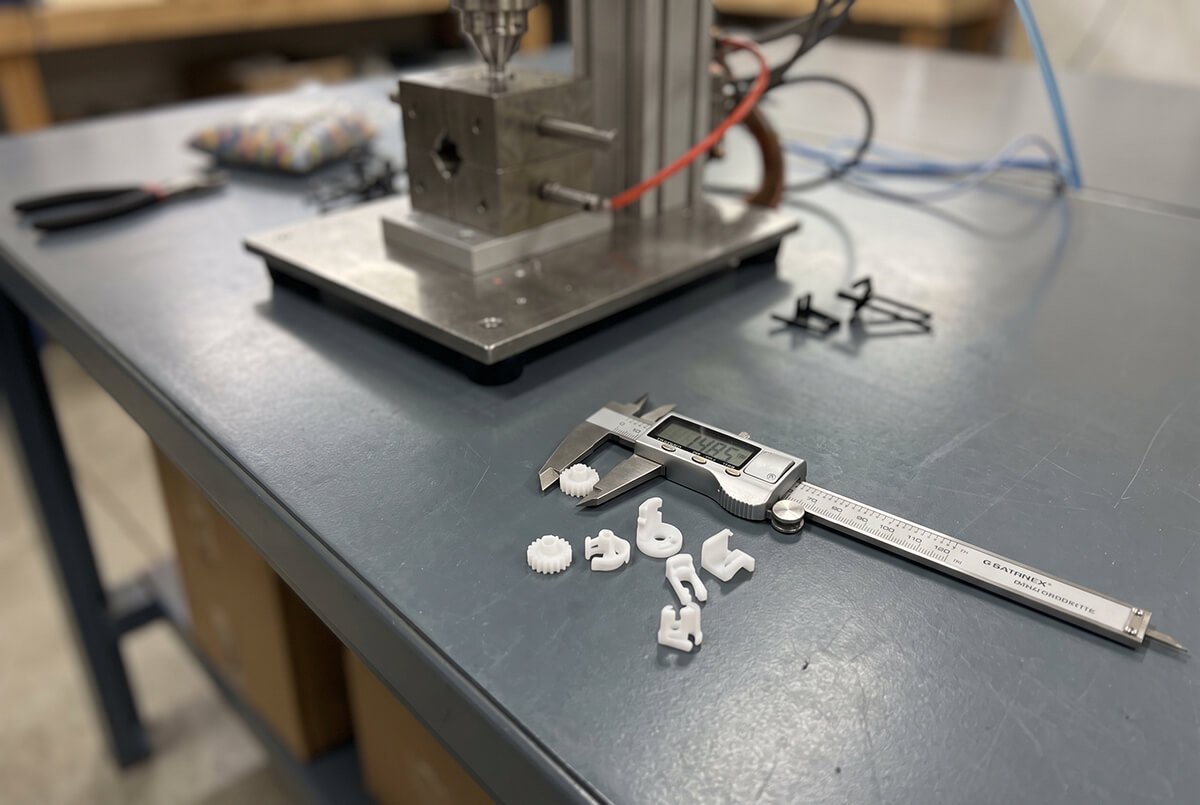
That job has gotten more common for a reason: a decade ago, a hardware founder’s only real pre-production options were 3D printing or paying a factory for aluminum tooling. A small injection molding machine fills the gap between those two — letting a technical founder mold actual target resin in-house, learn the process hands-on, and walk into a tooling conversation already knowing what their part does and doesn’t tolerate.
What These Small Injection Molding Machines Are Genuinely Good For
Used within its actual range, a benchtop machine earns its keep in a few specific ways:
- Material-accurate functional testing — a 3D-printed prototype approximates geometry; a part molded in the actual target resin tells you how it really flexes, snaps, and wears.
- Cheap validation of risky design assumptions — wall thickness, snap-fit engagement, and living-hinge behavior are far cheaper to get wrong on a $200 aluminum insert than on a production steel tool.
- Very small pilot batches — a few dozen to a couple hundred units for a crowdfunding run, beta test group, or early retail pilot.
- Process literacy — running the machine yourself builds a real working understanding of resin selection, cycle behavior, and part quality evaluation, which makes the eventual conversation with a toolmaker far more productive. Benchtop equipment is increasingly positioned this way by equipment makers themselves — as a practical training platform for exactly this kind of hands-on learning (Source: Plastics Machinery & Manufacturing).
If what you actually need at this stage is geometry validation rather than resin-accurate testing, it’s also worth weighing a benchtop machine against CNC-machined prototypes, which can hit tighter tolerances on a single complex part without any mold at all.
Where the Ceiling Is: Tonnage, Shot Size, and Material Limits
The limitations aren’t a design flaw — they’re the direct consequence of the machine being small. Three of them matter most for a founder deciding what’s actually feasible:
Clamping tonnage. Most desktop machines top out well under 20 tons. That caps both part size and wall geometry — anything with a large projected area, deep draws, or structural ribbing needs more clamping force to hold the mold shut against injection pressure than a benchtop machine can generate, regardless of how good the mold design is.
Shot size. Small barrels mean small shots, typically well under 100 grams. A part that needs more resin than that per cycle simply isn’t a candidate, no matter how the mold is designed.
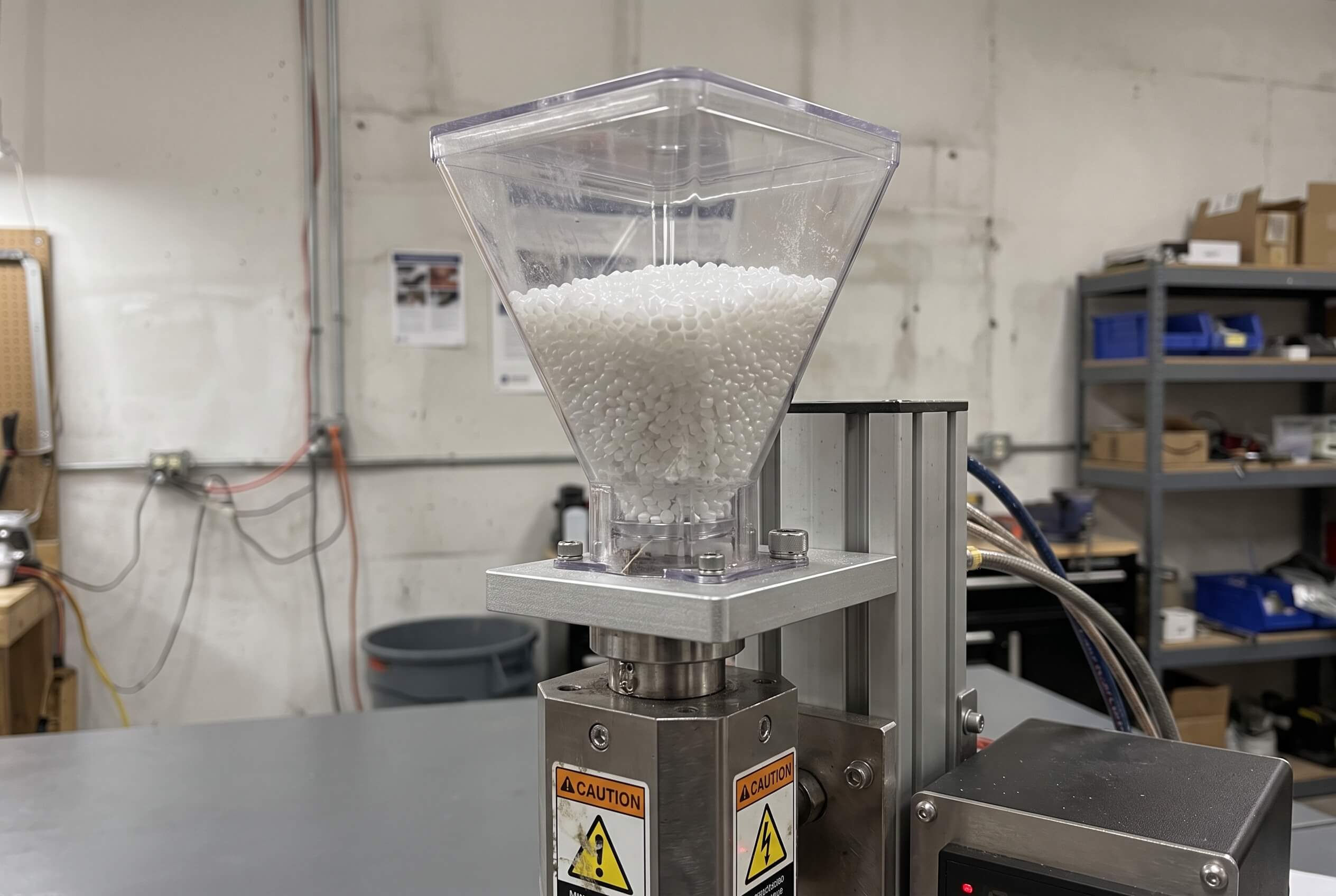
Material compatibility. Most benchtop machines handle easy-flow commodity resins comfortably — PP, PE, ABS, and sometimes nylon or PC. Glass-filled, flame-retardant, or certified medical- and food-contact-grade resins are a different story: the smaller screw and barrel designs, limited heat and shear control, and largely manual process adjustment make it difficult to consistently process these formulations the way a controlled production barrel can.
These aren’t arbitrary cutoffs — they’re the same reason a step up to even an entry-level industrial injection molding machine represents a real jump in capital cost, commonly landing in the $35,000–$60,000 range even for a small-to-mid-sized unit (Source: Plastics Machinery & Manufacturing). The gap between benchtop and production isn’t a small step — it’s a different equipment category entirely, which is exactly why most founders rent that capability from a factory instead of buying it.
Why “It Worked on the Benchtop” Doesn’t Always Survive the Jump to Production
A part that molds cleanly on a desktop machine ten times in a row can still fail once real production variables enter the picture. A few reasons that gap catches founders off guard:
No process control at scale. Most benchtop machines run on manual or basic semi-automatic settings, without the cavity pressure monitoring or decoupled fill/pack control that production machines use to hold shot-to-shot consistency over thousands of cycles — the kind of process discipline that becomes essential the moment volume climbs past a pilot batch.
Tool surface and life. Aluminum or 3D-printed inserts simply can’t hold the surface finish or cavity life of a hardened, polished production tool. Even a proper aluminum prototype tool — a real step up from a benchtop mold insert — is typically only guaranteed for around 2,000 shots at tolerances near ±0.08mm plus resin shrink tolerance (Source: Protolabs). A benchtop insert sits below even that.
No certification trail. If your part needs to claim FDA contact approval, UL94 flame rating, or any other regulatory status, that claim has to trace back to a tested, documented formulation and process — something a desktop setup with no batch traceability simply can’t provide.
Five Signals It’s Time to Move Beyond the Desktop Machine
You need more than a few hundred units — benchtop output and cycle speed simply can’t absorb real order volume.
Your part needs an engineering or certified-grade resin — glass-filled, flame-retardant, medical, or food-contact.
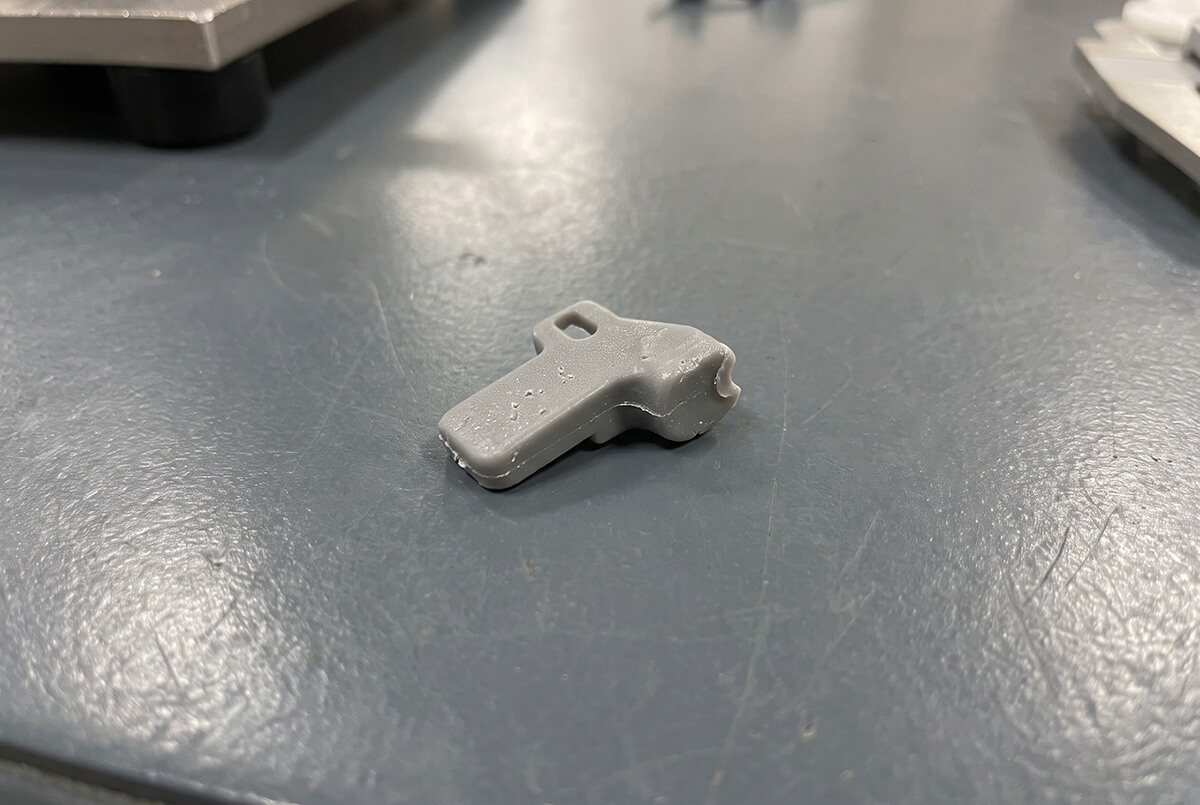
Cosmetic finish actually matters — you’re hand-sanding tool marks instead of shipping parts as-molded.
You need multiple cavities or a faster cycle time to realistically hit a launch date.
You need documented, repeatable tolerances for assembly, retail compliance, or a distribution partner’s QA requirements.
If two or more of these are true, the honest move is skipping straight past a second-generation prototype tool and into production-intent tooling. Our MUD rapid tooling program exists for exactly this jump — a working production tool in about 10 days, so the time spent proving a design on a benchtop machine converts directly into tooling progress instead of a second round of prototyping. Before that conversation, it’s worth running your part through a basic DFM check — several of the issues that surface in benchtop molding are also the first things a toolmaker will flag.
Frequently Asked Questions
How much does a desktop injection molding machine cost?
Most benchtop machines run from around $2,000 for basic manual models up to roughly $12,000-$15,000 for heavier-duty, semi-automatic units. That’s a fraction of industrial equipment — even a small-to-mid-sized production injection molding machine commonly costs $35,000-$60,000 before tooling, utilities, or floor space are factored in.
What materials can a small injection molding machine process?
Most handle easy-flow commodity thermoplastics well — PP, PE, ABS, PS, and often standard nylon or PC grades. Specialty resins like glass-filled compounds, flame-retardant formulations, and certified medical- or food-contact-grade materials are difficult to process reliably on a small barrel with limited heat and shear control, and are generally better suited to production-scale equipment.
Can a desktop injection molding machine produce production-quality parts?
For low-stress, cosmetically forgiving parts in small quantities, yes, to a point. But production-quality consistency depends on process control (cavity pressure monitoring, decoupled fill/pack), tool life, and documented tolerances — areas where even a step-up aluminum prototype tool outperforms a benchtop mold insert, and where hardened production steel tooling is in a different category altogether.
What’s the minimum order quantity if I skip the desktop machine and go straight to a factory?
It depends on the factory, but a common starting MOQ for custom injection molded accessory parts is around 1,000 units, often paired with a rapid tooling option to keep upfront cost down for a first production run. If your volume need is genuinely smaller than that, a benchtop machine or an aluminum prototype tool may still be the more economical bridge.
Is a desktop injection molding machine worth it for a hardware startup?
For validating design assumptions in real resin, building internal process knowledge, and producing a small pilot batch, yes — it’s a genuinely useful tool. It’s less worth it as a way to avoid ever talking to a factory, since the moment volume, material, finish, or compliance requirements grow past entry-level, the gap to production tooling has to be closed eventually, and closing it earlier is usually cheaper than closing it after a launch commitment.
Already past what a benchtop machine can handle?
Send us the part you’ve been prototyping — we’ll tell you honestly whether it’s ready for MUD rapid tooling or needs another design pass first.
Talk to Our Engineering Team →