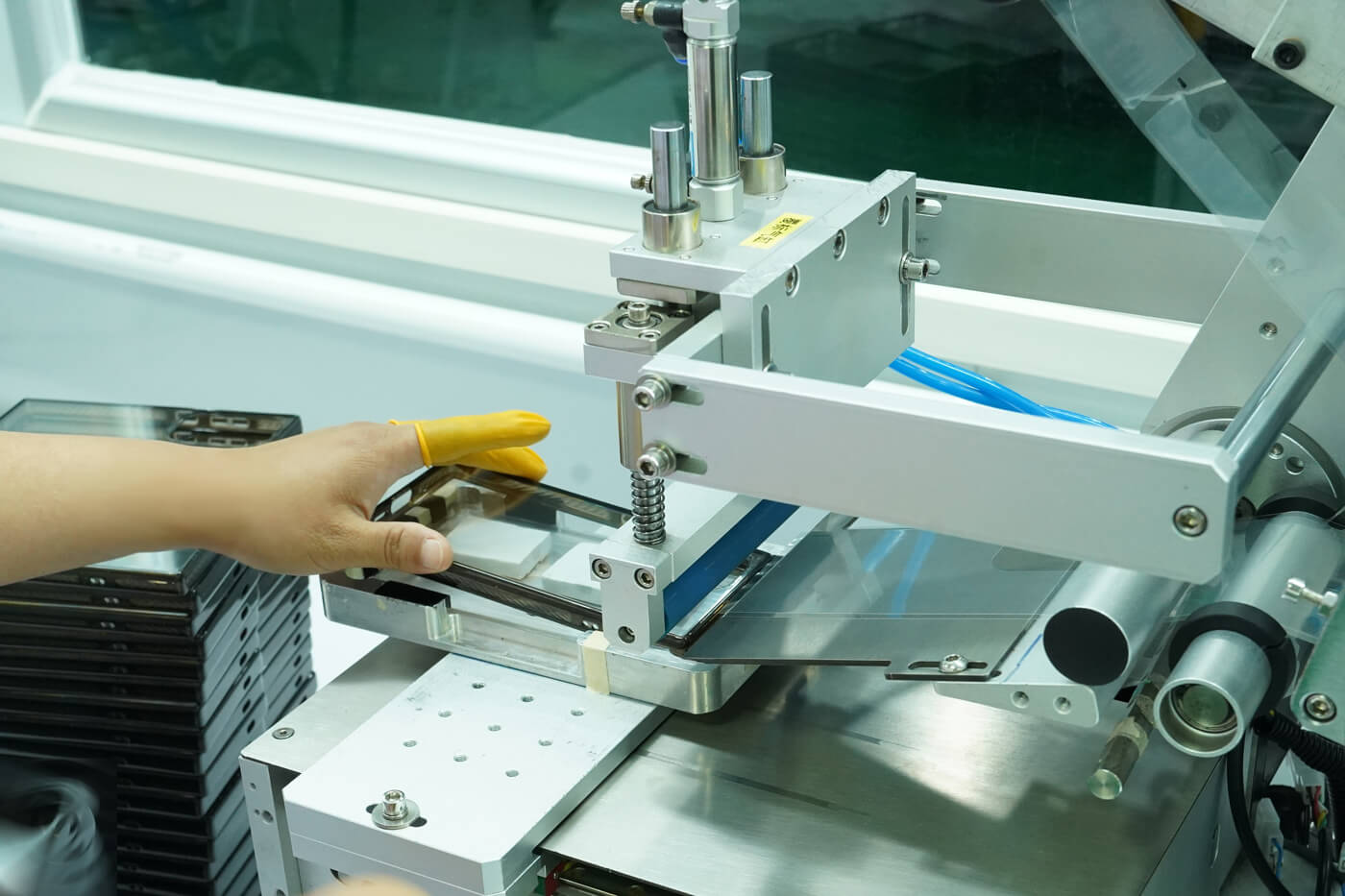

Every injection molded part has to fill correctly, cool evenly, and eject cleanly — but a clear part has to do all of that with nowhere to hide. A textured or opaque surface disguises a faint flow line, a slight sink, a scratch from an ejector pin. A clear part puts every one of those under a light table for a buyer to find. That’s why “clear plastic injection molding” isn’t really one skill — it’s standard molding practice plus three things done noticeably better: material selection, mold finish, and process discipline. Get any one of the three wrong and the part still functions, technically, but it fails the one test a clear part actually has to pass: looking as good as the sample that was approved.
Choosing the Right Clear Resin: PC, PMMA, PETG, or SAN
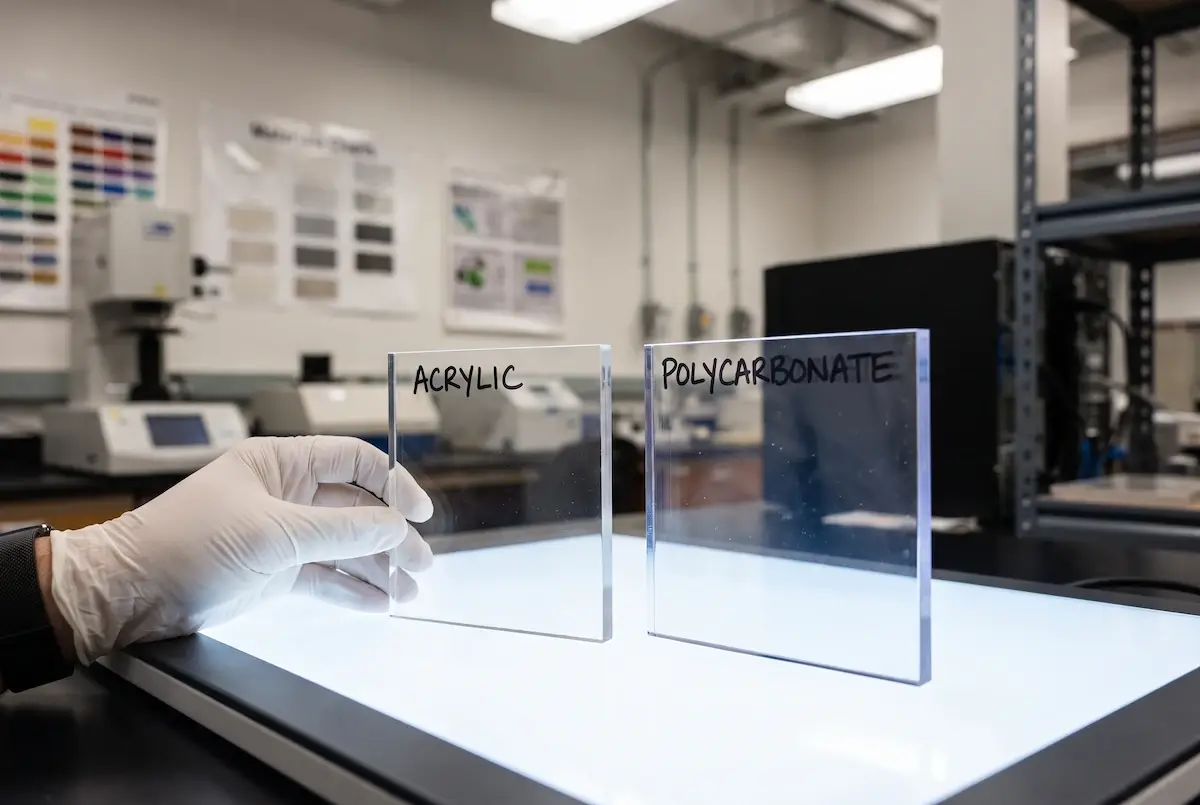
Most clear injection molded parts come down to a choice between polycarbonate (PC) and acrylic (PMMA), with PETG and SAN as lower-cost middle options for parts that don’t need either material’s extremes. The trade-off is consistent across nearly every project: acrylic wins on optical clarity and cost, polycarbonate wins on impact resistance and heat tolerance.
That impact-strength gap is usually what decides the material, not the transmission difference. A 6-percentage-point gap in clarity is hard to see with the eye; a part that shatters on the first drop versus one that doesn’t is not. PC is the default for anything handled, dropped, or stressed — device covers, protective housings, safety shields. Acrylic earns its place where optical quality genuinely leads, service temperature stays modest, and UV exposure is a factor, since PC yellows over time without a stabilized grade while acrylic resists it natively. PETG splits the difference at a lower cost when neither extreme is required, and SAN shows up where rigidity and dimensional stability matter more than outright toughness.
This exact trade-off played out directly on a clear PC protector case we built for a trading card accessory client: the client needed a fully transparent front window that would survive routine handling and shipping, which put PC ahead of acrylic despite acrylic’s edge on raw clarity.
Mold Finish and Gate Design: What Actually Keeps a Clear Part Looking Clean
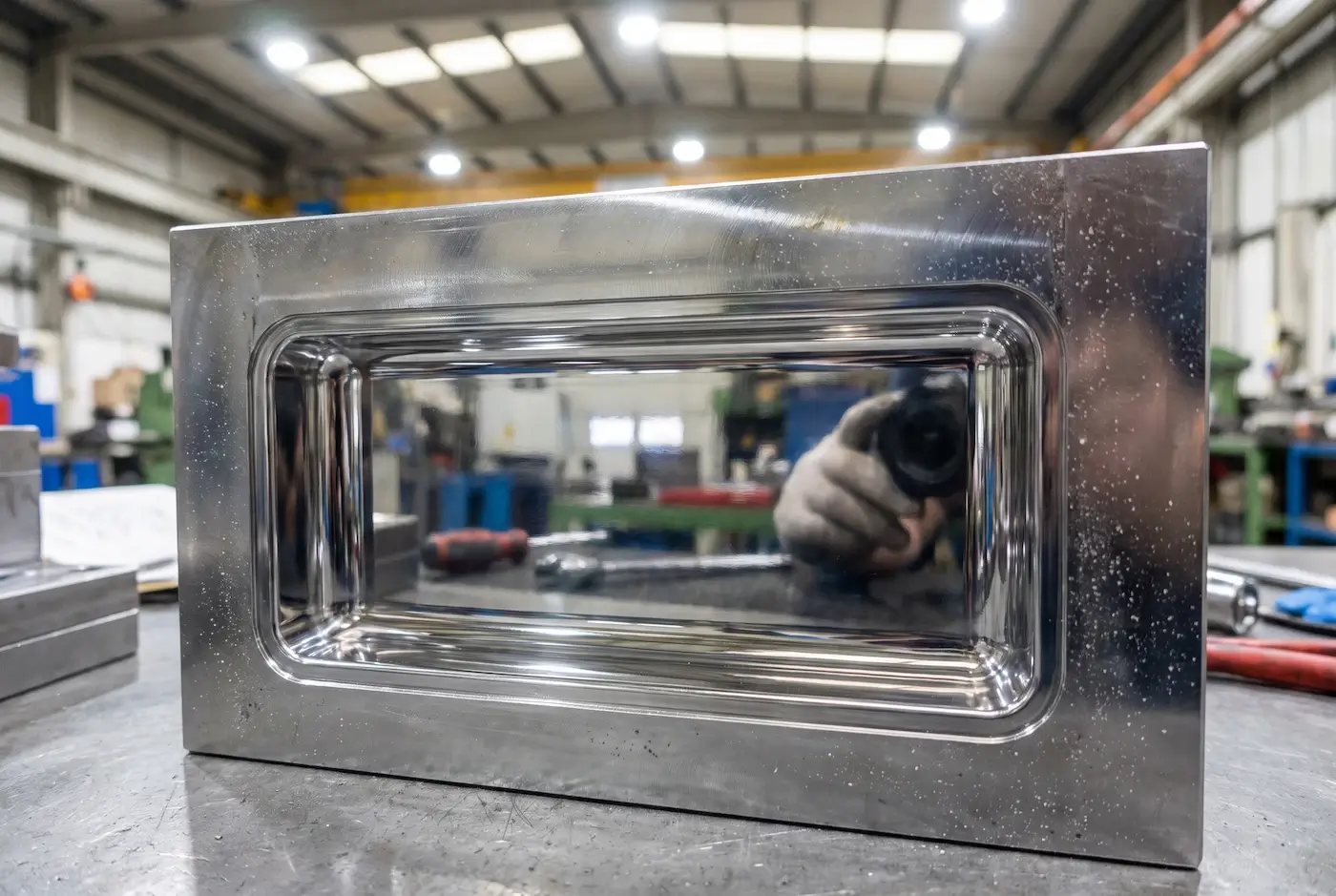
Material choice only sets the ceiling on clarity — the mold determines whether the part actually gets there. Optical-grade clear parts are polished to SPI grade A, the highest tier the Plastics Industry Association’s finish standard defines, achieved with successive diamond buffing rather than sandpaper or stone.
| SPI Grade | Finishing Method | Typical Use |
|---|---|---|
| A-1 | 6000-grit diamond buff | Lenses, mirrors, fully optical parts |
| A-2 | 3000-grit diamond buff | High-gloss transparent housings and covers |
| A-3 | 1200-grit diamond buff | Medium-to-high polish, non-optical clear parts |
Gate location matters as much as the polish. On a cosmetic clear part, the gate leaves a witness mark that never fully disappears, so it gets placed on a hidden edge or underside rather than a visible face whenever the geometry allows it. Fill balance matters just as much: if two flow fronts meet on their way around a boss or opening, the result is a faint but visible weld line — invisible on an opaque part, obvious on a clear one — so gate position and part geometry get planned together specifically to push that meeting point off the viewing surface. A hot runner system, which keeps the melt at a controlled temperature all the way to the gate, generally gives more consistent fill and less visible gate vestige than a cold runner on a cosmetic clear part, though it adds tooling cost that’s worth weighing against the part’s volume and finish requirements. Because flaws that would pass on an opaque part often can’t pass on a clear one, cosmetic clear parts typically need a tighter AQL classification at inspection than an equivalent opaque component; our guide to defect grading covers how that classification gets set, and our quality inspection process covers how it’s checked before a shipment goes out.
Process Controls That Prevent Haze, Stress Marks, and Crazing
A correctly specced material and a well-polished mold can still turn out a hazy or stressed part if the process side isn’t controlled just as tightly.
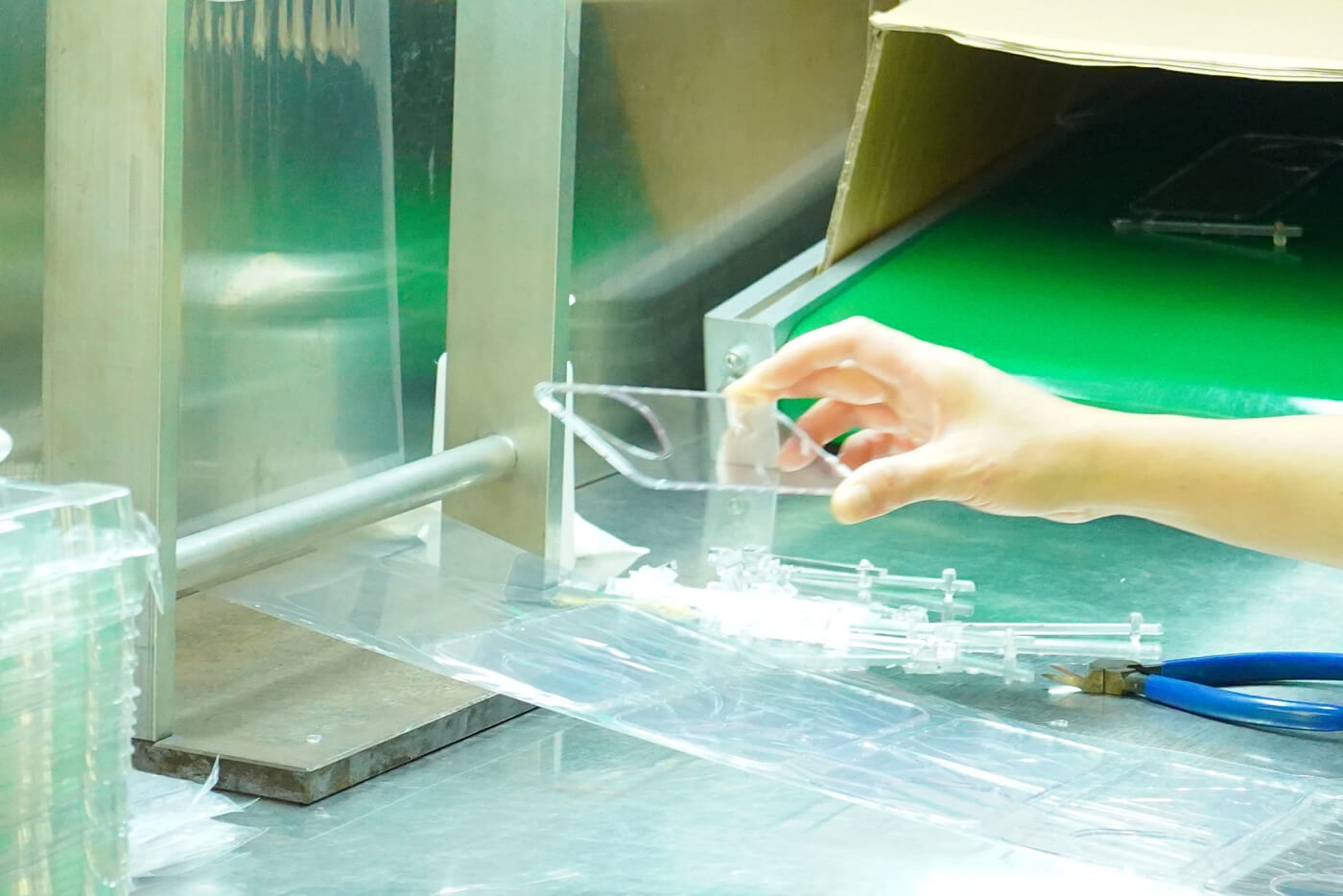
Handling matters right up to the box. A part that comes off the press optically perfect can still leave the shop scratched if it’s stacked bare in a tray — clear parts generally travel with a protective film applied at the press or get separated with interleaving before packaging, since a scratch on a glossy surface is exactly the kind of defect a clear part can’t hide either.
Frequently Asked Questions
What plastic is best for clear injection molded parts?
There’s no single best material — it depends on which property matters more for the part. Polycarbonate is the better choice when impact resistance, heat tolerance, or drop survival matters most. Acrylic (PMMA) is the better choice when maximum optical clarity, UV stability, and lower cost matter most. PETG and SAN sit between the two for parts that don’t need either extreme.
Can injection molded parts be completely transparent, or is some haze unavoidable?
Some measurable haze is unavoidable, even on a part that looks perfectly clear to the eye. Optical-grade clear resins are tested to ASTM D1003 for both light transmission and haze percentage, and even premium grades carry a small haze value — typically under 2% for the resins commonly used in clear molded parts. What matters practically is keeping that number consistent and low enough that it’s not visible in normal use, not chasing a literal zero.
Why does my clear plastic part look hazy or cloudy after molding?
Cloudiness after molding usually traces to one of a few causes:
- Undried, moisture-affected resin — especially likely with hygroscopic materials like PC
- Excess shear heat at the gate scattering light instead of transmitting it
- A mold polish that’s degraded or picked up fine scratches over repeated cycles
- A resin grade substituted for a lower-clarity alternative without re-approving the part visually
Is polycarbonate or acrylic better for a clear injection molded part?
Polycarbonate is the stronger choice for anything that gets dropped, handled roughly, or exposed to heat, since its impact strength is roughly 30 times higher than acrylic’s. Acrylic is the stronger choice for anything where optical clarity and outdoor UV stability matter most and the part won’t take significant impact — signage, display cases, and light-diffusing covers are typical fits.
Can clear plastic parts be tinted or given a gradient color?
Yes — a clear base resin can carry a color concentrate or masterbatch to produce a tinted, translucent, or gradient effect while still transmitting light. This is exactly how one client built five gradient colorways from a single clear-and-frame structure without tooling a separate mold for each. Combining a clear rigid shell with a separately colored soft-touch overmold is another common route — see our overmolding guide for how that two-material construction works.
How do you prevent scratches on clear molded parts during production and shipping?
Protective film applied directly at the press is the most reliable method, since it’s in place before the part is ever handled or boxed. Where film isn’t practical — small parts, tight geometry, or textured backs — interleaving sheets between stacked parts and using foam-lined trays instead of bare bins during transit both reduce the same risk. It’s worth building this into the packaging spec from the start rather than adding it after the first damaged-in-transit report, since a fine scratch that would be completely invisible on a textured part is immediately visible on a glossy or optically clear one, and buyers tend to notice it on inspection rather than in the field.