
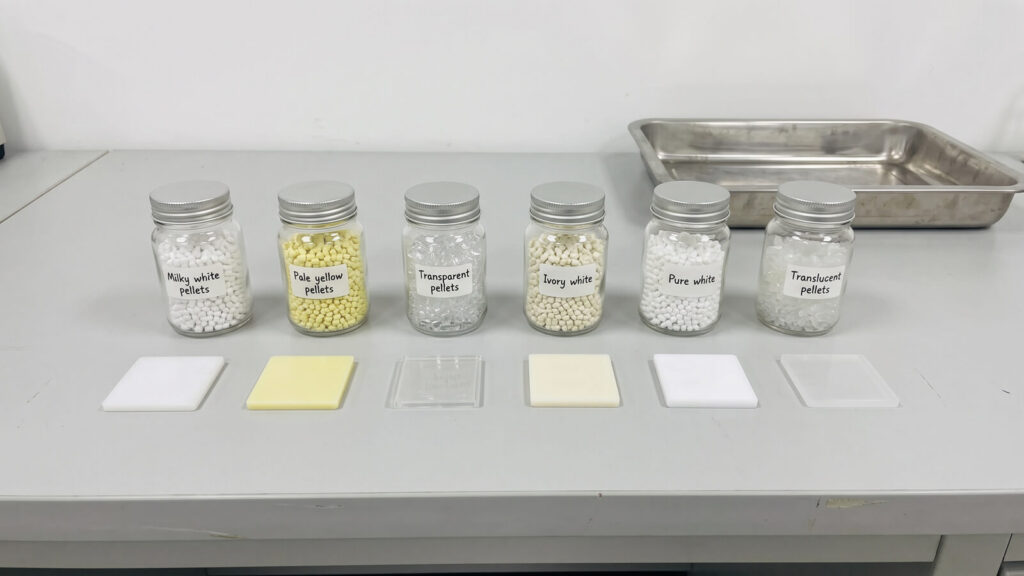
Most injection molded parts are made from thermoplastics: polymers that soften when heated, fill a steel mold, and harden as they cool. Polypropylene (PP), ABS, polycarbonate (PC), nylon (PA), acetal (POM) and a few relatives cover most jobs. Knowing the names is the easy part. The costly mistakes come later: paying for a high-performance resin the part never needed, cutting mold steel for a resin that is changed afterwards, or finding out that the “virgin” pellets were blended with regrind. This guide is organized around those three mistakes, then answers the material questions buyers ask us most. For datasheet-level property comparisons, see our full material selection guide.
Thermoplastics First: The Three Tiers Behind Most Orders
Injection molding is built around thermoplastics because they can be melted, shaped and, in principle, melted again. Thermosets are the exception: they cure through an irreversible chemical reaction inside a heated mold, so they cannot be remelted or reground. They earn their place in some electrical and high-heat parts, and our thermoset vs thermoplastic page covers the process differences. For the accessories and consumer products most small brands launch, the practical question is which thermoplastic tier fits.
Illustrative resin-only cost at round resin prices. Actual quotes vary by grade, volume and market.
The tiers matter because resin cost scales with every unit you ship. On a 1,000-piece first run, moving from an engineering resin to a high-performance one adds a modest line to the invoice; at 20,000 pieces a year it can decide whether the product holds its retail price. The cheapest resin that survives the real conditions is usually the right one.
What is the most common plastic used in injection molding?
Polypropylene is generally cited as the highest-volume injection molding resin, thanks to its low price, chemical resistance and mature supply chain. ABS is the default for rigid consumer housings. Treat PP or ABS as your cost anchor: if a quote for another resin is several times higher, there should be a documented reason.
Matching the Plastic to the Environment Without Over-Engineering
The expensive mistake is specifying for an imagined worst case. Instead, write down the three conditions the part will actually meet, then find the cheapest resin that clears each one.
Step up when: a stabilized grade fails your aging test, or the part must stay clear outdoors (UV-stabilized PC or PMMA).
Step up when: contact is continuous, hot or under molded-in stress. PA, POM and PBT handle oils and greases better; PPS covers aggressive media.
Step up when: continuous temperature under load exceeds that. Glass-filled PA and PBT come first; PPS and PEEK only beyond them.
A quick example: an outdoor-mounted accessory sees sun, rain and the occasional wipe-down with household cleaner, but never more than about 60 °C. ASA covers that fully. Specifying PC “to be safe” adds cost and a stress-cracking risk with the cleaner, and specifying PEEK solves a heat problem that does not exist. Naming the conditions first keeps the decision honest.
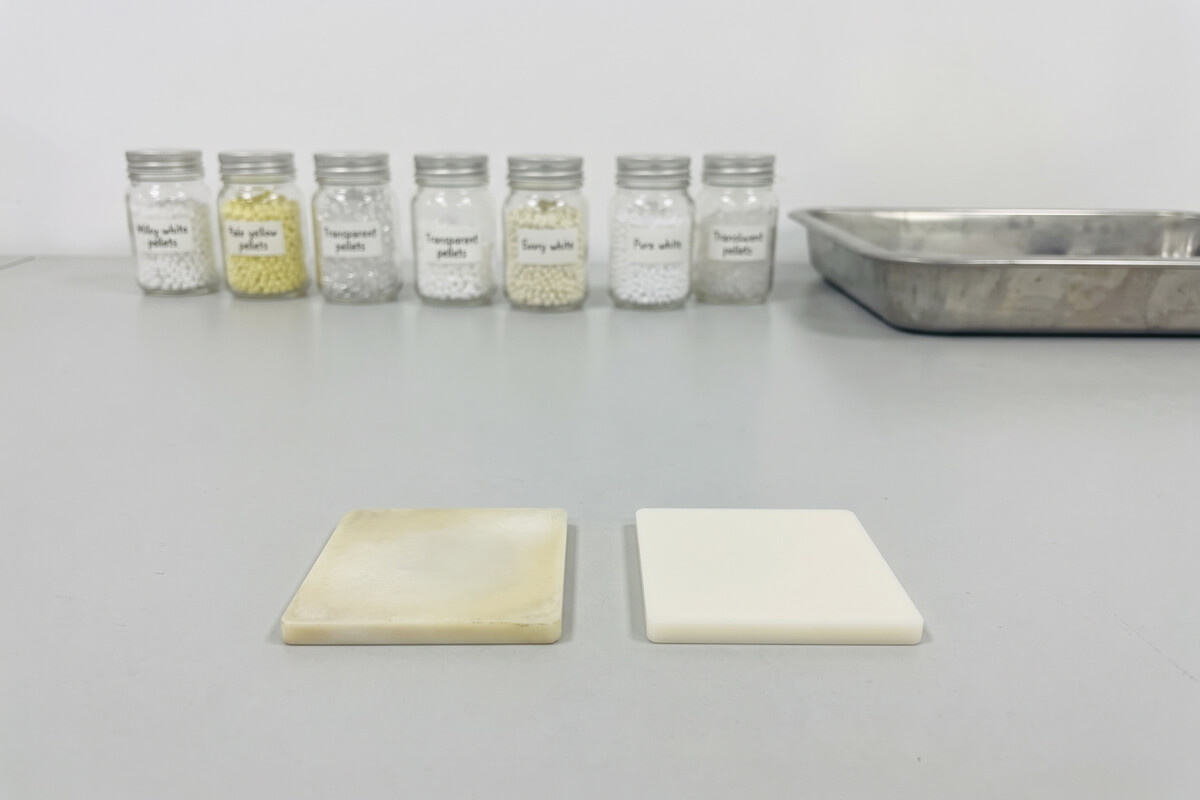
Before approving a step-up, ask for failure evidence: a datasheet value the cheaper resin misses, or a sample test such as a UV chamber, chemical soak or heat soak. Samples from prototype tooling make that test inexpensive. If a PP or ABS sample passes your worst realistic test, the upgrade has no job to do.
Amorphous vs. Semi-Crystalline: Why the Resin Decides the Steel
Plastic shrinks as it cools, and how much depends on its structure. In amorphous resins such as ABS, PC, PS and PMMA, the polymer chains stay randomly tangled, so shrinkage is low (typically 0.4% to 0.7%) and fairly even. In semi-crystalline resins such as PP, PE, PA, POM and PBT, chains pack into ordered crystals as they cool, which removes more volume: typically 1% to 3%, sometimes more, and it varies with wall thickness, cooling and packing pressure. Amorphous materials can show shrinkage nearly ten times lower, and fibers make semi-crystalline shrinkage directional, according to Plastics Engineering.
Shrinkage: about 0.4% to 0.7%
Behavior: fairly uniform in all directions
Dimension control: easier to hold tight fits
Shrinkage: roughly 1% to 3% or more
Behavior: differs along and across flow, and can keep changing after molding
Dimension control: needs grade-specific data and a validated process
Here is why this locks your steel. Cut a cavity for ABS at 0.5% shrinkage and then switch to PA66 at around 1.5%, and a 100 mm feature ends up roughly 1 mm off, far outside any normal tolerance. Steel can be removed but not added back, so a late resin change often means a new cavity. Glass fiber complicates it further: 30% glass can pull PP from around 2% to well under 1%, but the part now shrinks differently along and across the fibers, and gate location starts to steer warpage.
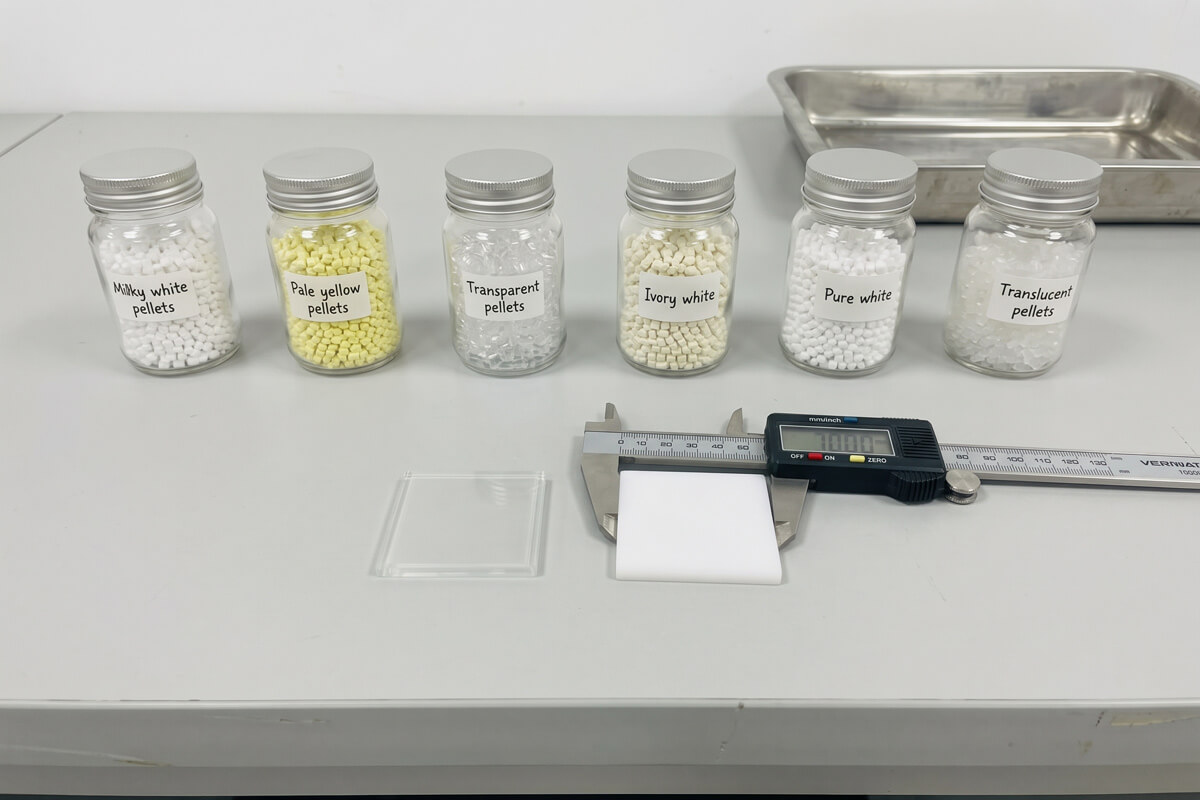
2. Filler type and percentage.
3. Colorant system, because pigments can shift shrinkage in semi-crystalline resins.
4. Gate location, agreed with fiber-orientation effects in mind.
5. A written rule: any resin change after steel cut is re-quoted for cavity rework.
If the resin is still undecided at quoting time, say so: a toolmaker can leave steel on critical features and trim after the first samples. Our guides on injection molding tolerances and steel-safe tooling explain how that works in practice.
Virgin vs. Regrind: How to Check What Went Into the Hopper
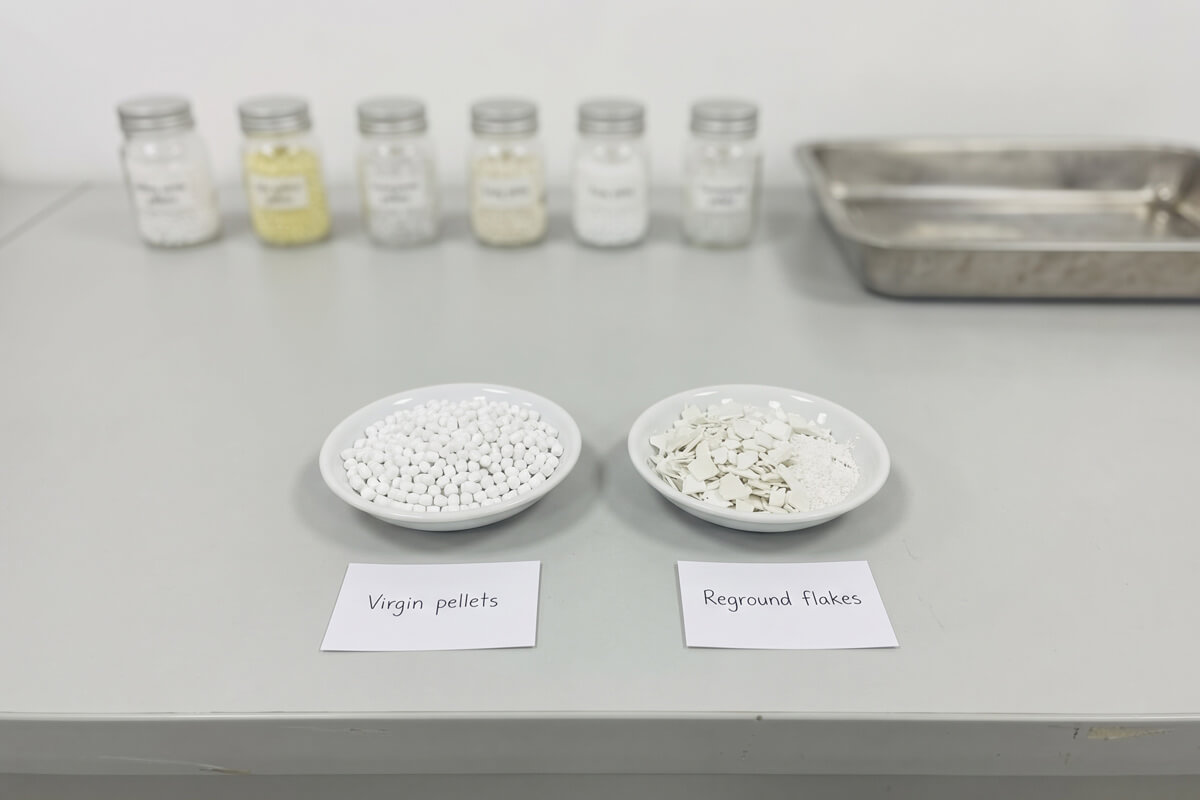
Regrind is plastic from sprues, runners and rejected parts that is ground up and fed back into production. Used and declared properly, it is ordinary industry practice. The problem is undeclared regrind in a contract that specifies virgin resin. Every heat cycle can shorten polymer chains, which lowers impact strength, and grinding adds uneven particle size, moisture and possible contamination. None of this is visible by eye.
The temptation is simple arithmetic. Resin is often the largest part of the piece price, and a shop that quietly blends in a high share of regrind can undercut an honest quote. That is why the order, not the brochure, has to carry the requirement.
Be realistic about verification: no test on a finished part reveals an exact regrind percentage. What you can build is an evidence chain.
Recycled content is a separate matter. When a customer wants it on purpose, it should be declared and certified, not hidden. We hold GRS 4.0 certification for that reason. Defect handling and lot traceability belong in your contract too; see our guide to reading quotes and commercial terms and our quality assurance page.
Quick Answers to Common Material Questions
Which injection molding plastic is the strongest for structural parts?
It depends on what “strong” means. For tensile strength and stiffness, glass-fiber-reinforced PA66 is the common metal-replacement choice. For impact toughness, PC and PC/ABS lead among everyday resins. POM suits creep resistance and wear, and PEEK or PPS grades keep strength at high temperature for a far higher price. Fiber raises stiffness but makes shrinkage directional and can reduce elongation, and nylon absorbs moisture, which changes both properties and size.
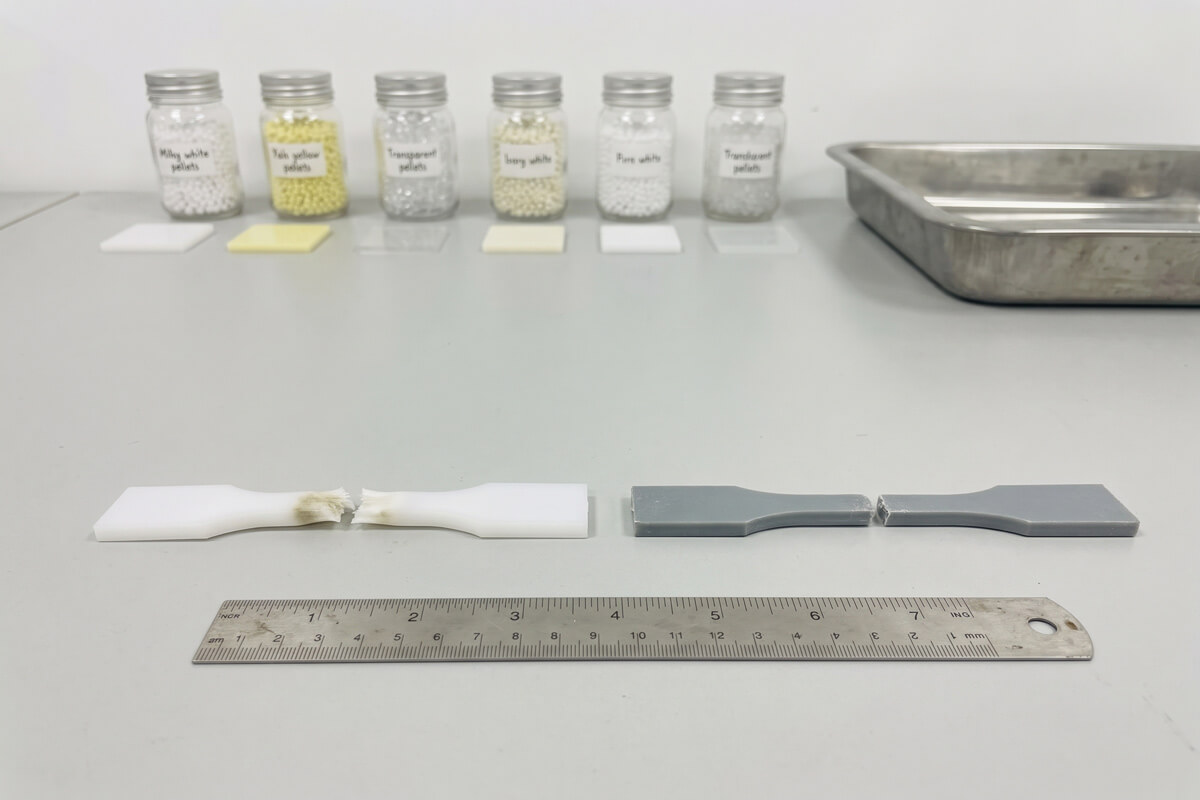
Can you mix different types of plastics together in injection molding?
Generally no. Most polymer pairs do not blend, and a molten mix of, say, PP and ABS delaminates and turns brittle. The exceptions are purpose-made blends such as PC/ABS, which are supplied as one grade. If you want two materials in one part, use two-shot molding or overmolding with a pair that bonds. Changing resins on a press also needs proper purging to avoid cross-contamination.
Which plastic is food-grade and FDA approved for injection molding?
Strictly, regulators do not approve a plastic by name. In the US, FDA regulations in 21 CFR list permitted polymers and additives, and the resin must be a compliant grade used under permitted conditions. In the EU, Regulation (EU) 10/2011 works from an authorized-substance list and requires a declaration of compliance. Common food-contact families include PP, HDPE, PET, BPA-free copolyesters such as Tritan, and some nylons, but each grade needs its own statement, and the colorant must comply too. Note that BPA-based polycarbonate is largely excluded from new EU food-contact products, as the main transition under Regulation (EU) 2024/3190 ended on July 20, 2026.
Why is polycarbonate used for clear parts instead of acrylic (PMMA)?
Often it is not. PMMA is the better pick when the part needs maximum clarity, scratch resistance and outdoor stability and will not take a hit. PC wins when the part will be dropped or struck, such as covers and guards on handheld products, because it is far tougher. The trade-off is a harder resin to mold: high melt temperature, thorough drying, stress cracking with some chemicals, and a UV-stabilized grade outdoors. Choose by failure mode: if it breaks, use PC; if it scratches or yellows, consider PMMA. Our clear plastic injection molding page goes deeper.
Share your STEP file and what the part must survive. We will check the resin choice against shrinkage, cost and environment, and flag anything that should be written into the order.