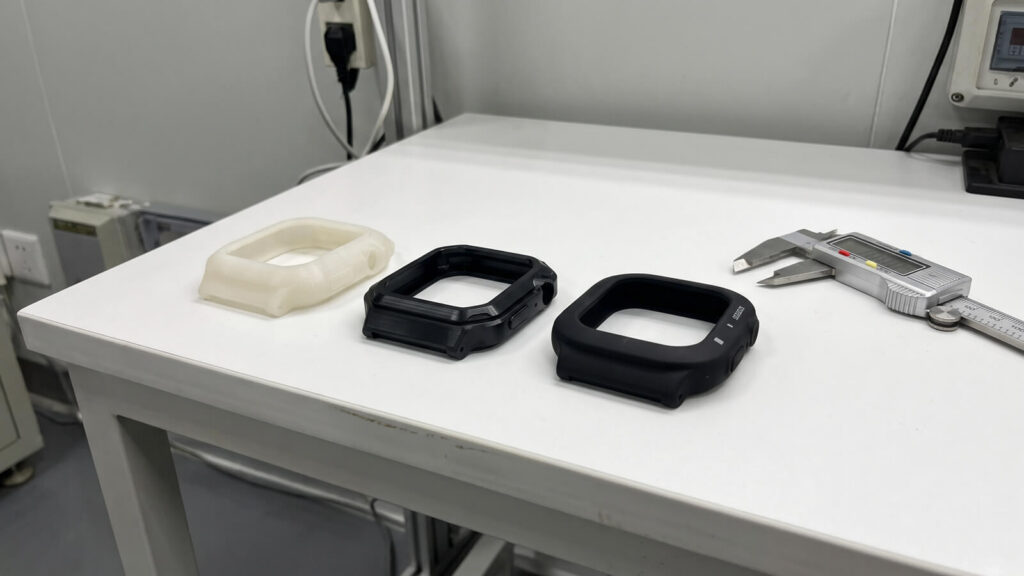

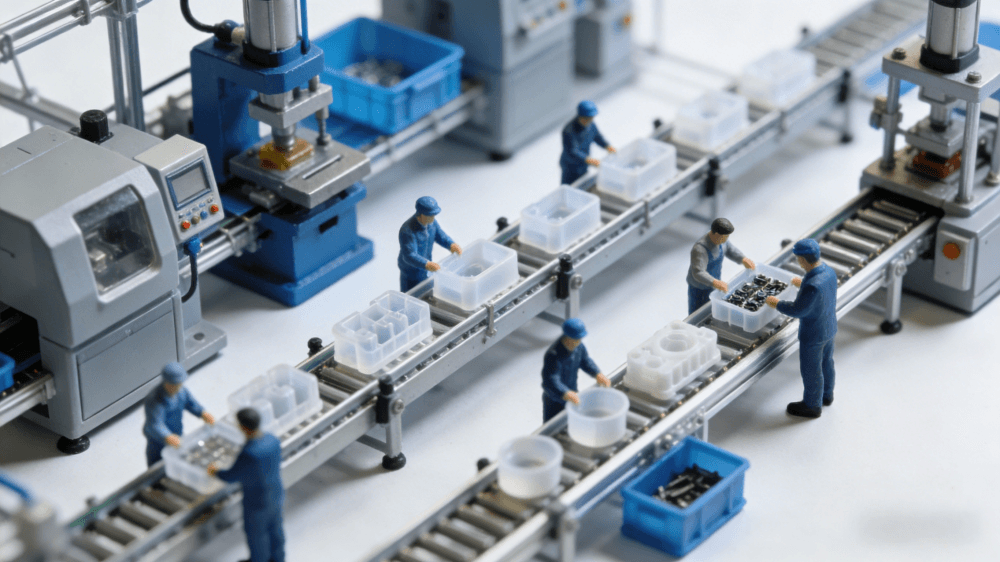
Hardware engineering teams and sourcing managers at fast-moving startups and SMEs consistently hit the same wall during New Product Introduction (NPI): the financial and technical chasm between 3D-printed prototypes and full-scale mass production tooling. When you are developing a high-value product—whether it is an industrial VR/AR headset bracket, a child-resistant storage enclosure, or a high-clarity collector display case retailing above $30—you do not need to gamble $25,000+ and 10 weeks of lead time on a multi-cavity Class 101 hardened steel mold just to validate your EVT/DVT builds or fulfill your initial commercial batch.
On the flip side, relying on CNC machining or additive manufacturing for 500 to 2,000 units destroys your unit economics and fails to validate actual molding physics. According to a 2026 industry report by Grand View Research, the global injection molding market reached USD 312.7 billion in 2025 and is projected to hit USD 327.5 billion in 2026—yet the report specifically highlights that large-scale molding operations carry rigid fixed costs that leave niche and low-volume hardware projects underserved.
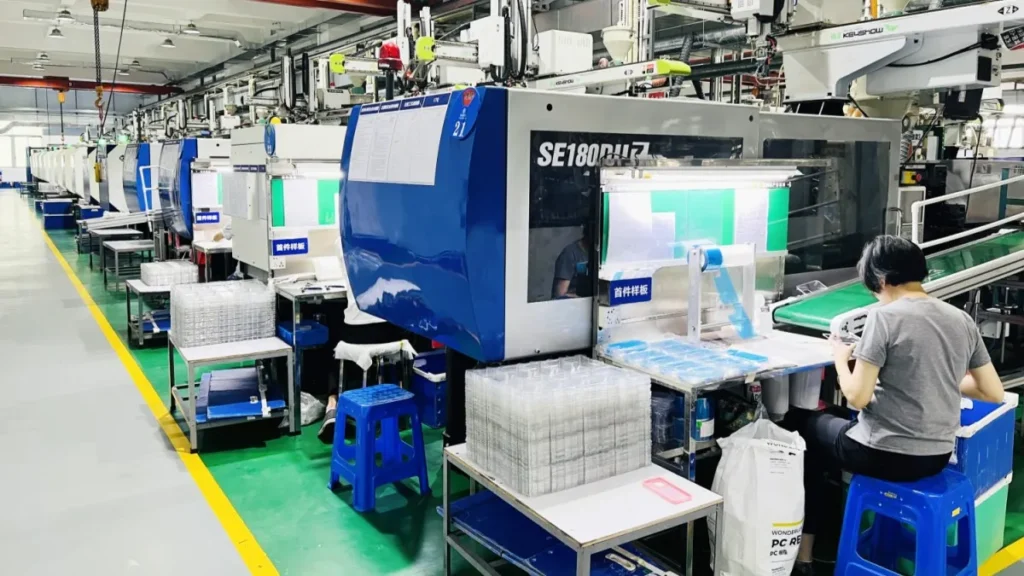
Having managed hundreds of NPI launches since 1996, our engineering team bridges this exact gap. By combining Master Unit Die (MUD) rapid tooling, production-grade engineering resins, and a fleet of 130+ injection presses ranging from 50T to 800T, we help hardware brands move from CAD validation to commercial launch with minimal capital exposure.
Engineering & Tooling Baseline
- Tooling Architecture: Master Unit Die (MUD) interchangeable inserts & dedicated bridge molds
- Lead Time & Cost Savings: Up to 30% lower tooling cost; T0 samples in as fast as 10 days
- Machining Precision: Standard mold tolerances held to ±0.01mm
- Press Tonnage & Environment: 50T–800T clamping force + ISO Class 8 cleanroom
- Advanced Processes: LSR/LIM, IMD, 2K Overmolding, and IM-3D-E integration
Commercial & IP Protection Terms
- Standard Production MOQ: 1,000 units (flexible pilot runs supported for EVT/DVT validation)
- IP & Tooling Ownership: Upfront NDA execution; 100% client mold ownership upon full payment
- Incoterms Supported: Priority support for EXW and door-to-door DDP delivery
- Payment Flexibility: 100% upfront, standard 50% deposit, or Net 30 terms for qualified partners
- Quality Resolution: Root-cause traceability + negotiated corrective engineering (CAPA)
Bridge Tooling vs. Prototyping: When to Switch in Your NPI Cycle
During Early Engineering Validation Testing (EVT), SLA/SLS 3D printing and CNC machining are indispensable for checking basic ergonomics and gross mechanical fit. However, a common mistake we see hardware founders make is pushing CNC or 3D-printed parts into Design Validation Testing (DVT) or early regulatory certification.
Subtractive and additive prototypes cannot replicate the anisotropic shrinkage, shear-induced molecular orientation, weld-line strength, or internal thermal stresses of an injection-molded part. If you are designing a snap-fit enclosure or an ultrasonic-welded housing, a CNC-machined ABS prototype will behave completely differently during a 1.5-meter drop test than a molded ABS component. Furthermore, secondary surface standards—such as SPI-A2 optical mirror polishes or VDI 3400 matte textures—can only be validated inside an actual mold cavity.
When evaluating injection molding vs. 3D printing for your NPI timeline, bridge tooling becomes mandatory the moment you need:
- True Material & Structural Validation: Testing functional snap-fits, living hinges, Boss pull-out strength, and creep resistance under real assembly loads.
- Regulatory & Environmental Certification: Submitting actual production-intent parts for UL 94 flammability testing, IP67/IP68 ingress protection, or child-resistant (CR) certification.
- Cosmetic & Assembly Sign-Off: Verifying parting line witness marks, ejector pin locations, and zero-gap mating with simple PCBA sub-assemblies before locking in mass production designs.
- Initial Market Seeding: Fulfilling Kickstarter/Indiegogo backer tiers, investor demo kits, or an initial 1,000-unit retail pilot batch while parallel-engineering high-cavitation hard tooling.
| NPI Parameter | 3D Printing / Urethane Casting | CNC Machining | MUD Rapid Bridge Tooling | Standard Hard Tooling (H13/S136) |
|---|---|---|---|---|
| Optimal Volume Sweet Spot | 1 – 50 units | 5 – 100 units | 1,000 – 30,000 units (Pilot runs from 100+) | 50,000 – 500,000+ units |
| T0 Sample Lead Time | 2 – 5 days | 5 – 8 days | 10 – 15 days | 30 – 45+ days |
| Upfront Tooling Cost | None / Very Low | None (High setup/programming) | Reduced by up to 30% vs. standard molds | 100% Baseline (High CapEx) |
| Material Integrity | Simulated thermosets / anisotropic | Extruded stock (no molded skin effect) | 100% Production-grade pellets (PC, PA+GF, PPS, LSR) | 100% Production-grade pellets |
| Dimensional Tolerance & Finish | ±0.15mm / Layer lines visible | ±0.02mm / Toolpath marks | ±0.01mm mold tolerance / Full SPI & VDI textures | ±0.01mm mold tolerance / Full SPI & VDI textures |
MUD (Master Unit Die) Architecture: Cutting Tooling Costs by 30%
In traditional mold making, up to 40% of your quotation goes toward purchasing and machining the custom steel mold base—the heavy A/B plates, ejector housings, leader pins, and cooling manifolds. In a low-volume NPI scenario, paying for a standalone mold base for every single part number is unnecessary overhead.
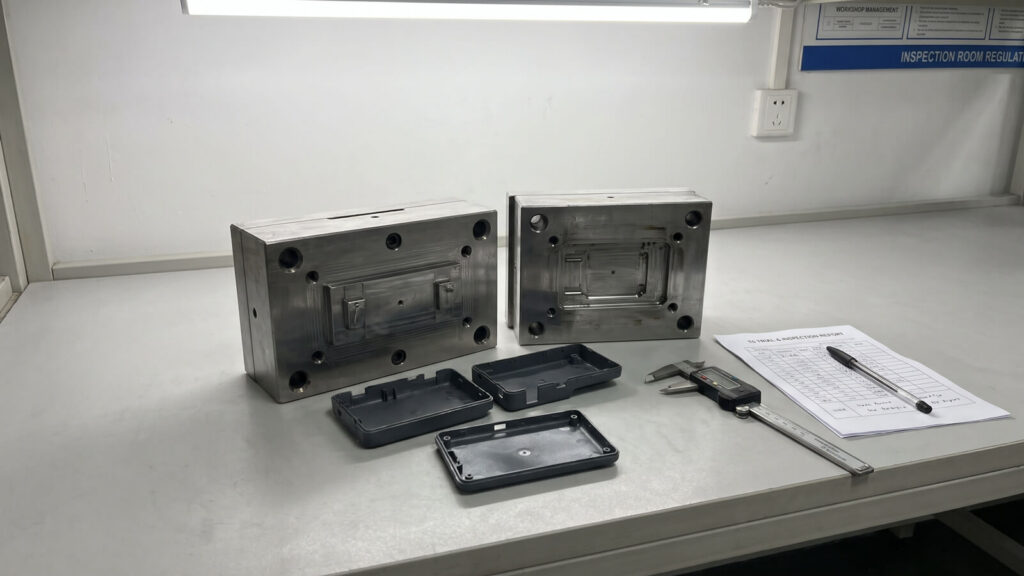
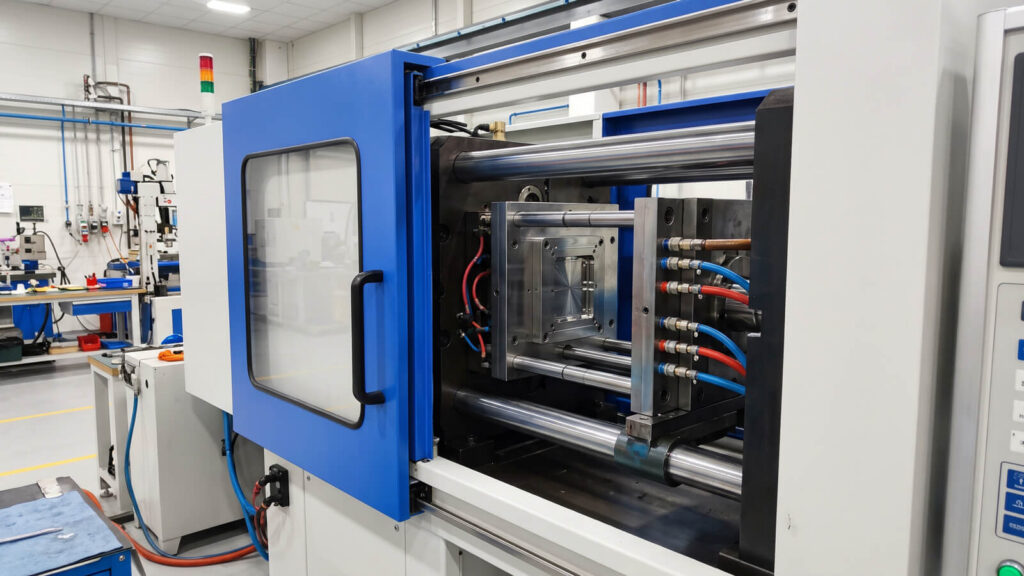
Through our specialized rapid tooling services, we eliminate this waste using a Master Unit Die (MUD) quick-change system. Instead of building a complete mold from scratch, our toolmakers machine only the custom core and cavity inserts, along with localized ejector assemblies. These precision inserts slide directly into our standardized, pre-engineered master mold frames permanently mounted in our injection presses.
Selecting the Right Insert Metallurgy: AL7075 vs. P20 vs. S136
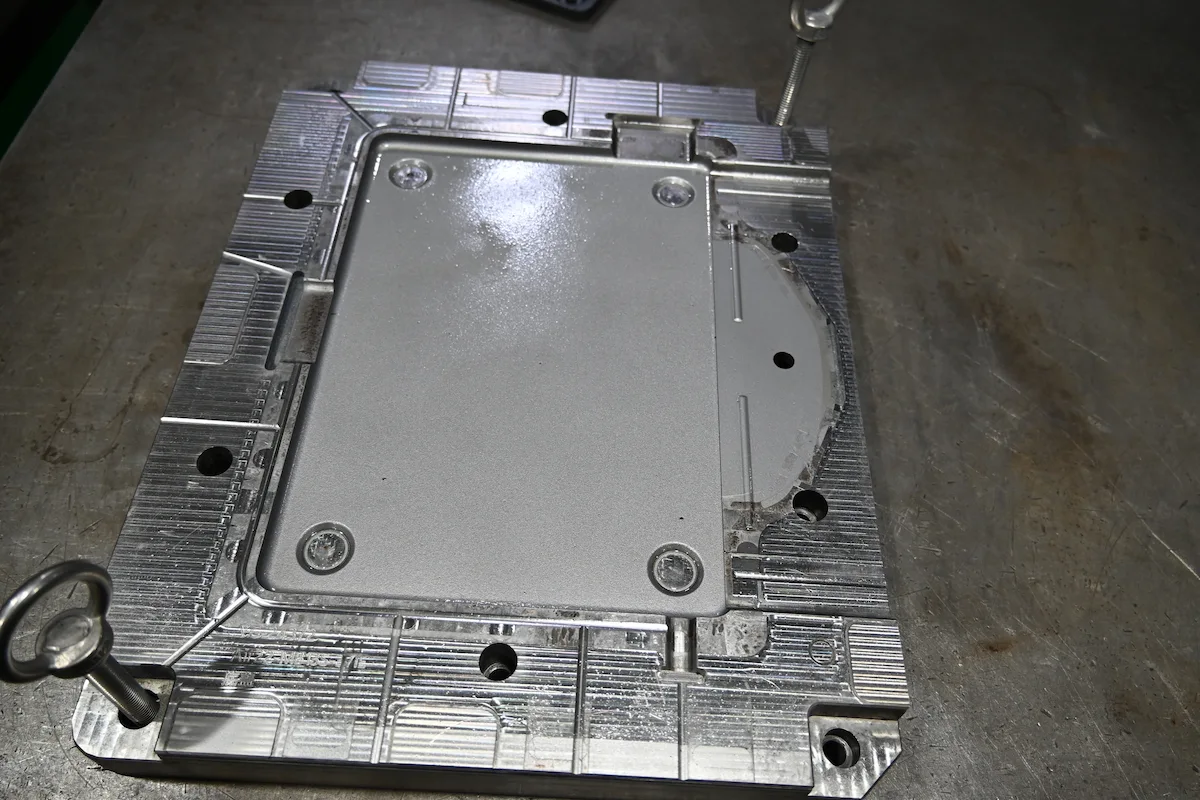
Choosing the right insert metal is a balance between part geometry, resin abrasiveness, surface finish, and expected shot life:
- High-Strength AL7075 Aluminum (5,000 – 15,000 Shots): Ideal for simple geometries, non-abrasive resins (like PP, PE, or standard ABS), and ultra-fast thermal cycling. However, aluminum is prone to galling on complex sliding shut-offs and cannot hold an optical mirror polish.
- Pre-Hardened P20 Tool Steel (20,000 – 30,000+ Shots): Our workhorse for NPI bridge tooling. Supplied at 30–34 HRC, P20 allows fast CNC milling and sinker EDM work without post-machining heat-treatment distortion. It handles glass-filled nylons, holds fine VDI textures, and easily bridges your first 20,000 to 30,000 commercial units.
- Hardened S136 / NAK80 Steel (300,000 – 500,000 Shots): When your product requires optical-grade clarity (such as crystal-clear collectible card slabs) or corrosive flame-retardant resins, we upgrade the inserts or build a dedicated mold with a standard lifespan of 300,000 shots—extendable up to 500,000 shots—while maintaining a strict ±0.01mm machining tolerance.
How Our 10-Day MUD Rapid Tooling Workflow Compresses NPI Timelines
Sign mutual NDA. Engineers audit draft angles, wall thickness, and gate locations to prevent sink marks and warpage before cutting steel.
Parallel roughing and finishing of P20/AL7075 MUD core and cavity inserts to ±0.01mm precision, bypassing custom mold-base delays.
Bench fitting, venting grinding, VDI/SPI surface texturing, and loading inserts into our standardized MUD master frames.
Scientific molding parameter lock on 50T–800T presses. T0 samples shipped via express air alongside CMM dimensional inspection data.
Material Selection & Specialized Processes for High-Value Niche Accessories
A persistent myth in contract manufacturing is that low volume injection molding forces you to compromise with soft commodity plastics. Because our MUD inserts are built from P20 and hardened tool steels and run inside industrial 50T–800T presses, we process the exact same engineering and specialty polymers during NPI that you specify for mass production.
This capability is critical given recent regulatory and material shifts. According to a 2026 market analysis by Coherent Market Insights, the global injection molding materials market is valued at USD 338.0 billion in 2026 and is increasingly driven by high-performance engineering thermoplastics and certified recycled resins following stricter 2026 EU sustainability regulations. Holding GRS (Global Recycled Standard) 4.0, RoHS, ISO 9001, ISO 14001, and ISO 13485 certifications, our facility routinely runs both virgin specialty resins and certified post-consumer recycled (PCR) grades.
Rather than taking on high-barrier, complex electronic core modules, our engineering team focuses specifically on structural and functional accessories—products with no electronics or straightforward PCBA integration that command retail prices of $30 and up. Below is how we pair resins and specialty molding processes with these target markets:
- Industrial VR/AR Structural Frames & Headsets: Wearable hardware requires ultra-low weight and high impact resistance. We mold PA66+30%GF (Glass-Filled Nylon) and carbon-fiber-reinforced polymers for rigid internal brackets, paired with LSR/LIM (Liquid Silicone Rubber) facial interfaces molded inside our ISO Class 8 cleanroom for skin-safe biocompatibility.
- High-Net-Worth Collectible Cases (Sneakers, Trading Cards & Figurines): Protecting graded trading cards and luxury collectibles requires zero optical distortion, UV resistance, and sonic-weldable seams. We process optical-grade PMMA (Acrylic) and UV-stabilized Polycarbonate (PC) using mirror-polished cavities. You can see how we solved warping and ultrasonic welding tolerances in our custom PSA slab protector manufacturing case study.
- Premium Functional Phone Cases & Mobile Accessories: For rugged, magnetic, or multi-material protective cases, we deploy 2K Two-Shot Molding (TPU over PC), IMD (In-Mold Decoration) for scratch-proof graphics, and IM-3D-E (In-Mold 3D Electronics) to integrate antennas, NFC coils, or capacitive touch circuits directly into the plastic shell.
- Child-Resistant (CR) & Harsh-Environment Enclosures: Specialized storage boxes require precise snap-lug deflection and chemical durability. We process impact-modified PC/ABS, POM (Acetal) for low-friction locking mechanisms, and high-temperature PPS (Polyphenylene Sulfide) when extreme thermal stability and flame retardancy are required without halogen additives.
Not Sure If Your CAD Is Ready for MUD Bridge Tooling?
Before committing to steel, let our senior mold engineers review your 3D STEP/IGES files. We identify undercut traps, wall-thickness transitions, and parting-line cosmetics within 24 hours—under strict upfront NDA protection.
Ideal for startups needing rapid MUD tooling and an initial 1,000-unit commercial run to validate the market.
Submit CAD for Free DFM →Explore our full capabilities in LSR, IMD, 2K overmolding, and cleanroom assembly for $30+ retail accessories.
Explore Custom Molding Specs →Case Study: 12-Day NPI Launch for a Smart Door Lock Faceplate
Speed in NPI is meaningless if cosmetic or dimensional quality fails during assembly. Consider a recent project where our team partnered with a North American smart home security brand preparing for an investor demonstration and field beta rollout.
Project Snapshot:
Component: Exterior Smart Door Lock Faceplate (Cosmetic Class-A housing with capacitive touch window and simple PCBA mounting bosses)
Batch Requirement: 1,000 units (Standard MOQ for commercial pilot & field testing)
Material & Tooling: UV-stabilized Flame-Retardant PC/ABS | P20 Steel MUD Cavity & Core Inserts
Turnaround Time: 12 calendar days from final DFM sign-off to T0 sample delivery
The Engineering Challenge: The faceplate featured a high-gloss central lens area surrounded by a fine matte VDI-24 border, plus internal snap ribs holding a capacitive touch PCBA. Standard mold makers quoted 5 weeks for hard tooling, which would have caused the client to miss their trade show and beta-testing window. However, 3D printing could not achieve the optical clarity or snap-fit retention force required.
Our MUD Execution: Using our MUD tooling system, we bypassed custom mold-base fabrication entirely. During our 24-hour DFM review, we noticed the client’s original boss wall-to-rib thickness ratio was 1:1, which would have caused visible sink marks on the glossy front face. We cored out the base of the mounting bosses and adjusted the rib thickness to 55% of the nominal wall. Utilizing P20 steel inserts machined to ±0.01mm tolerances, we completed high-speed CNC milling, EDM rib detailing, and dual surface finishing in 9 days. On Day 12, T0 injection-molded samples were delivered—passing drop tests and PCBA fit checks on the first shot—followed immediately by the 1,000-unit production run shipped via DDP directly to their US warehouse.
Seamless Scaling & De-Risking Your Supply Chain
The single greatest hidden cost in hardware NPI is switching vendors between EVT/DVT and Mass Production (MP). When you use a prototype-only job shop for your first 500 or 1,000 parts and then transfer the project to a mass-production factory, you lose institutional DFM knowledge. The new vendor has to re-engineer the gating, re-cut new steel molds, and re-qualify tolerances from scratch—often introducing unexpected warpage or assembly delays right when customer orders are piling up.
We eliminate this handoff risk by operating as a single-source, scalable manufacturing partner from NPI through high-volume retail fulfillment:
- Seamless Tonnage & Cavitation Scaling: Once your initial 1,000-unit run validates market demand, the exact same engineering team transitions your project to multi-cavity H13 or S136 production molds (rated for 300,000 to 500,000 shots) across our 130+ Sumitomo and Haitian presses (50T to 800T).
- Retail-Ready Factory Audits: Scaling a consumer or commercial accessory often means selling into major retail channels. Our facility has already passed rigorous Amazon and Walmart factory audits, meaning your supply chain is pre-qualified for big-box retail compliance from Day 1.
- Uncompromising IP & Asset Ownership: Hardware startups rightly worry about intellectual property in offshore manufacturing. We execute binding upfront NDAs before reviewing your files, and 100% of the mold ownership belongs to you upon final tooling payment—whether it is a dedicated mold or custom MUD inserts.
- Pragmatic Commercial Terms & Closed-Loop QA: We keep cash flow predictable for growing SMEs with a practical 1,000-unit standard MOQ, flexible payment structures (100% upfront, standard 50% deposit, or Net 30 credit terms for established accounts), and priority EXW or DDP shipping. If a quality anomaly ever arises, we do not brush it off with a generic replacement; our quality engineers execute a formal closed-loop investigation—tracing resin lot numbers, cavity pressure logs, and CMM data to negotiate a permanent engineering solution.
Accelerate Your Hardware NPI Without Overpaying for Steel
Whether you are validating a high-value VR/AR accessory, a child-resistant enclosure, or a custom collector case, our engineering team is ready to audit your CAD files. Cut your upfront tooling cost by 30% and hold T0 injection-molded samples in your hands in as fast as 10 days.